unilad homepage
unilad homepage
    • News
      • UK News
      • US News
      • World News
      • Crime
      • Health
      • Money
      • Sport
      • Travel
    • Music
    • Technology
    • Film and TV
      • News
      • DC Comics
      • Disney
      • Marvel
      • Netflix
    • Celebrity
    • Politics
    • Advertise
    • Terms
    • Privacy & Cookies
    • LADbible Group
    • LADbible
    • SPORTbible
    • GAMINGbible
    • Tyla
    • UNILAD Tech
    • FOODbible
    • License Our Content
    • About Us & Contact
    • Jobs
    • Latest
    • Archive
    • Topics A-Z
    • Authors
    Facebook
    Instagram
    X
    Threads
    TikTok
    YouTube
    Submit Your Content
    40 Million-Year-Old Lost Continent Has Been Rediscovered
    Home>News
    Updated 16:36 22 Feb 2022 GMTPublished 16:34 22 Feb 2022 GMT

    40 Million-Year-Old Lost Continent Has Been Rediscovered

    The lost continent of Balkanatolia may have just been rediscovered

    Shola Lee

    Shola Lee

    google discoverFollow us on Google Discover
    Featured Image Credit: Alamy

    Topics: News, World News, Animals

    Shola Lee
    Shola Lee

    Shola Lee began her journalism career while studying for her undergraduate degree at Queen Mary, University of London and Columbia University in New York. She has written for the Columbia Spectator, QM Global Bloggers, CUB Magazine, UniDays, and Warner Brothers' Wizarding World Digital. Recently, Shola took part in the 2021 BAFTA Crew and BBC New Creatives programme before becoming a journalist at UNILAD, where she works on breaking news, trending stories, and features.

    Advert

    Advert

    Advert

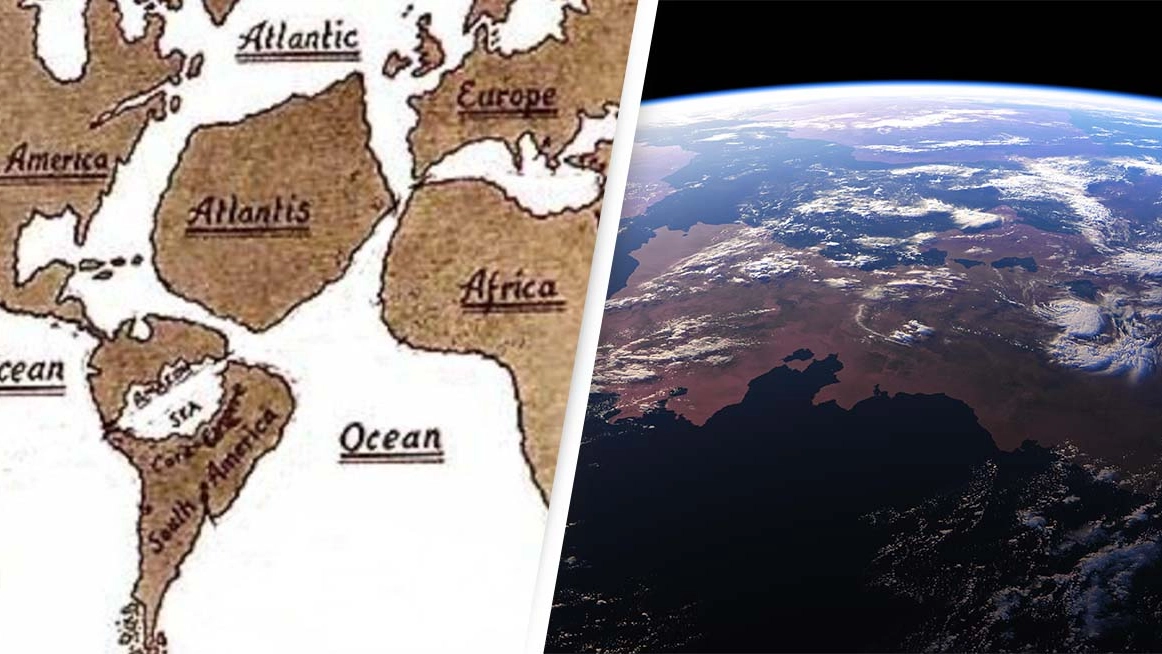
    The lost continent of Balkanatolia has been rediscovered by researchers.

    The continent is said to have stretched across the present-day Balkans and Anatolia, hence its name 'Balkanatolia'.

    Researchers suggest that the continent could help explain why there are difference in mammal fossils in the region between Western Europe and Asia.
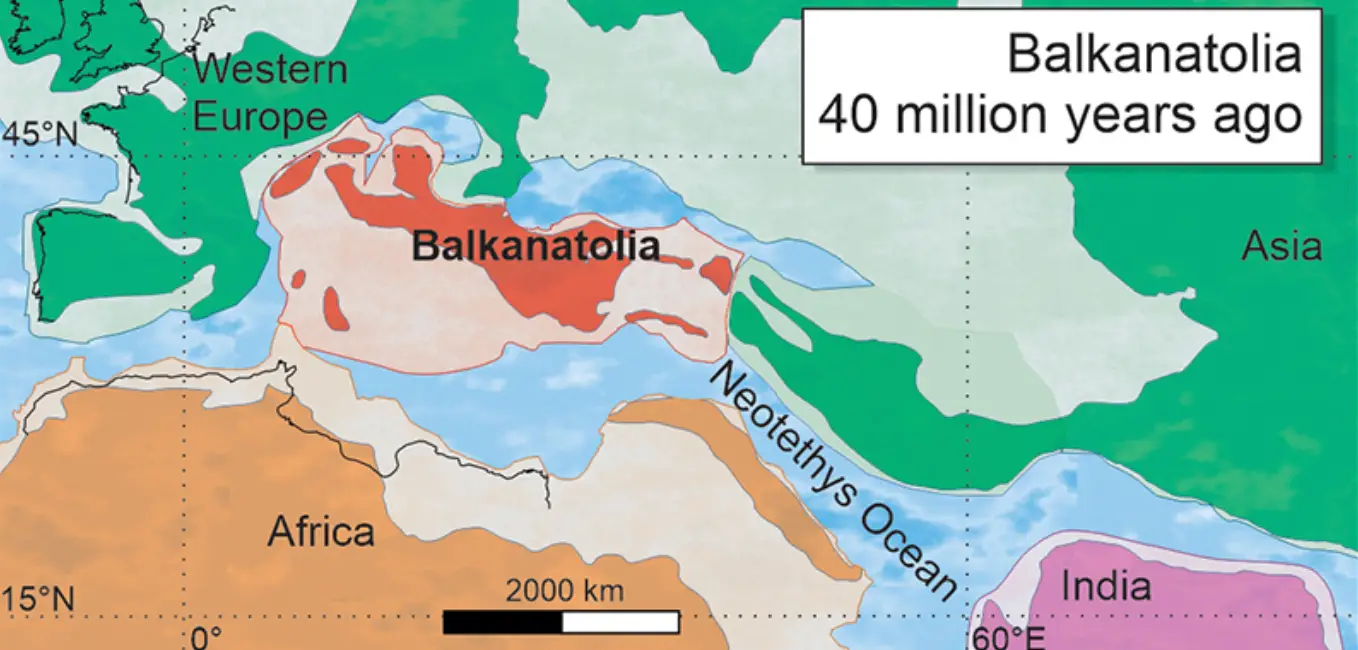
    Balkanatolia (CNRS)
    Balkanatolia (CNRS)

    Advert

    The team was led by researchers from the Centre national de la recherche scientifique (CNRS) and included French, American and Turkish palaeontologists and geologists.

    It has been understood, for some time, that around 34 million years ago fauna indigenous to Asia colonised Western Europe, which led to a major renewal of vertebrate fauna.

    This event, dubbed the Grande Coupure, introduced new fauna into the region and led to the extinction of some mammals native to Europe.

    However, evidence was then found that seemed to contradict our current understanding of this event.

    Fossils in the Balkans were discovered that suggested the presence of Asian mammals in that part of southern Europe, some time before the Grande Coupure.
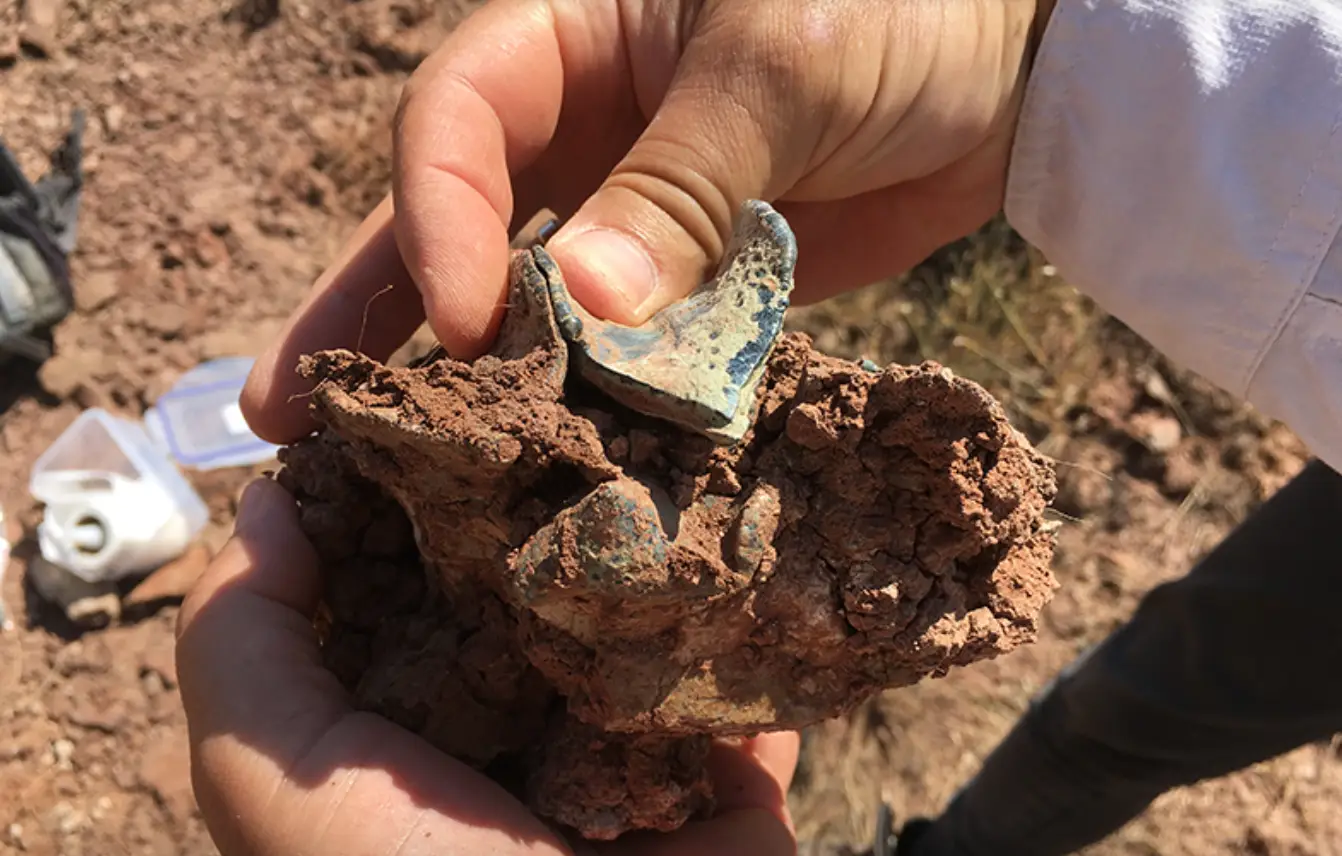
    Upper molar of a Brontothere mammal of Asian origin (CNRS)
    Upper molar of a Brontothere mammal of Asian origin (CNRS)

    With this in mind, the team of researchers set out to understand why this might be, and to understand more about the history of the region.

    In doing so, they reviewed earlier paleontological discoveries in light of current geological data.

    They found that 'the region corresponding to the present-day Balkans and Anatolia was home to a terrestrial fauna that was homogeneous, but distinct from those of Europe and eastern Asia'.

    This means that the 'region must therefore have made up a single land mass, separated from the neighbouring continent' to have had such different fauna.

    This led to the researchers concluding that around 50 million years ago, there was a 'low-lying continent separating Europe from Asia', as per CNRS.
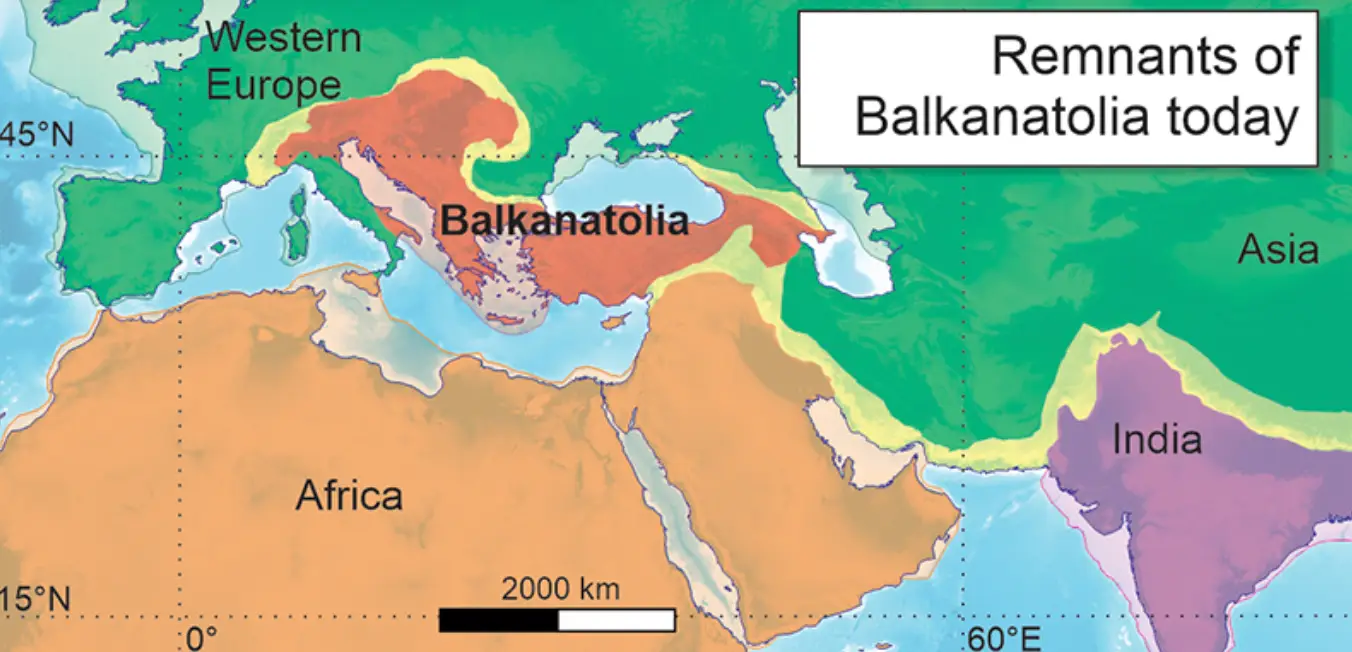
    Balkanatolia (CNRS)
    Balkanatolia (CNRS)

    During this time, it is said that the fauna — mammals — that inhabited the region were very different from those of Europe and Asia.

    Around 40 million years ago, the continent was colonised by mammals from Asia following 'geographical changes that have yet to be fully understood'.

    The researchers claim that a 'major glaciation' took place some six million years later, which lowered sea levels.  

    This connected Balkanatolia to Western Europe, paving the way for the Grande Coupure.

    If you have a story you want to tell, send it to UNILAD via [email protected]  

    Choose your content:

    7 hours ago
    8 hours ago
    9 hours ago
    • Getty Stock
      7 hours ago

      What your answer to 'the Red or blue Button' dilemma means, according to science

      The red button or blue button debate has split social media in half, but a game theory expert has broken down what it actually means

      News
    • TLC
      8 hours ago

      The horrific crimes 90 Day Fiancé Geoffrey Paschel went to prison for explained

      Geoffrey Paschel appeared on our TV screens not long before being imprisoned for 18 years over a brutal attack on his ex

      News
    • Getty Stock
      9 hours ago

      The simple way swingers spot each other on a ‘spicy’ cruise explained

      There's a simple way to tell if passengers are up for 'play'...

      News
    • Getty Stock Image
      9 hours ago

      The six stages of a relationship explained and what to expect

      Knowing if your relationship is on the right track isn't easy, but there are six stages that all couples can expect to go through

      News
    • DoorDash driver who allegedly filmed naked customer and posted viral TikTok has been indicted
    • 23-year-old influencer accused of ‘leading drug trafficking ring’
    • 'Sextortion' explained after 15-year-old boy tragically dies just 3 hours after being targeted
    • People left 'sickened' after learning about disturbing marriage between 22-year-old man and his 9-year-old wife