
unilad homepage
  • News
    • UK News
    • US News
    • World News
    • Crime
    • Health
    • Money
    • Sport
    • Travel
  • Film and TV
    • Netflix
  • Music
  • Tech
  • Features
  • Celebrity
  • Politics
  • Advertise
  • Terms
  • Privacy & Cookies
  • LADbible Group
  • LADbible
  • SPORTbible
  • GAMINGbible
  • Tyla
  • UNILAD Tech
  • FOODbible
  • License Our Content
  • About Us & Contact
  • Jobs
  • Latest
  • Archive
  • Topics A-Z
  • Authors
Facebook
Instagram
X
Threads
TikTok
YouTube
Submit Your Content
Where you're most likely to encounter lion's mane jellyfish after officials issue warning about toxic animal

Home> News> Animals

Published 17:51 30 Jun 2025 GMT+1

Where you're most likely to encounter lion's mane jellyfish after officials issue warning about toxic animal

The sting can be particularly painful

Gerrard Kaonga

Gerrard Kaonga

google discoverFollow us on Google Discover
Featured Image Credit: Facebook/City of South Portland

Topics: US News, Animals

Gerrard Kaonga
Gerrard Kaonga

Gerrard is a Journalist at UNILAD and has dived headfirst into covering everything from breaking global stories to trending entertainment news. He has a bachelors in English Literature from Brunel University and has written across a number of different national and international publications. Most notably the Financial Times, Daily Express, Evening Standard and Newsweek.

Advert

Advert

Advert

The ocean is full of all kinds of creepy crawlies and magnificent animals, but experts have warned against getting too close to lion's mane jellyfish and for good reason.

That’s because this jellyfish is big - like, really big - and that means it comes with a whole lot of tentacles, and that means plenty of opportunities to sting you.

Their sting has been known to send people to hospital, and in rare cases it can be fatal. The tentacles can continue to sting even when they're detached from the jellyfish's body.

A localised sting can cause severe pain to spread throughout the body within 20 minutes, and in some cases can even lead to back pain, nausea, abdominal cramps and sweating.

Advert

Understandably, since the jellyfish look ‘friendly’ and dance in the water you could be forgiven for wanting to touch them, despite that being a generally bad idea.
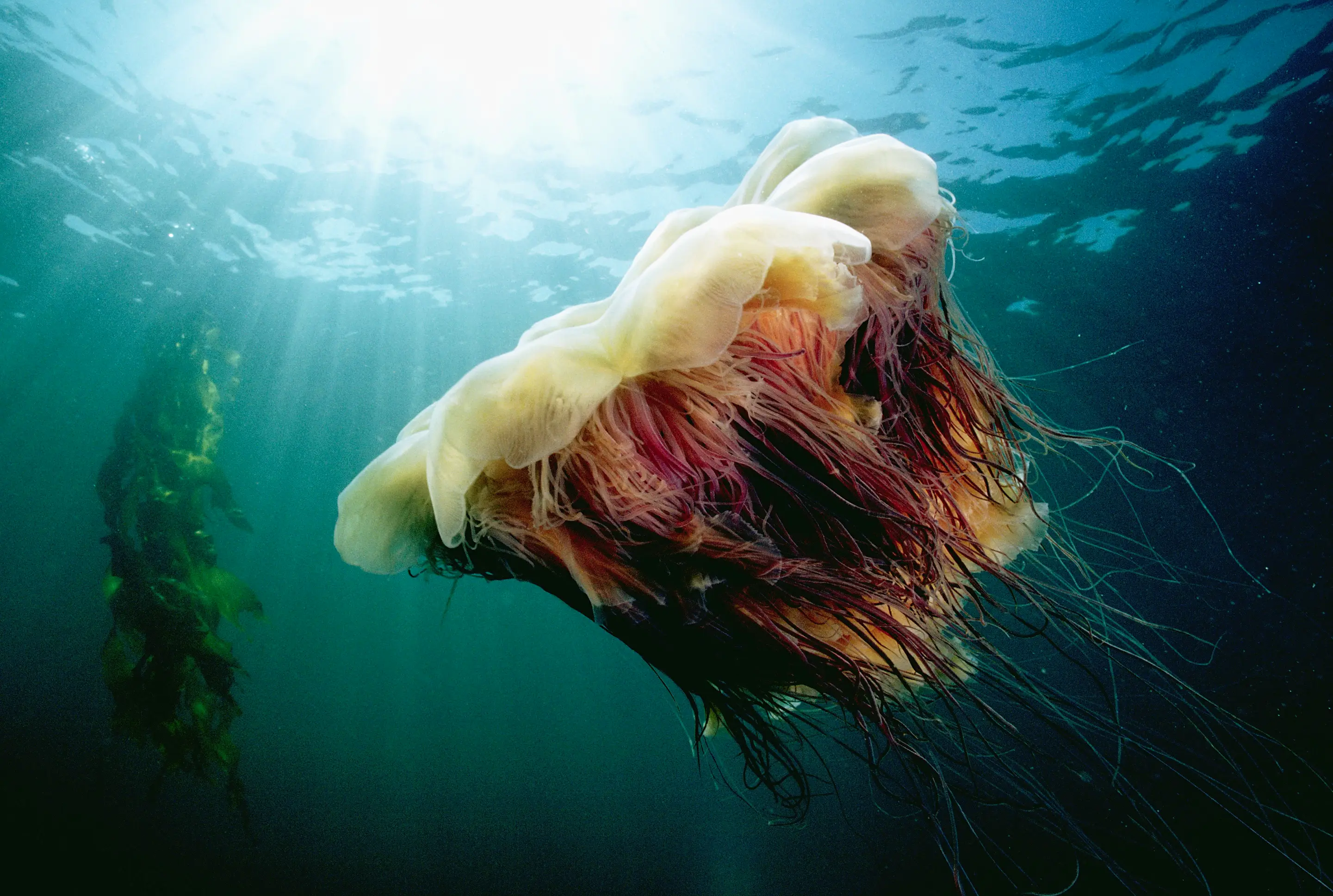
Lion mane jellyfish can grow quite big in size (Getty Stock Image)

How big is the lion's mane jellyfish?

Well, the lion mane jellyfish is one of the largest species of jellyfish in the world.

Their tentacles can reach lengths of up to 120ft, that is about four-fifths the size of the Statue of Liberty.

Blue whales are pretty massive, right. Well, while the jellyfish is far from the same mass, they can be 20 feet longer because of those huge tentacles.

But where can the lion's mane jellyfish be found?

Well, the jellyfish is mostly confined to cold waters of the Arctic, northern Atlantic and northern Pacific oceans.

In North America, they are most commonly found on the north eastern coasts of the US between Washington and Alaska, but can also be found on the south western coast of Canada.

They are also commonly found on the east coast of England and Scotland and are also common in the Irish Sea.
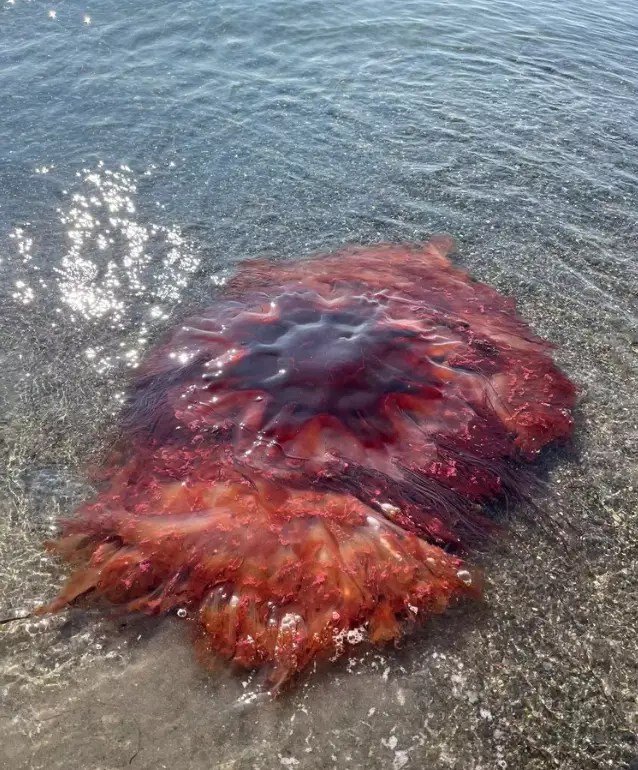
Warning in the US for the lion's mane jellyfish

A huge 5ft wide lion's mane jellyfish has been spotted in Maine (Facebook/City of South Portland)

Most recently, officials at the City of South Portland, in Maine, have attempted to raise awareness about the fascinating creature as there has been a slight uptick in appearance of the animal in recent years.

Writing on Facebook, they shared a picture of a rather big jellyfish and gave instructions on what to do if discovered.

The post read: "Spotted this weekend at Willard Beach: A nearly 5-foot wide lion's mane jellyfish!

"If you see one, here's what to do: Don't touch it! They sting; Observe it. They're so interesting to watch, and pretty too.

"If you see one washed up at Willard Beach, notify a lifeguard and they will help it back into the water with a shovel."

The Wildlife Trust says the species can 'give a very nasty sting, so consult a doctor if swelling or [hives] are severe'.

Choose your content:

13 mins ago
5 hours ago
6 hours ago
7 hours ago
  • MS Now
    13 mins ago

    Pam Bondi's portrait spotted in Justice Department trash one day after Trump firing

    The President announced Bondi was being let go from her role on April 2.

    News
  • Dave Benett/Getty Images for dunhill
    5 hours ago

    Brian Cox slams Hollywood's biggest names as 'stupid' in brutal rant

    The Succession actor ranted about people he's worked with in the past, as well as big directors

    Celebrity
  • CBS News
    6 hours ago

    Disturbing joke woman made after she fatally poisoned boyfriend's energy drink

    Leroy Fowler died two days after consuming the poisoned drink

    News
  • Getty Stock Images
    7 hours ago

    Scientists discover the male 'G-spot' and it's not where they thought it was

    Scientists call the male G-spot one of the most 'persistent blind spots in sexual medicine and urology'

    News
  • Officials issue warning as huge toxic jellyfish washes up at tourist hotspot
  • US officials issue 'warning of major threat' after mysterious drones fly over nuclear command center
  • 'Attack squirrel' sends multiple people to the ER as officials issue urgent warning
  • Map shows all the US states where you're allegedly most likely to be cheated on