unilad homepage
unilad homepage
    • News
      • UK News
      • US News
      • World News
      • Crime
      • Health
      • Money
      • Sport
      • Travel
    • Music
    • Technology
    • Film and TV
      • News
      • DC Comics
      • Disney
      • Marvel
      • Netflix
    • Celebrity
    • Politics
    • Advertise
    • Terms
    • Privacy & Cookies
    • LADbible Group
    • LADbible
    • SPORTbible
    • GAMINGbible
    • Tyla
    • UNILAD Tech
    • FOODbible
    • License Our Content
    • About Us & Contact
    • Jobs
    • Latest
    • Archive
    • Topics A-Z
    • Authors
    Facebook
    Instagram
    X
    Threads
    TikTok
    YouTube
    Submit Your Content
    Harvard scientist accused of taking the crucial 'proof' that aliens exist without permission

    Home> News

    Updated 13:50 11 Jul 2023 GMT+1Published 20:25 10 Jul 2023 GMT+1

    Harvard scientist accused of taking the crucial 'proof' that aliens exist without permission

    The professor and his team retrieved dozens of fragments from a meteor that's believed to come from beyond our solar system

    Dominic Smithers

    Dominic Smithers

    google discoverFollow us on Google Discover
    Featured Image Credit: Bryan Bedder/Getty Images for Breakthrough Prize Foundation/Avi Loeb

    Topics: US News, Science, Technology

    Dominic Smithers
    Dominic Smithers

    Dominic Smithers is the News/Agenda Desk Lead, covering the latest trends and breaking stories. After graduating from the University of Leeds with a degree in French and History, he went on to write for the Manchester Evening News, the Accrington Observer and the Macclesfield Express. So as you can imagine, he’s spent many a night wondering just how useful that second language has been. But c'est la vie.

    X

    @SmithersDom

    Advert

    Advert

    Advert

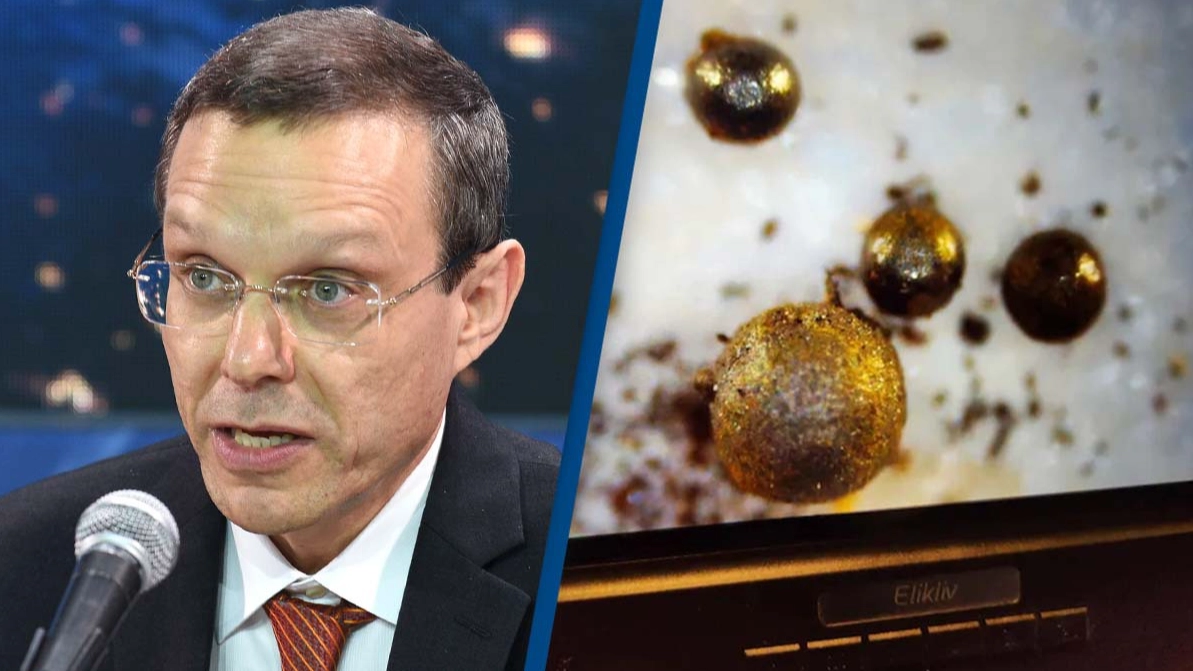
    A Harvard professor has been accused of taking crucial 'proof' of alien life without permission by Papua New Guinea.

    Professor Avi Loeb claimed last month that his team had uncovered pieces of the IM1 meteor that plunged to the Earth in January 2014.

    The fragments had found themselves on the sea bed off the coast of Manus Island, over 200 miles from Papua New Guinea.

    The IM1 is thought to have come from outside our solar system, and following the find, prof Loeb claimed that the pieces of metal could very well be technological in origin.

    Advert

    Loeb and his team managed to pull 50 tiny fragments out from the depths of the water, with the Harvard scientist saying it's possible that they originated in 'a natural environment different from the solar system, or an extraterrestrial technological civilization'.
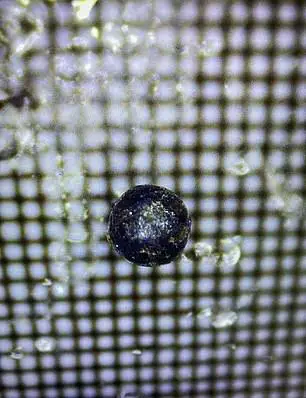
    One of the fragments of the meteor.
    Avi Loeb / Medium

    However, George Penua Polon, deputy administrator of Manus Province, has now come out and demanded answers as to why and how the fragments were removed.

    "We've been cheated," he told the Sunday Times. "They came here, no one knew about it and now they've gone. What have they found? Does it have value? Do we have rights over it?

    "If it's scientific research, how are our scientific institutions going to benefit?"

    Rob McCallum, an experienced ocean explorer, claimed that Loeb's team had applied for a marine science research permit. However, he said that this doesn't cover objects from space.

    "This is a unique project," he said. "It aims to locate, retrieve and study material that literally fell from the sky.

    "Current permitting procedures focus on the extraction of existing biological or geological material, which this is not.
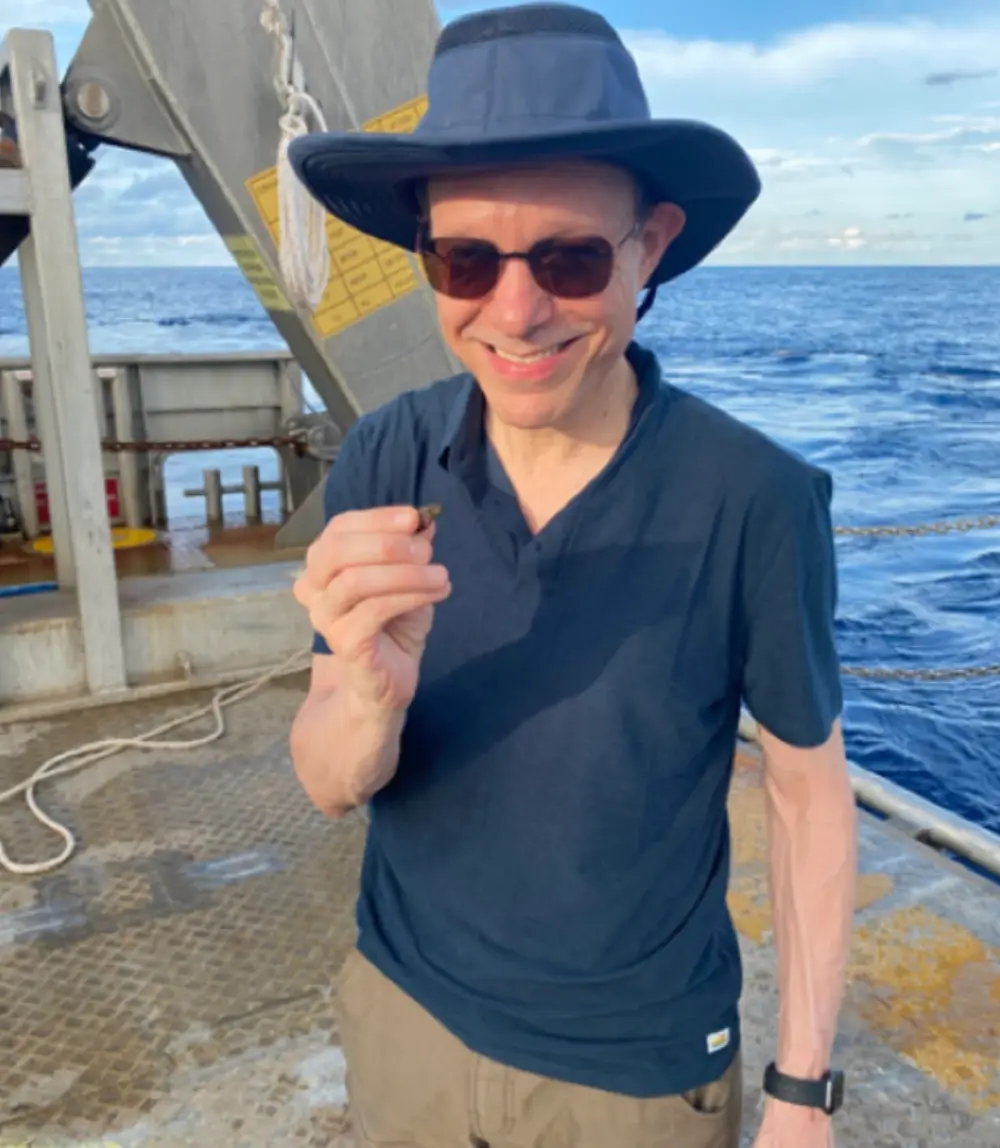
    Questions have been raised over whether Avi Loeb and his team had the right to take the fragments.
    Avi Loeb/Medium.com

    "This research recovered grains of sand that are from outside of the area/PNG/Earth and have no known economic or commercial value."

    A senior official from the immigration department claimed that there may be a legal question to answer for prof Loeb and his tea with regards to how they retrieved the IM1 fragment.

    They told the outlet: "It may be illegal, hence, those scientists can be charged criminally."

    Speaking to UNILAD, prof Loeb said: "We have been engaged with PNG for eight months and have an agreement with the University of Technology (PNG) to study and share the results of this unique astrophysical project.

    "We look forward to continuing to work with the relevant PNG authorities as they may so determine."

    It's not the first time that Professor Loeb has argued that the Earth has been visited by extraterrestrial lifeforms.

    In 2017 a long, cigar-shaped object passed through the solar-system, called Oumuamua. Prof Loeb asserted that the enormous object was in fact of interstellar origin, and possibly even the product of extra-terrestrial life.

    Choose your content:

    28 mins ago
    an hour ago
    21 hours ago
    22 hours ago
    • NBC
      28 mins ago

      Olivia Rodrigo trolls Jake Paul with savage dig during SNL opening monologue

      Rodrigo poked fun at her former cast mate during her appearance on Saturday Night Live

      Film & TV
    • MSC Cruises/ChatGPT
      an hour ago

      MSC cruises' new ship is an outdoor theme park in the middle of the ocean with Europe’s first over-water swing

      MSC says there will also be the longest dry slide at sea

      News
    • Getty Stock
      21 hours ago

      Body removal technician shares the sight that 'breaks their heart every time' while working with the dead

      The body removal technician works in Toronto

      News
    • Michael M. Santiago/Getty Images
      22 hours ago

      Astronauts who spent 10 days in space reveal 'weird' experience as they approached dark side of the Moon

      The Artemis II astronauts have spoken about what it was like to visit the dark side of the Moon for the first time ever

      News
    • Harvard scientist claims remnants of 'alien spacecraft found at the bottom of the Pacific Ocean'
    • The Little Known Scientist Who Saved Billions But Killed Millions
    • Concerns as ‘mysterious’ brain disorder striking hundreds of young people in Canada