unilad homepage
unilad homepage
  • News
    • UK News
    • US News
    • World News
    • Crime
    • Health
    • Money
    • Sport
    • Travel
  • Music
  • Technology
  • Film and TV
    • News
    • DC Comics
    • Disney
    • Marvel
    • Netflix
  • Celebrity
  • Politics
  • Advertise
  • Terms
  • Privacy & Cookies
  • LADbible Group
  • LADbible
  • SPORTbible
  • GAMINGbible
  • Tyla
  • UNILAD Tech
  • FOODbible
  • License Our Content
  • About Us & Contact
  • Jobs
  • Latest
  • Archive
  • Topics A-Z
  • Authors
Facebook
Instagram
X
Threads
TikTok
YouTube
Submit Your Content
Scientists discover 'kill switch' that triggers death of cancer cell in breakthrough
Home>News>Health
Published 16:02 23 Nov 2023 GMT

Scientists discover 'kill switch' that triggers death of cancer cell in breakthrough

Scientists have heralded their latest study as a breakthrough in how we can treat cancer patients.

Gerrard Kaonga

Gerrard Kaonga

google discoverFollow us on Google Discover
Featured Image Credit: Getty Stock Image

Topics: News, Science, Cancer

Gerrard Kaonga
Gerrard Kaonga

Gerrard is a Journalist at UNILAD and has dived headfirst into covering everything from breaking global stories to trending entertainment news. He has a bachelors in English Literature from Brunel University and has written across a number of different national and international publications. Most notably the Financial Times, Daily Express, Evening Standard and Newsweek.

Advert

Advert

Advert

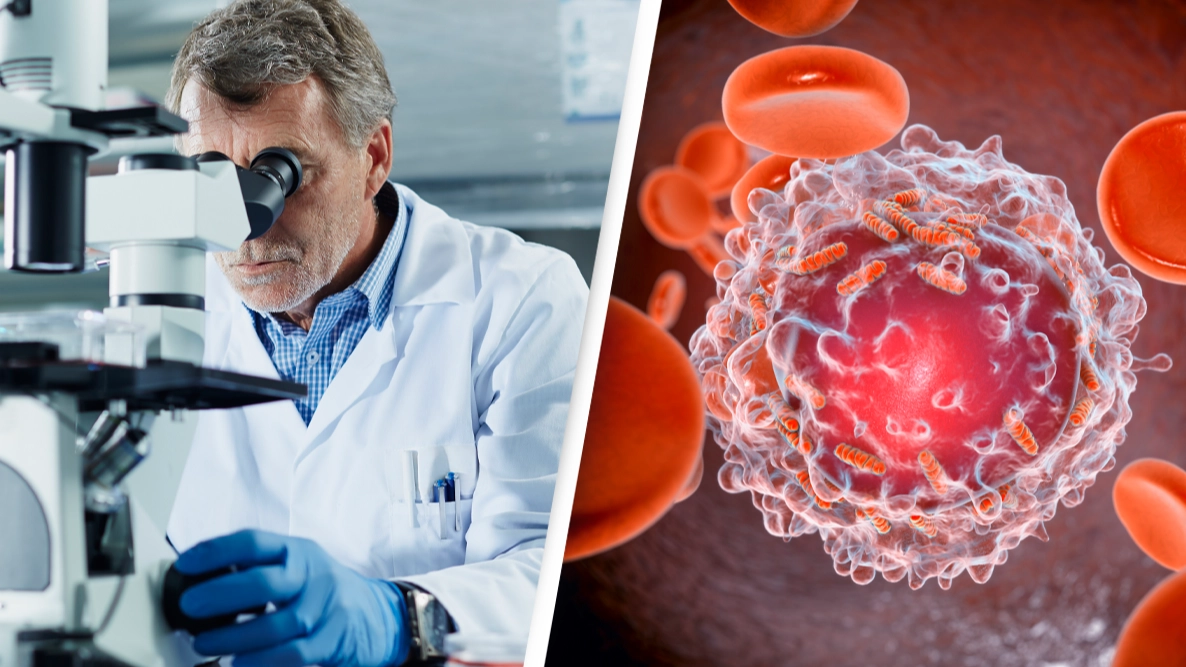
A research team in California have had a breakthrough in possible cancer treatments as they discover a way to cause cell death.

Scientists from the University of California, Davis (UCD) have found a way to destroy cells by using an essential ‘timer bomb’ on cells that line a tumor's associated blood vessels.

Basically, these vessels control access to the tumor tissue and until they are open, cells hoping to fight the cancer can’t get in.

Advert

With the timer bomb strategy, these doors are detonated as the cells 'death' receptor, called FAS or CD95, is activated.

Their findings were published Oct. 14 in the Nature journal Cell Death & Differentiation, and the scientists involved have heralded it as an important step forward.

“Previous efforts to target this receptor have been unsuccessful. But now that we’ve identified this epitope, there could be a therapeutic path forward to target Fas in tumors,” Tushir-Singh, immunologist and senior author of the study, said.

The antibody that binds to this epitope (a specific part of the death receptor) essentially represents the kill switch for the cell.

Once this immune checkpoint has been blown open, other cancer therapies have a greater chance of being effective and are now able to target the cancer cells.
Scientists involved have heralded it as an important step forward.
Getty Stock Image

These targets that are now accessible are often clumped together and hidden within the tumor.

"These are often called cold tumors because immune cells simply cannot penetrate the microenvironments to provide a therapeutic effect," Tushir-Singh added.

"It doesn't matter how well we engineer the immune receptor activating antibodies and T cells if they cannot get close to the tumor cells. Hence, we need to create spaces so T cells can infiltrate."

UCD have said despite this breakthrough, cancer treatment will likely continue to be managed with surgery, chemotherapy and radiotherapy.

UCD have said despite this breakthrough, cancer treatment will likely continue to be managed with surgery, chemotherapy and radiotherapy.
Getty Stock Image

“These treatments may work initially, but in some cases, therapy-resistant cancers often return. Immunotherapies, such as CAR T-cell-based immune therapies and immune checkpoint receptor molecule activating antibodies, have shown tremendous promise to break this cycle,” the University said in a statement.

Currently they only help an extremely small number of patients. This is especially true of people suffering with solid tumors such as ovarian, triple-negative breast cancer, lung and pancreas.

“Developing drugs that boost death receptor activity could provide an important weapon against tumors," the university added.

"However, though drug companies have had some success targeting the Death Receptor-5, no Fas agonists have made it into clinical trials. These findings could potentially change that."

Choose your content:

2 hours ago
3 hours ago
15 hours ago
  • Getty stock image
    2 hours ago

    WHO declare global health emergency over new Ebola strain that has no cure and high fatality rate

    The WHO has declared the highest level of global health emergency as the virus spreads to a second country

    News
  • Getty Stock
    2 hours ago

    Ex-CIA researcher makes bombshell claim 4 types of aliens have been pulled from UFO crashes

    The American government has identified four distinct types of alien life, a former CIA-backed advanced weapons researcher has claimed

    News
  • Rosalind O'Connor/NBC via Getty Images
    3 hours ago

    SNL viewers stunned after show opens season finale with bizarre Epstein sketch

    Will Ferrell left SNL viewers with their jaws on the floor when his opening sketch for the season 51 finale mocked Trump and Epstein

    Film & TV
  • YouTube/True Crime Conversations
    15 hours ago

    Crime scene cleaner reveals part of the job that 'haunts' her the most

    The former hairdresser also revealed the surprising way cleaning up crime scenes made her a better person

    News
  • Scientists discover worrying link between hantavirus and sperm that can increase risk
  • Scientists discover how dog contact improves survival in cancer patients in shocking new study
  • Doctor warns of four everyday habits that could be increasing your risk of cancer
  • Scientists discover two miracles by Jesus 'actually happened' in breakthrough revelation