unilad homepage
unilad homepage
  • News
    • UK News
    • US News
    • World News
    • Crime
    • Health
    • Money
    • Sport
    • Travel
  • Music
  • Technology
  • Film and TV
    • News
    • DC Comics
    • Disney
    • Marvel
    • Netflix
  • Celebrity
  • Politics
  • Advertise
  • Terms
  • Privacy & Cookies
  • LADbible Group
  • LADbible
  • SPORTbible
  • GAMINGbible
  • Tyla
  • UNILAD Tech
  • FOODbible
  • License Our Content
  • About Us & Contact
  • Jobs
  • Latest
  • Archive
  • Topics A-Z
  • Authors
Facebook
Instagram
X
Threads
TikTok
YouTube
Submit Your Content
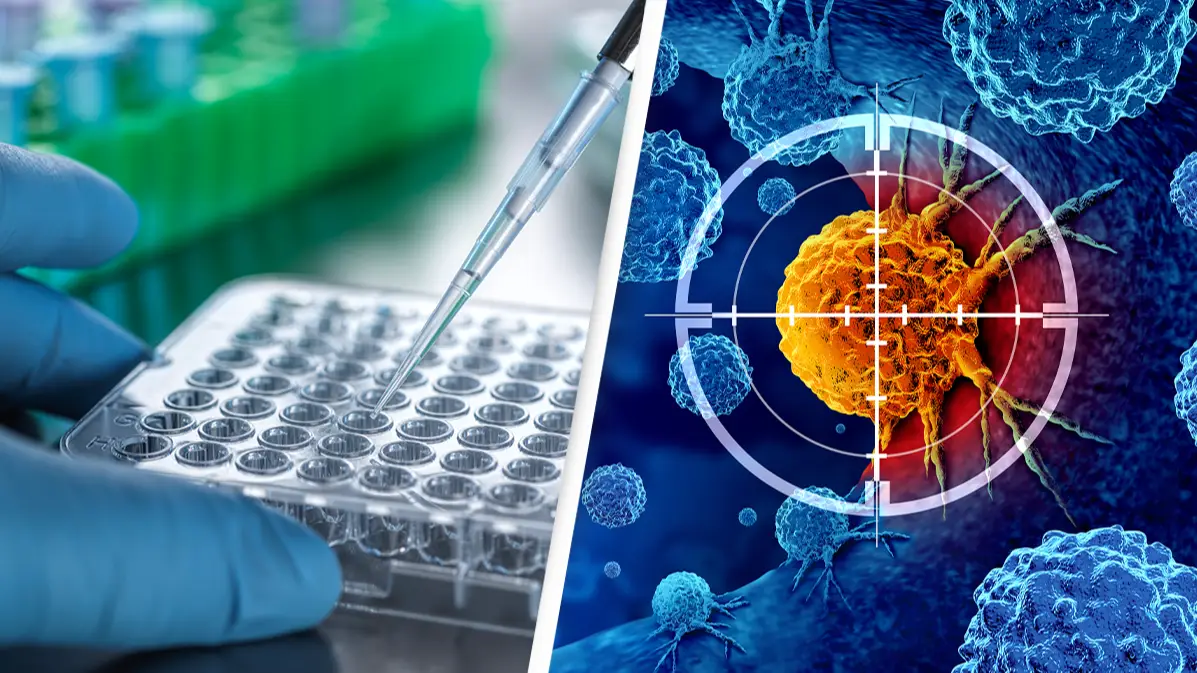
Study shows new cancer vaccine to treat melanoma has 96% survival rate
Home>News>Health
Published 17:31 4 Jun 2024 GMT+1

Study shows new cancer vaccine to treat melanoma has 96% survival rate

The treatment was called one of the 'single biggest developments' in the study of cancer

Kit Roberts

Kit Roberts

google discoverFollow us on Google Discover
Featured Image Credit: Getty Stock Image

Topics: Cancer, Health, News, World News, Science, Technology

Kit Roberts
Kit Roberts

Kit joined UNILAD in 2023 as a community journalist. They have previously worked for StokeonTrentLive, the Daily Mirror, and the Daily Star.

Advert

Advert

Advert

A new vaccine treatment for skin cancer melanoma has shown extremely promising results in a new study.

The overall survival rate with the vaccine was indicated as being 96 percent according to the research.

The vaccine was developed by Moderna and Merck and Co, and was announced alongside the therapy Keytruda.

Advert

It showed both improved survival chances in patients, as well as a durable efficacy.

The trial was with 157 patients over the course of a two-and-half-year period.

It found that melanoma patients who had received the vaccination combination had an overall survival rate of 96 percent.

This was compared to 90.2 percent for people who only took Keytruda.

When it came to recurrence, when someone's cancer came back, around 75 percent of the patients who had the vaccine did not have a recurrence.

Meanwhile, 55.6 percent of the patients who only had Keytruda did not have a recurrence.
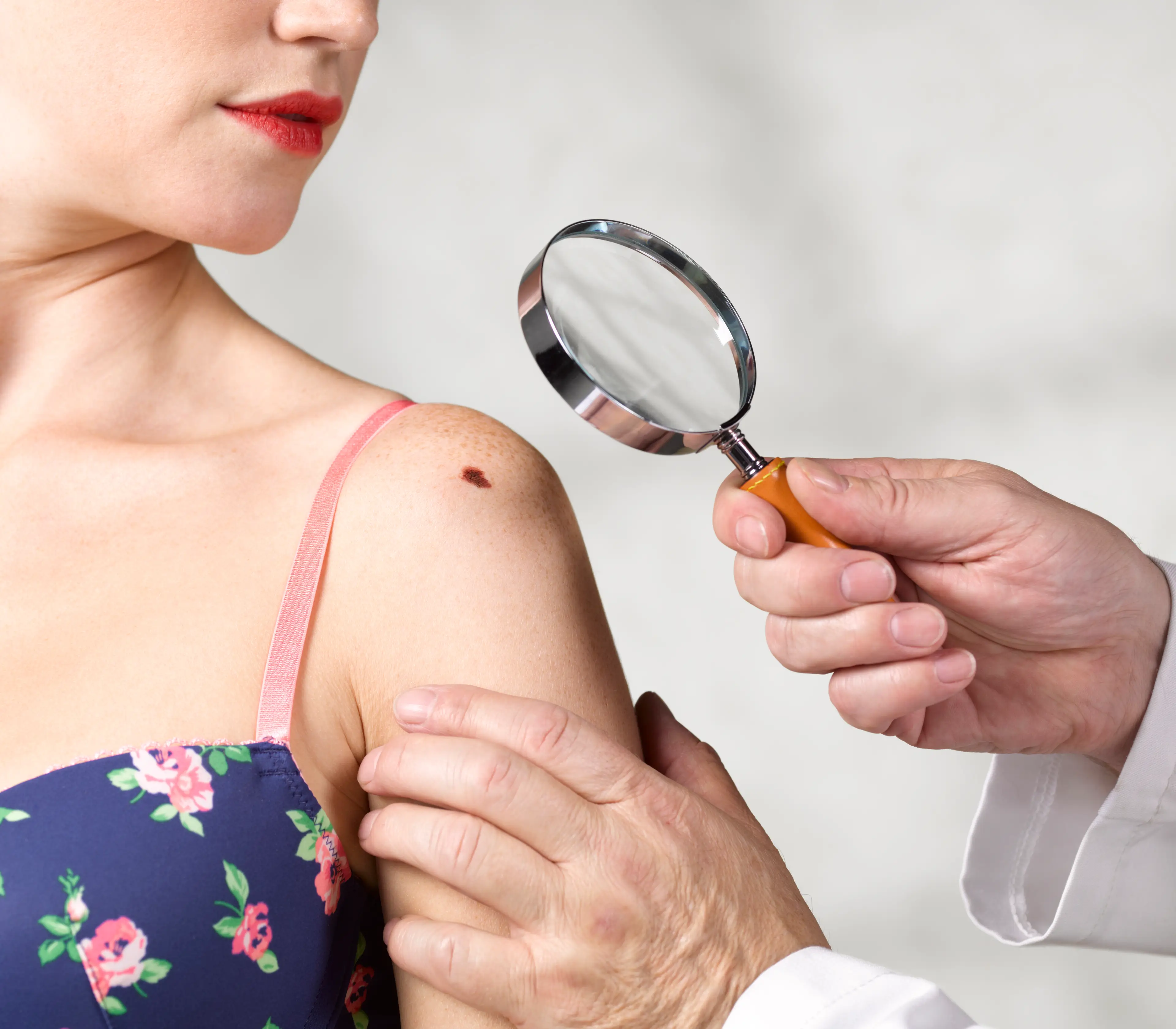
The treatment has been tested against melanoma. (Peter Dazeley / Getty)

A report in December went on to find that there was a risk reduction of 49 percent for recurrence or death among patients who were on the combination compared to just Keytruda.

This had a median follow up of just under three years.

While it's currently only being tested for melanoma, it could have applications in other forms of cancer.

Professor Georgina Long, co-director of the Melanoma Institute Australia, told Sky News: "This has the power to transform cancer treatments across the world.

"The trial results are transformative for not only the treatment of melanoma, but they set the stage and benchmark for other cancers.

"This phase III trial is the first of its kind and is one of the single biggest developments, not only in melanoma, but the whole cancer field.
The treatment has been shown to have a big impact on survival rates. (Image source RF/Andrew Brookes)

"Our next step is to refine who gets what immunotherapy before surgery, as some patients will need combination and others will not."

Merck and Moderna have been collaborating since 2016, and are also carrying out a study examining the late stage of the combination of Keytruda and the new vaccine.

But how does a 'vaccine for cancer work?

A regular vaccine infects a patient with a weakened version of a virus to build immunity, but cancer is not a virus, it's when cells mutate and multiply out of control.

So this can't be like those sorts of vaccine, and is called mRNA vaccine technology.

To treat cancer, the vaccine carries instructions for someone's cells to make a specific protein.

This is different for different people, and can be used to prevent the kinds of mutations which cause cancer.

Choose your content:

an hour ago
2 hours ago
  • Getty Stock
    an hour ago

    Quick thumb test could indicate if you're at risk of a serious heart problem, experts say

    The condition often has no noticeable symptoms, but can become very serious very quickly

    News
  • Jack Gorman/Getty Images
    an hour ago

    How long it takes to clear a 90,000-seat stadium in an emergency as FIFA details banned items

    A security expert has highlighted the biggest 'threat' to those attending the World Cup

    News
  • Zack D. Films via YouTube
    2 hours ago

    Simulation shows how Ozempic helps with weight loss as the drug continues to surge in popularity

    The video also showcased the grim reality of potential side effects

    News
  • Anna Moneymaker/Getty Images
    2 hours ago

    JD and Usha Vance explain how Erika Kirk impacted their decision to have a fourth child

    Erika 'prayed to God' that she was pregnant following Charlie Kirk's brutal death

    News
  • Scientists discover how dog contact improves survival in cancer patients in shocking new study
  • Scientists successfully achieve 'permanent disappearance of pancreatic cancer' in new study for cure
  • Groundbreaking study finds these two simple supplements could fight brain cancer
  • Study shows two major overlooked signs of brain cancer that can be easily mistaken for common conditions