unilad homepage
unilad homepage
    • News
      • UK News
      • US News
      • World News
      • Crime
      • Health
      • Money
      • Sport
      • Travel
    • Music
    • Technology
    • Film and TV
      • News
      • DC Comics
      • Disney
      • Marvel
      • Netflix
    • Celebrity
    • Politics
    • Advertise
    • Terms
    • Privacy & Cookies
    • LADbible Group
    • LADbible
    • SPORTbible
    • GAMINGbible
    • Tyla
    • UNILAD Tech
    • FOODbible
    • License Our Content
    • About Us & Contact
    • Jobs
    • Latest
    • Archive
    • Topics A-Z
    • Authors
    Facebook
    Instagram
    X
    Threads
    TikTok
    YouTube
    Submit Your Content
    Scientists reveal impact of one night without sleep that can cause serious health issues
    Home>News>Health
    Updated 19:49 7 May 2026 GMT+1Published 19:44 7 May 2026 GMT+1

    Scientists reveal impact of one night without sleep that can cause serious health issues

    Pulling an all-nighter may be a lot worse than we once thought

    Kiesha Dosanjh

    Kiesha Dosanjh

    google discoverFollow us on Google Discover
    Featured Image Credit: Getty Stock Images

    Topics: Health, Mental Health

    Kiesha Dosanjh
    Kiesha Dosanjh

    Advert

    Advert

    Advert

    We're all guilty of pulling all-nighters for deadlines, or parties, but scientists have now found that even one night without sleep can cause serious health issues.

    It's advised that adults in the U.S. should get between 7 to 9 hours of sleep a night for optimal health and cognitive function.

    Of course, with the way life goes, it's virtually impossible to get a good night's sleep every single night.

    However, citizens may want to skip the regular all-nighters, as scientists have discovered a long list of problems in the human brain that mirror those of Alzheimer's after just one night of no kip.

    Advert

    Plus - they won't actually help for those finals many will be panic studying for.

    The study was done by a team from the University of Ibadan in Nigeria who reviewed a large collection of medical studies over the last 25 years which focused on sleep deprivation, memory and brain function.

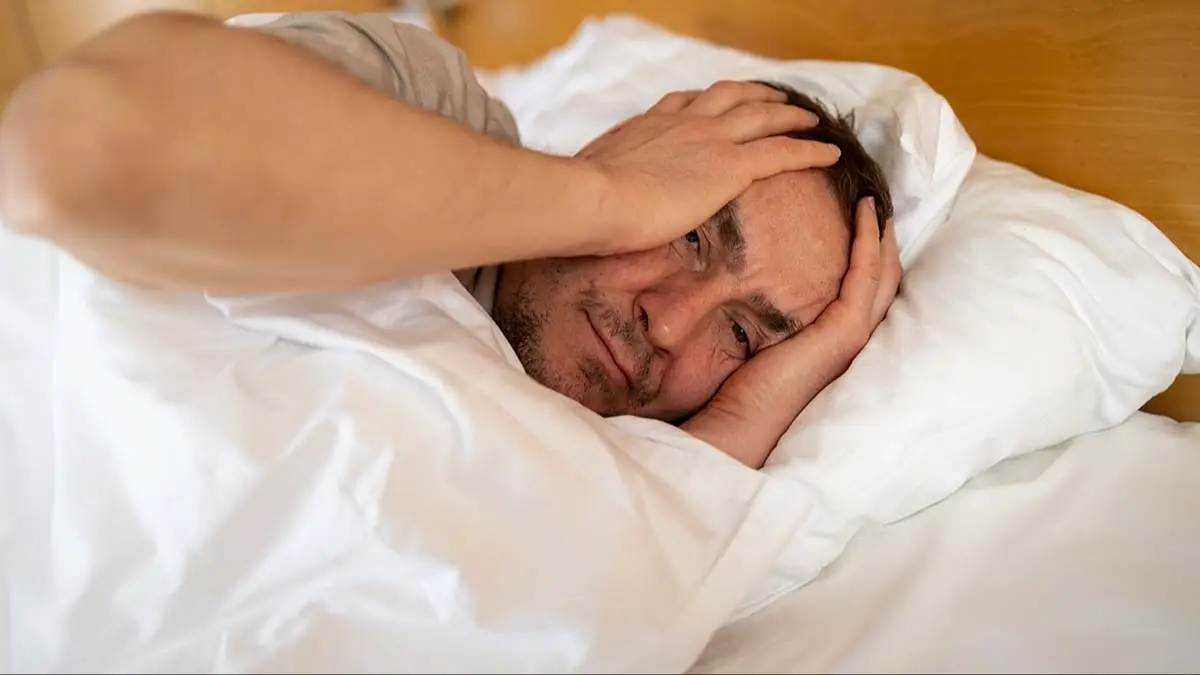
    Scientists have discovered negative impacts on going just one night without sleep (Getty Stock Image)
    Scientists have discovered negative impacts on going just one night without sleep (Getty Stock Image)

    In alarming findings, the team found that even one night without sleep can cause a number of pretty big problems within the brain including damage to memory function and weakened brain cell connection.

    They also found that even a short period of no sleep could affect your brains ability to create more cells, and invited more toxins to build up - which is never good.

    These mirrored the impact caused by progressive neurodegenerative condition, Alzheimer's disease, which is the most common cause of dementia in the U.S.

    Alzheimer's accounts for 60% to 80% of all cases of dementia in the country, the National Institute of Aging states.

    However, there's no need to panic, as scientists found that the issues caused by no sleep can be reversed by napping, and essentially, getting more sleep.

    If that wasn't enough reason to stop the all-nighters, the study found that they don't actually help. Instead of retaining information, they caused people to easily forget. Their decision making and mood were also negatively effected, which sounds like a disaster for anyone sitting their SATs.

    Scientists have found that even a single night of sleep can trigger brain damage similar to Alzheimer's disease (Getty Stock Image)
    Scientists have found that even a single night of sleep can trigger brain damage similar to Alzheimer's disease (Getty Stock Image)

    We now know the damage one night of no sleep could cause - but what about 264 hours?

    Well, back in 1963, 17-year-old Randy Gardner and his friends took it upon themselves to figure out what happens to the brain on no sleep, with Randy drawing the short straw to go without sleep for a whole week - eventually lasting 11 days.

    He was then taken to the hospital where doctor's observed his brain waves. Although at the time they said he was 'medically healthy' he admitted that he still felt the affects years later.

    In 1997, over 40 years later, he stopped being able to sleep. The exact reason was unclear.

    • Criminal psychologist claims asking one question can instantly reveal a narcissist
    • Experts reveal seven reasons you shouldn't sleep in your underwear or risk health issues
    • Shocking new study explains how one milkshake could cause serious harm to your health
    • Scientists reveal what happens to your body if you get less than 6 hours of sleep at night

    Choose your content:

    an hour ago
    2 hours ago
    3 hours ago
    • Al Drago/Bloomberg via Getty Images
      an hour ago

      Frontier Airlines flight with 231 people onboard kills pedestrian on runway during takeoff at popular airport

      The Frontier Airlines flight was bound for LA

      News
    • Aaron Schwartz/CNP/Bloomberg via Getty Images
      2 hours ago

      Trump sparks backlash after sharing 'selfish' Mother's Day post that has 'nothing to do' with mothers

      Mother's Day will be celebrated across the US this Sunday

      News
    • Getty Stock Photo
      2 hours ago

      The top 10 most popular US baby names for 2025 revealed

      To mark Mother's Day in the US, the Social Security Administration have revealed which names were the most popular last year

      News
    • SWNS
      3 hours ago

      Girl left unable to walk after doctors dismissed seizures as anxiety

      Rubie Boynton was walking in the park with friends when something triggered a rare genetic disorder

      News