
unilad homepage
unilad homepage
    • News
      • UK News
      • US News
      • World News
      • Crime
      • Health
      • Money
      • Sport
      • Travel
    • Music
    • Technology
    • Film and TV
      • News
      • DC Comics
      • Disney
      • Marvel
      • Netflix
    • Celebrity
    • Politics
    • Advertise
    • Terms
    • Privacy & Cookies
    • LADbible Group
    • LADbible
    • SPORTbible
    • GAMINGbible
    • Tyla
    • UNILAD Tech
    • FOODbible
    • License Our Content
    • About Us & Contact
    • Jobs
    • Latest
    • Archive
    • Topics A-Z
    • Authors
    Facebook
    Instagram
    X
    Threads
    TikTok
    YouTube
    Submit Your Content
    Scientists present new possible cause of Parkinson's disease and explain surge in diagnosis
    Home>News>Health
    Published 17:17 7 Mar 2026 GMT

    Scientists present new possible cause of Parkinson's disease and explain surge in diagnosis

    A new study has connected one thing in particular to an uptick in the condition

    Kit Roberts

    Kit Roberts

    google discoverFollow us on Google Discover
    Featured Image Credit: Dia Dipasupil/Getty Images

    Topics: News, US News, World News, Health

    Kit Roberts
    Kit Roberts

    Kit joined UNILAD in 2023 as a community journalist. They have previously worked for StokeonTrentLive, the Daily Mirror, and the Daily Star.

    Advert

    Advert

    Advert

    Scientists have found a potential cause of Parkinson's disease in a new study, and it means that practically all of us are at a heightened risk.

    Parkinsons is a health condition which affects movement, and is triggered when brain cells that make dopamine stop working properly.

    The condition often begins to manifest with tremors or stiffness, and progressively gets worse over time.

    There is no cure for the condition, but it can be managed and proper treatment can help to reduce symptoms.

    Advert

    Parkinsons has two types, one which is genetic, and another where the precise cause is not known, and may differ from person to person.

    But now scientists working in China have identified one possible factor which could put us in more danger of the condition.
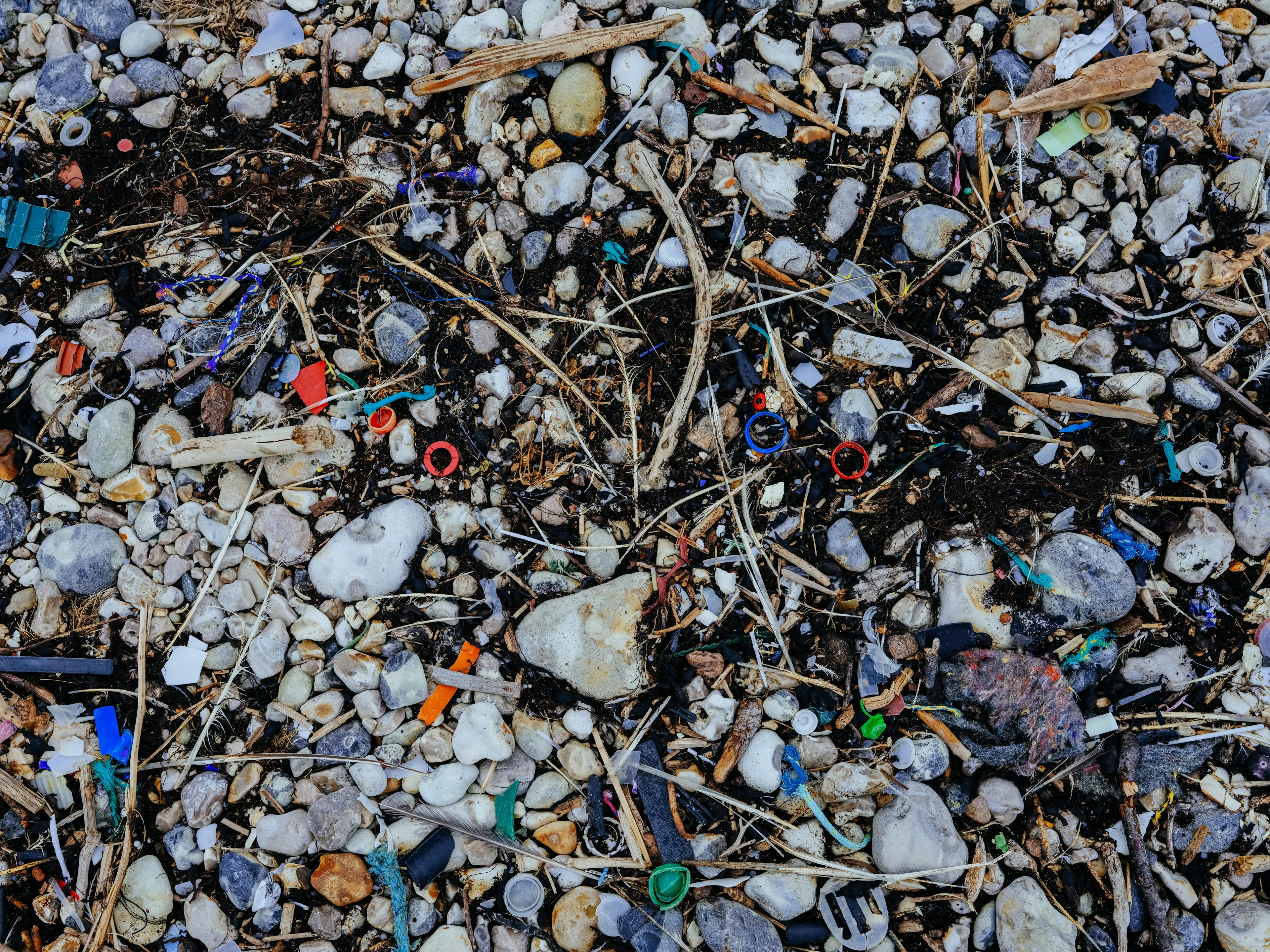
    Microplastics are becoming increasingly prevalent (Guido Mieth/Getty)
    Microplastics are becoming increasingly prevalent (Guido Mieth/Getty)

    Sadly, this is something which is becoming increasingly difficult to avoid.

    It's microplastics - those tiny fragments of plastic which have wormed their way to everywhere from the deep ocean to our very bodies.

    As plastic pollution becomes more prevalent, microplastics are being found in more and more places, including in the food we eat.

    The study said: "With the intensification of global plastic pollution, the potential threats posed by micro- and nanoplastics to human health have become a major concern.

    "Microplastics] enter the organism through ingestion, inhalation, and skin contact, subsequently accumulating in multiple organs - particularly the brain."

    This study was made up of a review of around 100 different studies.

    Microplastics enter our bodies through ingestion, and can then go on to accumulate in our brains.

    There, the review warned that this may lead to toxic proteins building up which are themselves connected to Parkinson's Disease.
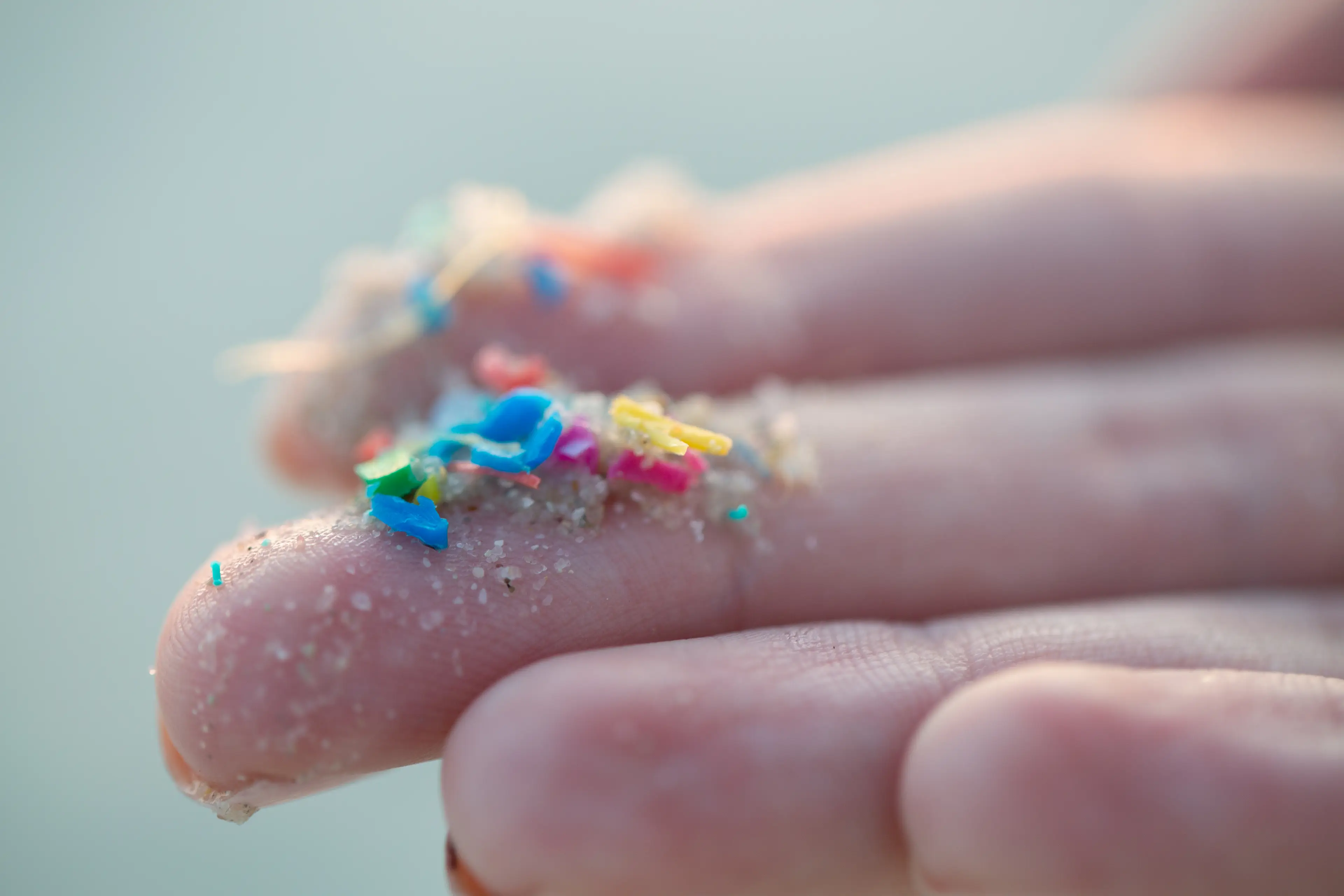
    Microplastics are ingested, and can lead to health problems (Alistair Berg/Getty)
    Microplastics are ingested, and can lead to health problems (Alistair Berg/Getty)

    The study has come amid a rise in cases of Parkinson's disease, which have more than doubled over the course of the last 25 years.

    Now, an estimated 8.9 million people live with Parkinson's, including actor Michael J Fox.

    Plastic pollution is now at such a problem that we simply cannot avoid ingesting it.

    Microplastics are formed when larger plastic items begin to break down in the environment, eventually reaching a microscopic size.

    Some researchers now estimate that in the US the average person will ingest approximately five grams of microplastics each week.

    This is about the equivalent of a spoon full of them, and comes to around 21 grams per month, and 125 grams over the course of six months.

    Microplastic is defined as being a fragment smaller than five millimeters, and a nanoplastic is smaller than a thousandth of a millimeter.


    • Scientists make new prediction 'Super El Niño’ could cause hottest summer ever with scorching temperatures
    • Experts discover new possible cause of colon cancer as rates in young people surge
    • Benjamin Netanyahu reveals cancer diagnosis he kept secret for years
    • Pro wrestler Tanea Brooks breaks down in tears revealing ALS diagnosis as she prays for 'peaceful' death

    Choose your content:

    15 mins ago
    an hour ago
    • Wise County Sheriff's Department
      15 mins ago

      Jury was in tears hearing final moments of Athena Strand, 7, before sentencing FedEx driver to death for her murder

      Tanner Horner kidnapped and murdered the young girl in 2022

      News
    • YouTube/GMA
      an hour ago

      Parents of baby boy 'born twice' explain 'triumph' after fearing for his life

      Expecting parents Greg and Keishera Joubert expected the worst when their unborn sun was diagnosed with 'CHAOS'

      News
    • ANGELA WEISS / AFP via Getty Images
      an hour ago

      Trump's granddaughter Kai responds to wild conspiracy that Barron Trump is a time traveler

      The theories are linked to an 1893 book penned by Ingersoll Lockwood

      News
    • Instagram/@mchooyah
      an hour ago

      Navy SEAL who killed Osama Bin Laden reveals one disturbing regret he has after 15 years

      He said the team were not motivated by fame, but by honoring memory of 9/11 victims

      News