unilad homepage
unilad homepage
    • News
      • UK News
      • US News
      • World News
      • Crime
      • Health
      • Money
      • Sport
      • Travel
    • Music
    • Technology
    • Film and TV
      • News
      • DC Comics
      • Disney
      • Marvel
      • Netflix
    • Celebrity
    • Politics
    • Advertise
    • Terms
    • Privacy & Cookies
    • LADbible Group
    • LADbible
    • SPORTbible
    • GAMINGbible
    • Tyla
    • UNILAD Tech
    • FOODbible
    • License Our Content
    • About Us & Contact
    • Jobs
    • Latest
    • Archive
    • Topics A-Z
    • Authors
    Facebook
    Instagram
    X
    Threads
    TikTok
    YouTube
    Submit Your Content
    Scientists find 'definitive evidence' of ancient coastline on Mars
    Home>News
    Published 16:37 31 Oct 2022 GMT

    Scientists find 'definitive evidence' of ancient coastline on Mars

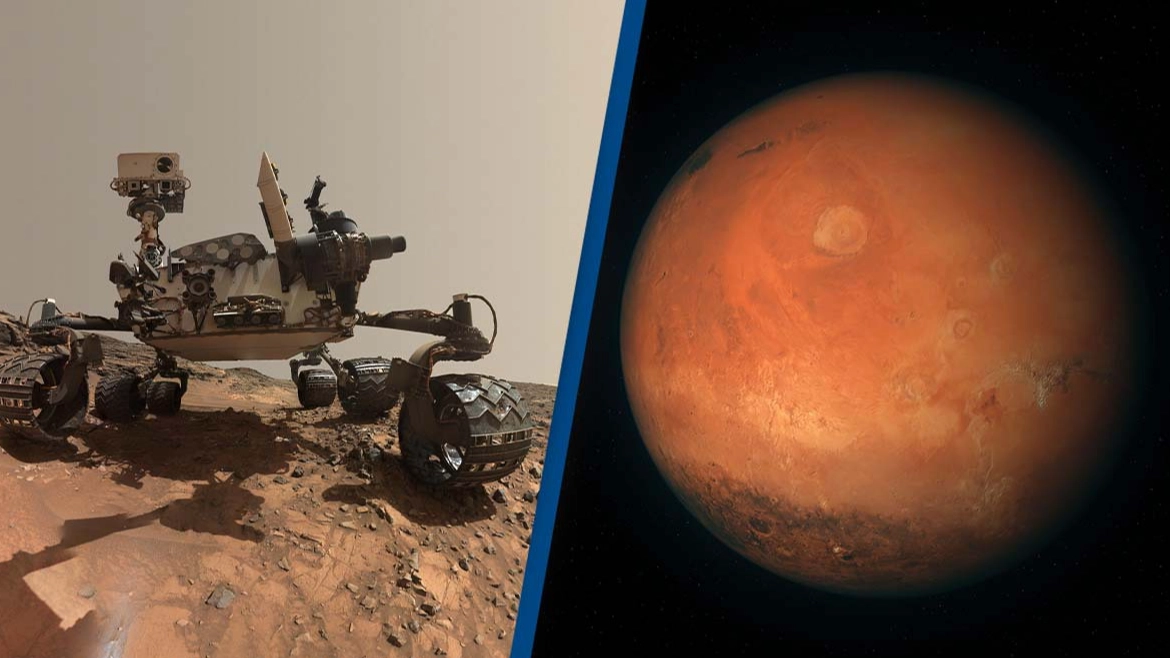
    Mars might have had a coastline and weathering conditions different from what in the past was thought to have been a freezing cold climate.

    Shola Lee

    Shola Lee

    google discoverFollow us on Google Discover
    Featured Image Credit: Geopix / Christophe Coat / Alamy Stock Photo

    Topics: Science, Technology, News, Space, Viral

    Shola Lee
    Shola Lee

    Shola Lee began her journalism career while studying for her undergraduate degree at Queen Mary, University of London and Columbia University in New York. She has written for the Columbia Spectator, QM Global Bloggers, CUB Magazine, UniDays, and Warner Brothers' Wizarding World Digital. Recently, Shola took part in the 2021 BAFTA Crew and BBC New Creatives programme before becoming a journalist at UNILAD, where she works on breaking news, trending stories, and features.

    Advert

    Advert

    Advert

    A team of researchers from Pennsylvania State University has found new evidence of ancient oceans on Mars.

    That's right, the red planet with a seemingly hostile, dust-filled atmosphere may have once been home to a coastline and honestly, how cool of a swim would that be?
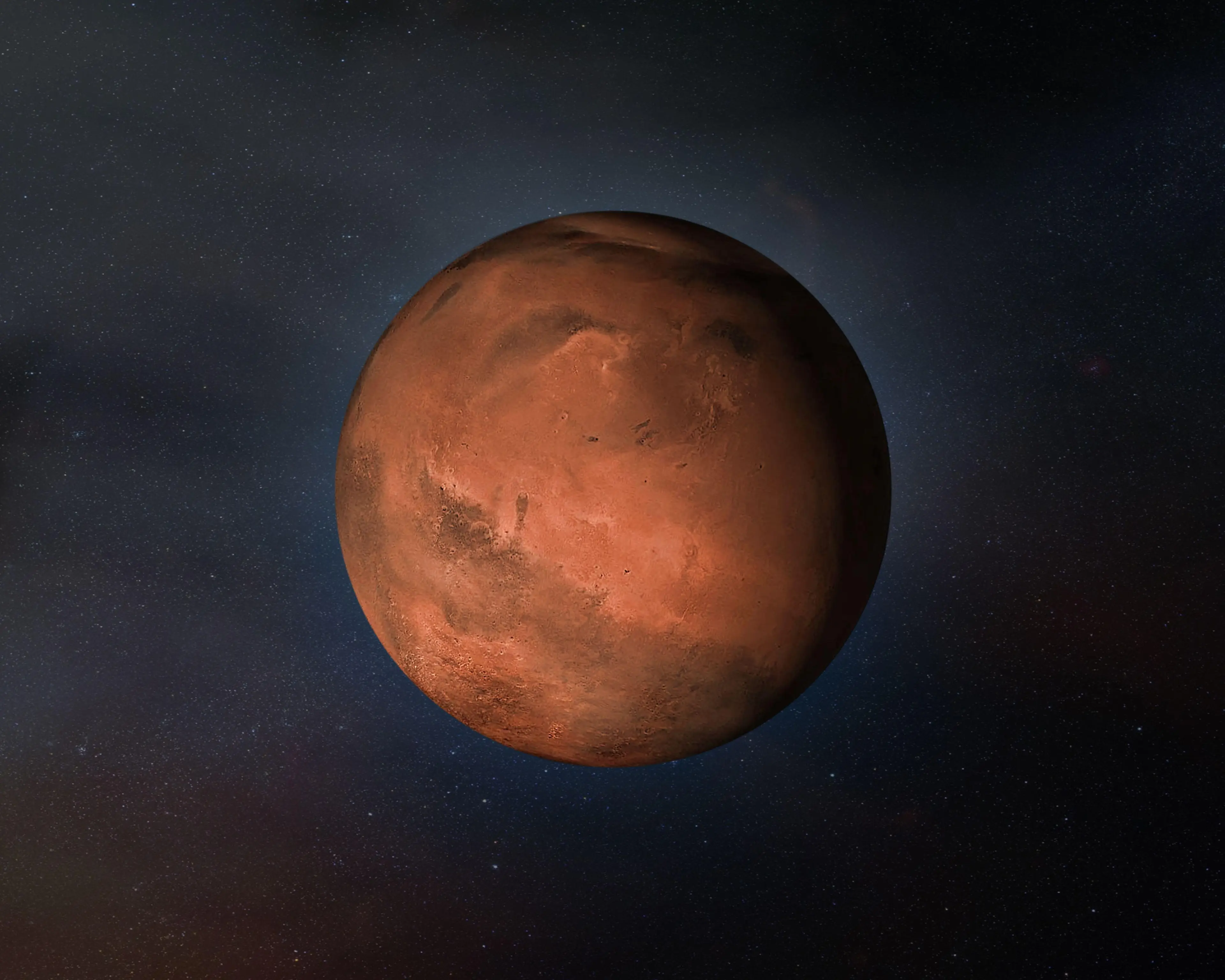
    What do you think of Mars past potential ocean?
    Paopano / Alamy Stock Photo

    The team, led by Benjamin Cardenas published their findings in the Journal of Geophysical Research: Planets.

    Advert

    Analyzing terrain maps of Mars, the team tracked the sedimentary accumulation in specific areas that could be consistent with the levels present in ocean shoreline accumulation.

    The researchers mapped over 6,500km of fluvial ridges, basically signs of sediment that gets deposited by flowing water, and grouped them into 20 systems.

    They then traced the evidence together to present a stratigraphy of an ancient ocean's margin.

    For those of us that skipped a lot of their GCSE science textbook (us) the team essentially measured the amount of sediment left from water flow in each area to form a map of the shoreline.
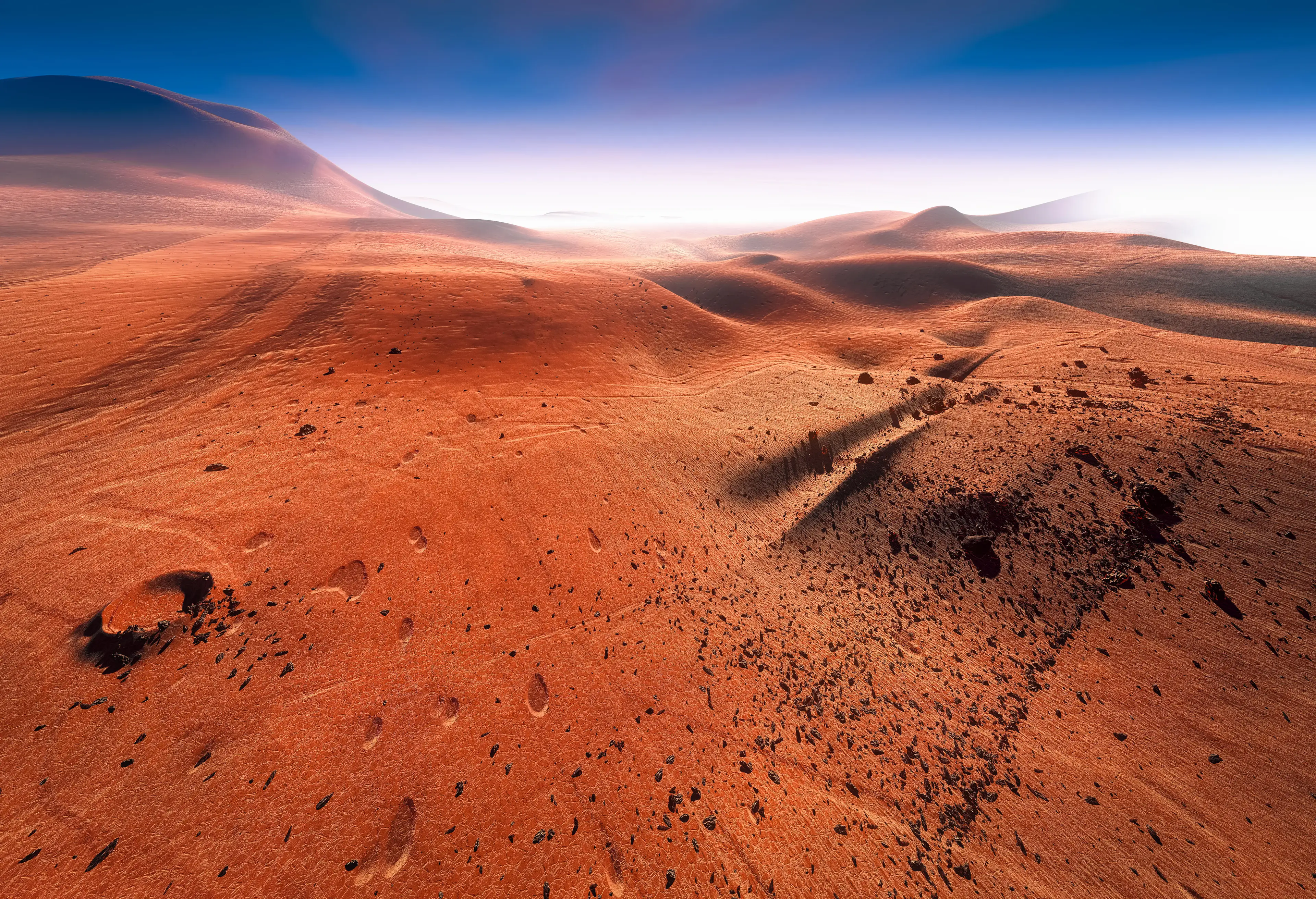
    It's hard to imagine water flowing across this surface.
    Plrang GFX / Alamy Stock Photo

    And, turns out that the "Measurements of ancient flow directions and stratigraphic positions record a history of an ocean-scale shoreline that, over time, rose at least 900 metres vertically while retreating from north to south," which is a pretty big ocean.

    This means that not only could Mars have had a substantial body of water, but it also points towards the planet having a warmer and wetter climate than first thought, which bodes well when considering the planet as an option for sustaining life.

    Still, while the findings are ridiculously impressive, according to Cardenas, they gathered it using pretty 'mundane' stratigraphy and geology.

    "On Earth, we chart the history of waterways by looking at sediment that is deposited over time."

    So, they applied this idea to Mars, and hey-presto, there's some pretty impressive findings, as Cardenas continued to explain: "We call that stratigraphy, the idea that water transports sediment and you can measure the changes on Earth by understanding the way that sediment piles up. That's what we've done here — but it's Mars."

    Cardenas said that the findings were significant in helping point towards the potential for life on the red planet: "What immediately comes to mind as one the most significant points here is that the existence of an ocean of this size means a higher potential for life."

    Choose your content:

    7 hours ago
    9 hours ago
    • Getty Stock
      7 hours ago

      What your answer to 'the Red or blue Button' dilemma means, according to science

      The red button or blue button debate has split social media in half, but a game theory expert has broken down what it actually means

      News
    • TLC
      9 hours ago

      The horrific crimes 90 Day Fiancé Geoffrey Paschel went to prison for explained

      Geoffrey Paschel appeared on our TV screens not long before being imprisoned for 18 years over a brutal attack on his ex

      News
    • Getty Stock
      9 hours ago

      The simple way swingers spot each other on a ‘spicy’ cruise explained

      There's a simple way to tell if passengers are up for 'play'...

      News
    • Getty Stock Image
      9 hours ago

      The six stages of a relationship explained and what to expect

      Knowing if your relationship is on the right track isn't easy, but there are six stages that all couples can expect to go through

      News
    • Scientists discover unexpected side effect of masturbating regularly
    • One of 10 scientists reported dead or missing allegedly claimed she was blasted with top-secret weapon
    • Scientists studied the orgasms of 86 different women and revealed the most unusual reactions
    • Baywatch star Noah Beck's mom put on leave from school after video of her simulating oral sex on son resurfaces