
Scientists have worked out the reason why you hate the sound of other people eating

Ever get the sudden urge to punch someone when they're eating loudly? Well, you're not alone – and scientists think they've figured out the reason for your rage.
There's even a name for it – misophonia, which causes people to have a visceral response to common sounds, often ones made by other humans like breathing, yawning or chewing.
Anyone who has misophonia will know that sitting next to a person who's chomping loudly on their burger can be unbearably irritating.
Advert
While the term was officially recognised as a medical disorder in 2001, a study has examined the reason behind it.
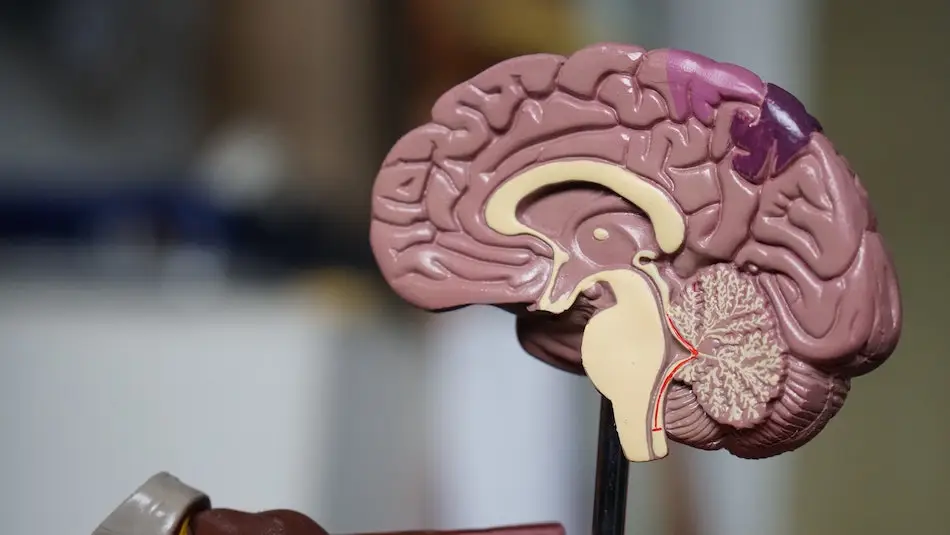
According to a team at Newcastle University, the condition is all down to a 'supersensitive connection' between two different parts of the brain.
The study saw the researchers perform brain scans on a group of people with misophonia and another group without it while playing a 'trigger sound'.
What they discovered is that those who have the condition had stronger connectivity between the auditory cortex, which is responsible for processing sounds, and the premotor cortex, which handles mouth and throat muscle movements.
Published in the Journal of Neuroscience in 2021, the study is the first time a link between these two specific parts of the brain has been identified as a possible cause of the condition.
Scientists were hugely excited by the breakthrough, which challenges previous assumptions that the disorder was caused by an issue with the processing of sound.
Lead author and Newcastle University neuroscientist, Dr. Sukhbinder Kumar, said: "Our findings indicate that for people with misophonia there is abnormal communication between the auditory and motor brain regions – you could describe it as a 'supersensitised connection'.

"This is the first time such a connection in the brain has been identified for the condition."
Statistics suggest that misophonia affects anywhere between 6 percent to 20 percent of people, although some experience it more intensely than others.
Those on the more extreme end can find themselves unable to tolerate social situations whether that be with family, colleagues, friends or just being out in public.
Speaking about a potential solution for the problem, Dr Kumar added: "What surprised us was that we also found a similar pattern of communication between the visual and motor regions, which reflects that misophonia can also occur when triggered by something visual.
"This lead us to believe that this communication activates something called the 'mirror system', which helps us process movements made by other individuals by activating our own brain in a similar way – as if we were making that movement ourselves.
"We think that in people with misophonia involuntary overactivation of the mirror system leads to some kind of sense that sounds made by other people are intruding into their bodies, outside of their control.
"Interestingly, some people with misophonia can lessen their symptoms by mimicking the action generating the trigger sound, which might indicate restoring a sense of control.
"Using this knowledge may help us develop new therapies for people with the condition."
So the next time you find yourself raging at your mate for chewing loudly, maybe just try pretending to eat. Although be warned – this might just make them angry instead.
Topics: Food and Drink, Science, World News
 Daisy Phillipson