Scientist Claims Alien Technology Could Have Crash-Landed Into Pacific Ocean

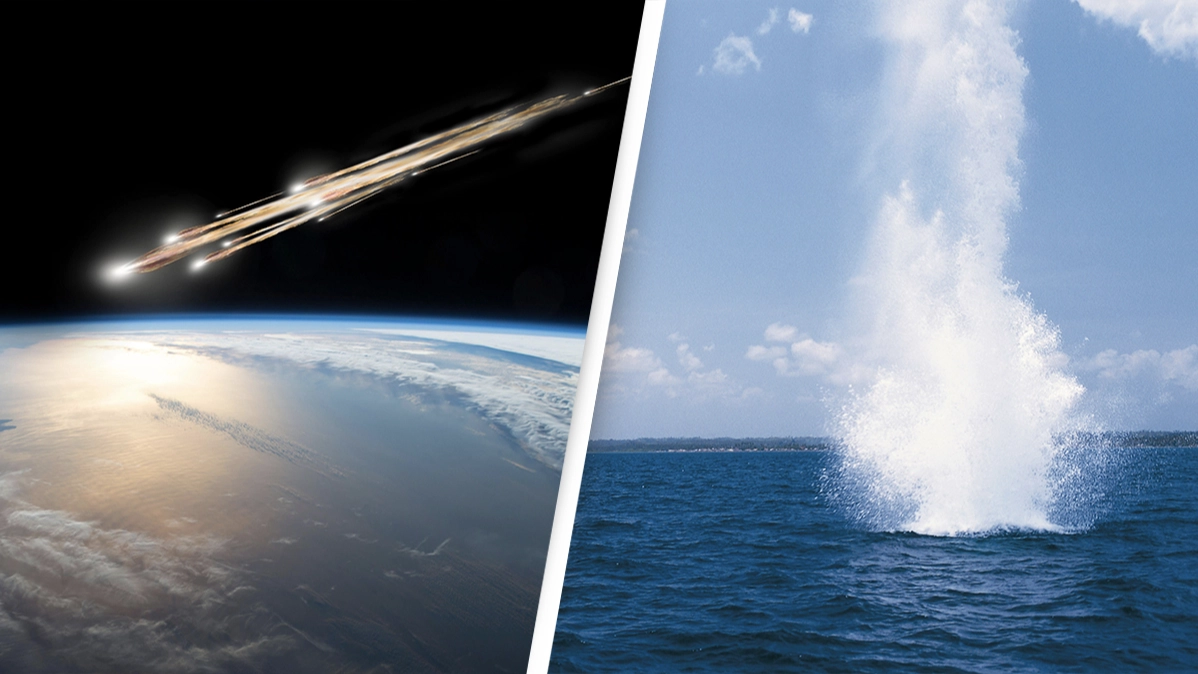
A Harvard scientist has claimed that alien technology may have crash-landed into the Pacific Ocean, saying a meteor that crashed into the sea eight years ago may be of 'artificial' origin.
The US Space Command recently confirmed a meteor that entered Earth’s atmosphere in 2014 was from another solar system, making it the first interstellar object to reach Earth.
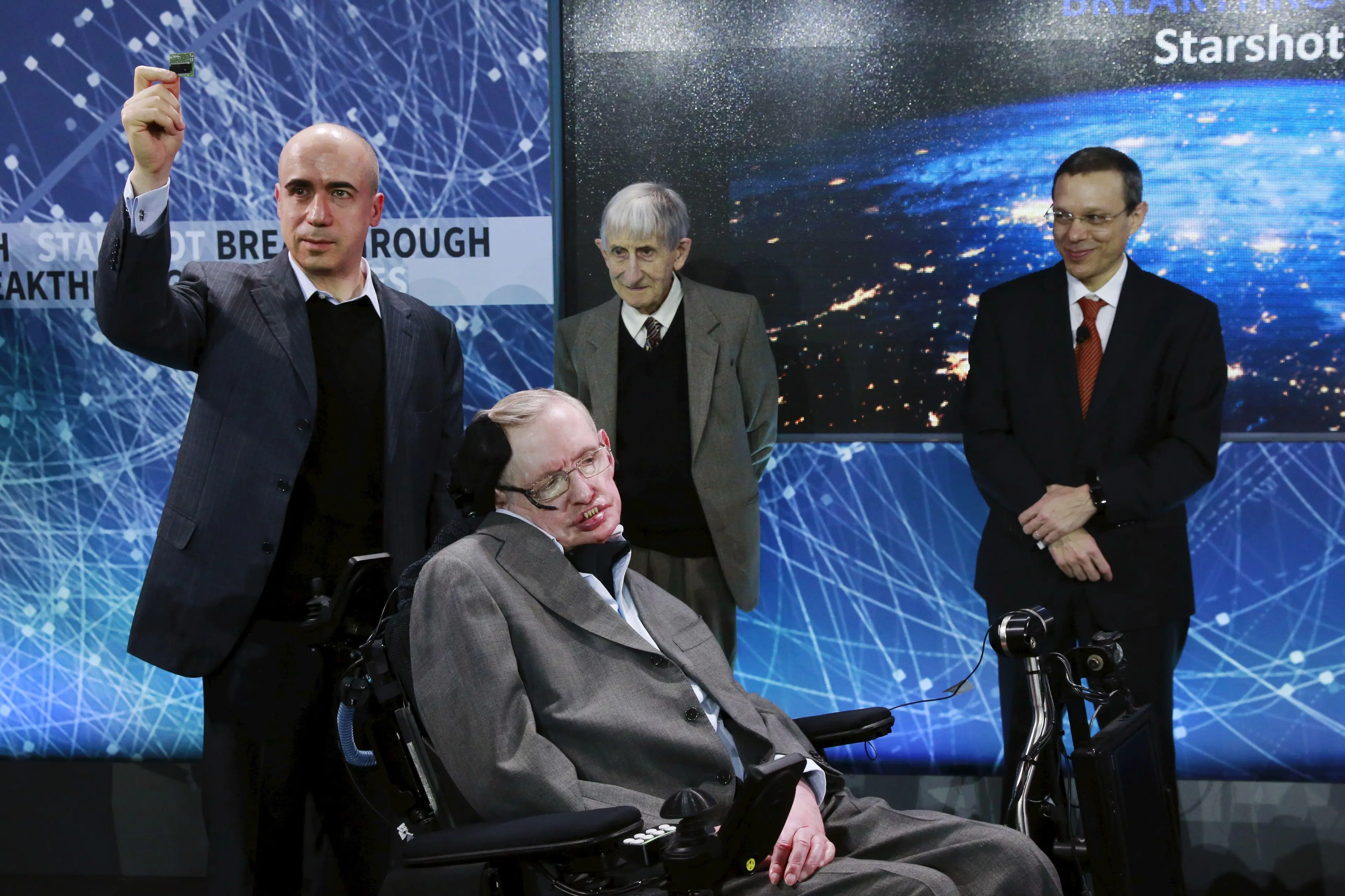
The discovery of the object was first shared in a 2019 study published by Harvard University researchers Dr Amir Siraj and Dr Abraham 'Avi' Loeb, but was confirmed as a meteor by US officials in a recently-released memo.
Many scientists believe the meteor burnt up in the sky above Papua New Guinea, and may have left interstellar debris scattered on the floor of the South Pacific Ocean.
Now, Loeb, one of the co-authors of the original study, has said he believes the object was some form of spacecraft, arguing that it could be ‘unambiguously artificial’ in origin, and that some of its 'technological components' may have survived the impact.
Advert
Loeb, who often makes headlines for his controversial theories, wrote in an essay published in The Debrief: “Our discovery of an interstellar meteor heralds a new research frontier, in which the Earth serves as a fishing net for massive interstellar objects.”

The astrophysicist explained how 'only a tiny fraction’ of such objects are seen as meteors ‘because of the small size of our “fishing net”, the Earth.
“The situation is analogous to finding many more small fish than whales in the ocean,” Loeb said.
“But we should also keep in mind that most meteors originate from the Solar system, but the interstellar ones can be flagged by their high speeds.
“The interstellar meteor discovery is very important from another perspective. One can imagine a billion-dollar mission to land on an interstellar object like `Oumuamua and return a sample of it to Earth, similar to the OSIRIS-REx mission that landed on the asteroid Bennu and will return material from it in September 2023.”
He continued: “The fundamental question is whether any interstellar meteor might indicate a composition that is unambiguously artificial in origin? Better still, perhaps some technological components would survive the impact. My dream is to press some buttons on a functional piece of equipment that was manufactured outside of Earth.
“This gives a whole new meaning to a ‘fishing expedition’; in this case, one involving extraterrestrial equipment.”
Loeb said an expedition to explore the sea bed for meteor fragments was ‘feasible’, and that his team were ‘currently engaged in designing it’.
Concluding his essay, he added: "In February 1954, just 14 months before he died, Einstein wrote a letter to the physicist David Bohm, in which he stated: 'If God created the world, his primary concern was certainly not to make its understanding easy for us.' I wonder whether our expedition to Papua New Guinea might replace the word 'God' in Einstein’s statements with the term 'an advanced scientific civilization'."
If you have a story you want to tell, send it to UNILAD via [email protected]
 Jess Hardiman