Scientists believe they've found a reason behind why we get Déjà Vu

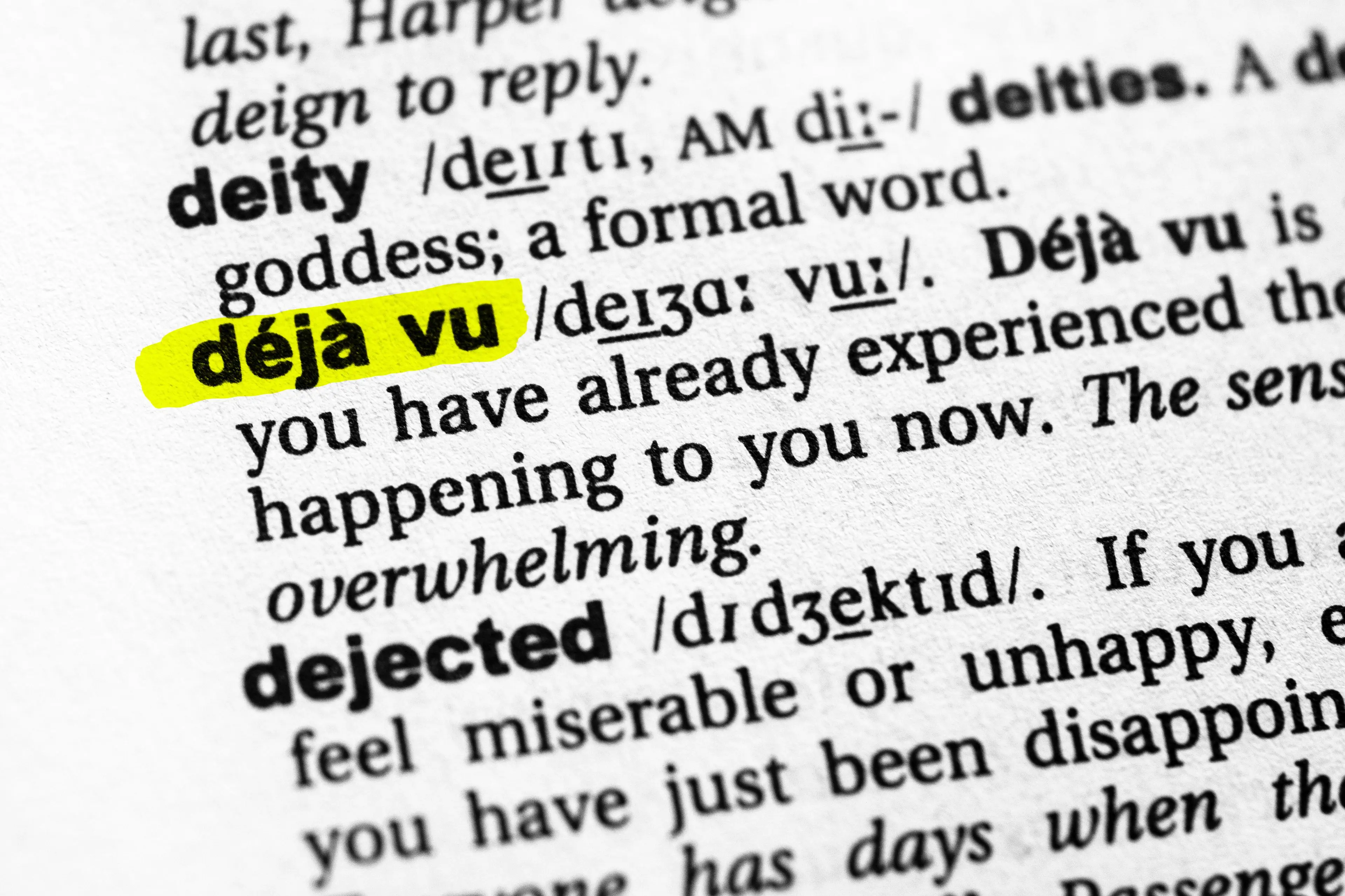
It's a phenomenon that has perplexed humans for generations: déjà vu.
The strange sensation, which translates from French to 'already seen', that you've been somewhere or done something before often takes you by surprise and leaves you feeling a little weird.
Have I lived a previous life? Am I a ghost? A time traveller? Are all the fairly irrational thoughts that race through your mind at that moment. But what is the cause?
Well, scientists believe they are a step closer to understanding it after uncovering what they think to be one of the reasons behind it all.
Advert
For the past couple of hundred years, people have been aware of déjà vu, with a variety of explanations being thrown about, such as it being the result of a mental disorder or something more otherworldly.
And in the early part of the 21st century, a scientist going by the name of Alan Brown delved into all the research that had been carried out into the subject up until that point.
While he found there was a predisposition to thinking there was something supernatural about it, Brown did come across some studies that involved regular people rather than mediums and psychics.
And the majority of incidents seemed to have been sparked by a place or conversation, and that there were even hints of people having some kind of seizure on the brain.
Compelled to delve into the topic deeper by Brown's research, scientist Anne Cleary conducted her own experiment, where she tested something called the Gestalt familiarity hypothesis.
The basic premise of the theory is that déjà vu is sparked by someone having a memory of a place they have been in the past that they can't immediately recall, which shares characteristics of their current setting.
For example, you walk into an office block and suddenly feel that you've been there before even though you definitely haven't.
It may be that you had previously visited a similar scene before, maybe the tables and chairs, or even the windows, were in a similar configuration to your old school or your doctor's surgery.
According to the Gestalt familiarity hypothesis, if you are unable to immediately recall that previous setting, you are left with the sensation of... déjà vu.
To test the theory, Cleary used virtual reality to manipulate settings and scenes, to see whether there was a correlation between recollection and experiencing déjà vu.
Writing in The Conversation about the experiment, she said: "As predicted, déjà vu was more likely to happen when people were in a scene that contained the same spatial arrangement of elements as an earlier scene they viewed but didn't recall.
"This research suggests that one contributing factor to déjà vu can be spatial resemblance of a new scene to one in memory that fails to be consciously called to mind at the moment.
"However, it does not mean that spatial resemblance is the only cause of déjà vu. Very likely, many factors can contribute to what makes a scene or a situation feel familiar."
If you have a story you want to tell, send it to UNILAD via [email protected]
 Dominic Smithers