unilad homepage
unilad homepage
  • News
    • UK News
    • US News
    • World News
    • Crime
    • Health
    • Money
    • Sport
    • Travel
  • Music
  • Technology
  • Film and TV
    • News
    • DC Comics
    • Disney
    • Marvel
    • Netflix
  • Celebrity
  • Politics
  • Advertise
  • Terms
  • Privacy & Cookies
  • LADbible Group
  • LADbible
  • SPORTbible
  • GAMINGbible
  • Tyla
  • UNILAD Tech
  • FOODbible
  • License Our Content
  • About Us & Contact
  • Jobs
  • Latest
  • Archive
  • Topics A-Z
  • Authors
Facebook
Instagram
X
Threads
TikTok
YouTube
Submit Your Content
Doctor 'catches' cancer from patient while he was performing surgery in unbelievably rare case
Home>News
Published 10:32 3 Jan 2025 GMT

Doctor 'catches' cancer from patient while he was performing surgery in unbelievably rare case

Cancer is not contagious, but incidents exist of it being passed from person to person

Emily Brown

Emily Brown

google discoverFollow us on Google Discover
Featured Image Credit: Getty Stock Images

Topics: Cancer, Health, Science

Emily Brown
Emily Brown

Emily Brown is UNILAD Editorial Lead at LADbible Group. She first began delivering news when she was just 11 years old - with a paper route - before graduating with a BA Hons in English Language in the Media from Lancaster University. Emily joined UNILAD in 2018 to cover breaking news, trending stories and longer form features. She went on to become Community Desk Lead, commissioning and writing human interest stories from across the globe, before moving to the role of Editorial Lead. Emily now works alongside the UNILAD Editor to ensure the page delivers accurate, interesting and high quality content.

Advert

Advert

Advert

It's common knowledge that cancer isn't contagious - you can't 'catch' cancer by spending time with someone who has the disease - but there are reports revealing how tumors have passed between people in the past.

In 1996, the New England Journal of Medicine detailed a case study involving a 32-year-old man who had cancer, and the 53-year-old surgeon assigned to help him.

The younger man had been diagnosed with malignant fibrous histiocytoma (MFH); a rare, aggressive cancer which, according to the National Cancer Institute, usually forms in soft tissue but can also form in bone.
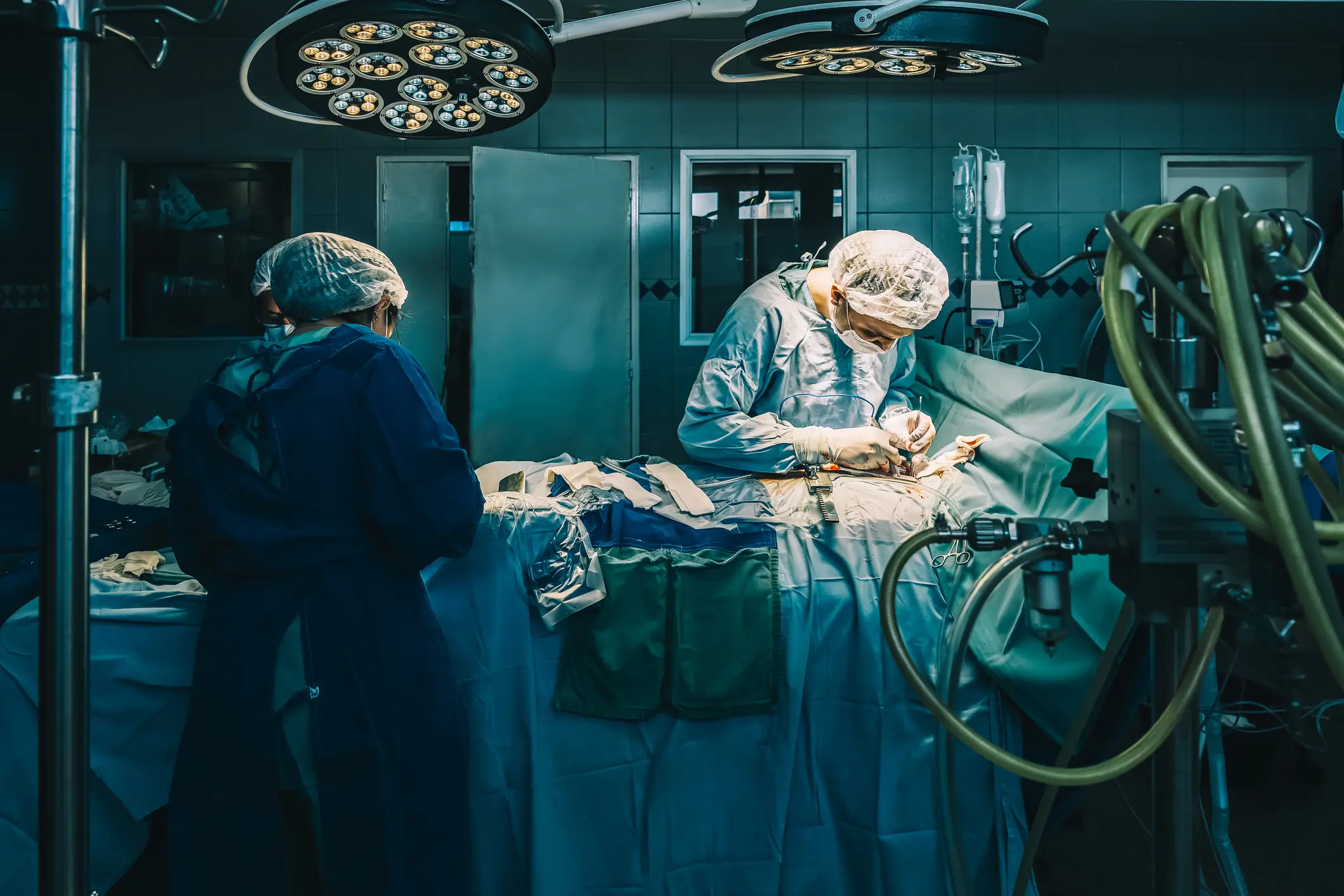
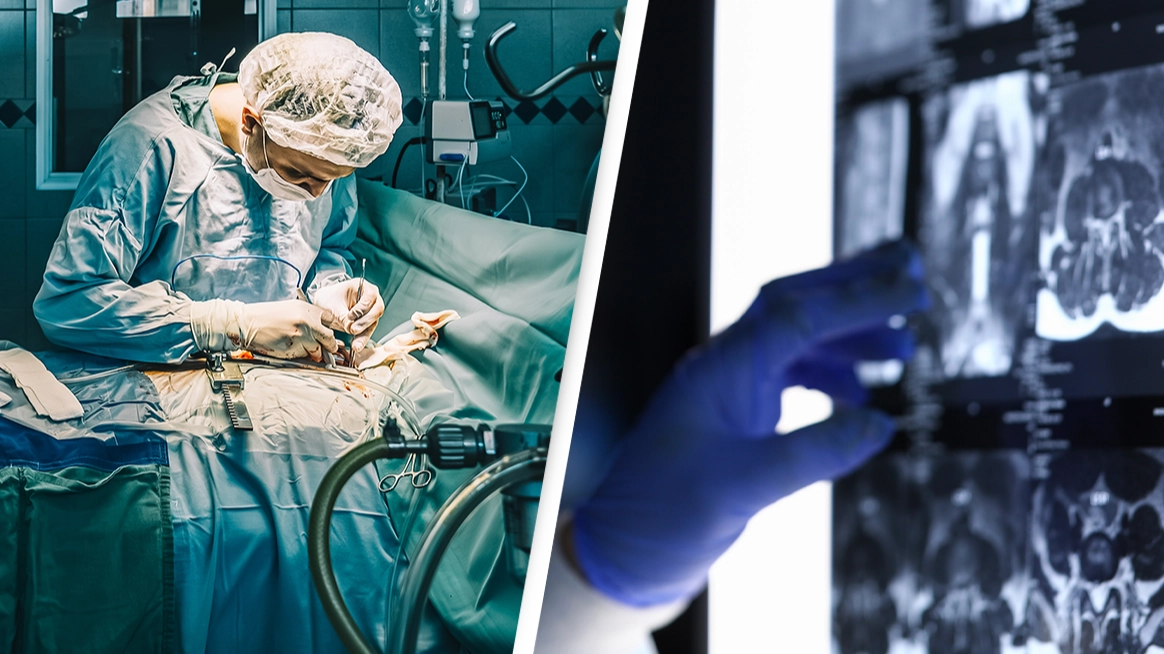
The tumor was transplanted during surgery (Getty Stock Photo)

Advert

The cancer can occur anywhere in the body and the tumors often grow quickly, spreading to other parts of the body.

In this particular case, the patient had a tumor in his abdomen which the surgeon sought to remove.

Sadly, the patient died shortly after the operation due to post-operative complications, but it wasn't until a few months later that the surgeon realized how the operation had affected him personally.

During the procedure, the surgeon injured the palm of his left hand while trying to place a drain. The wound was immediately disinfected and dressed, but in the months after the surgery the doctor noticed a hard, tumor-like swelling in his left palm.

Five months after the procedure, the surgeon consulted a hand specialist for the swelling, which was 1.2 inches in diameter and located at the base of his middle finger - the same place he'd been injured during the operation.

The surgeon visited a specialist about his hand (Getty Stock Photo)

Tests found that the surgeon did not have any signs of immune deficiency and the tumor was successfully removed from his hand. When it was tested, it was found that the tumor was a malignant fibrous histiocytoma - the same kind of cancer the patient had.

A pathologist working on the case questioned whether the tumors were identical, prompting analysis of tissues from both the surgeon and the patient.

The results revealed the tumors were morphologically identical.

The authors of the paper published in the New England Journal of Medicine noted that 'there are several clinical examples of the accidental transplantation of a malignant tumor or tumor cells into a healthy recipient', however they pointed out that such transplantation usually induces an immune response which leads to the rejection of the transplanted tissue.

In this case, the authors believe the surgeon had an 'ineffective antitumor immune response'.

Thankfully, however, the removal of the tumor seemed to work, and two years later the surgeon's condition was good, with no evidence of a recurrence of the tumor.

Choose your content:

3 hours ago
7 hours ago
8 hours ago
  • Enhanced Games / YouTube
    3 hours ago

    Enhanced Games gets off to chaotic start as official live stream freezes minutes into first event

    The blunder meant fans missed the first event entirely

    News
  • Getty Stock Photo
    7 hours ago

    Criminal lawyer reveals the one mistake that makes murder suspects appear instantly guilty

    The High Court advocate says that it's the little inconsistencies that give prosecutors the big picture behind a criminal's lies

    News
  • Facebook
    7 hours ago

    Wellness coach dies after 'detox' using 'frog poison drug'

    Krystian Trend was taking part in a 'purging' ritual involving a poison secreted in the skins of frogs from 5000 miles away

    News
  • Netflix
    8 hours ago

    AI names 'creepiest' series on Netflix and even Stephen King agrees

    Artificial intelligence has found the 'creepiest' show on Netflix and fans think it might be 'the best horror TV show ever made'

    Film & TV
  • Mom issues warning after spotting son’s cancer symptom while he watched TV
  • Doctor details four subtle skin symptoms that may actually be signs of cancer
  • Doctor reveals signs of 'silent killer' cancer all women need to be aware of
  • Woman shares first symptoms of rare cancer she was diagnosed with while in best shape of her life