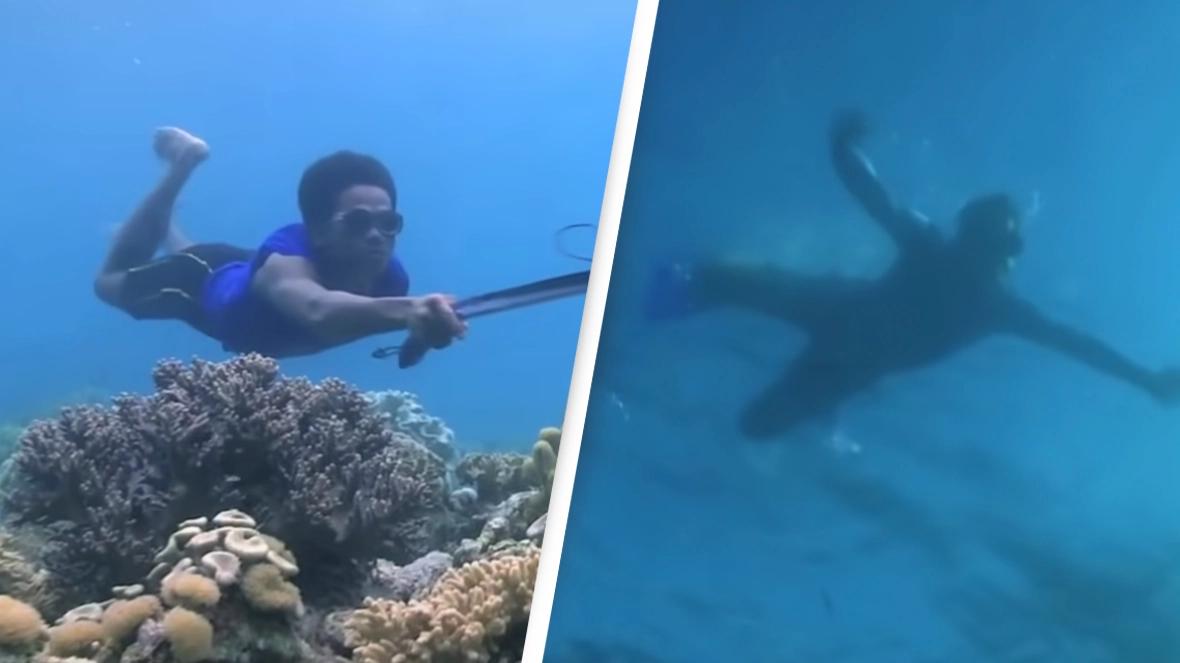
Tribe of ‘fish people’ developed new mutant ‘sea nomad gene’ to let them dive to bottom of the ocean

The Banjau tribe of Indonesia are a group unlike any other, as they are the first known humans to have genetically adapted to diving.
The tribe live a high amphibious life, and have now been proven to have the genetic makeup to do so.
Banjau people have lived off the coasts of Indonesia for more than 1,000 years, living in houseboats and spending a large portion of their lives in the sea.
Advert
They're also highly skilled in freediving and fishing with spears.
Needless to say, Banjau people are strong swimmers and are known for having extraordinary lung capacities.
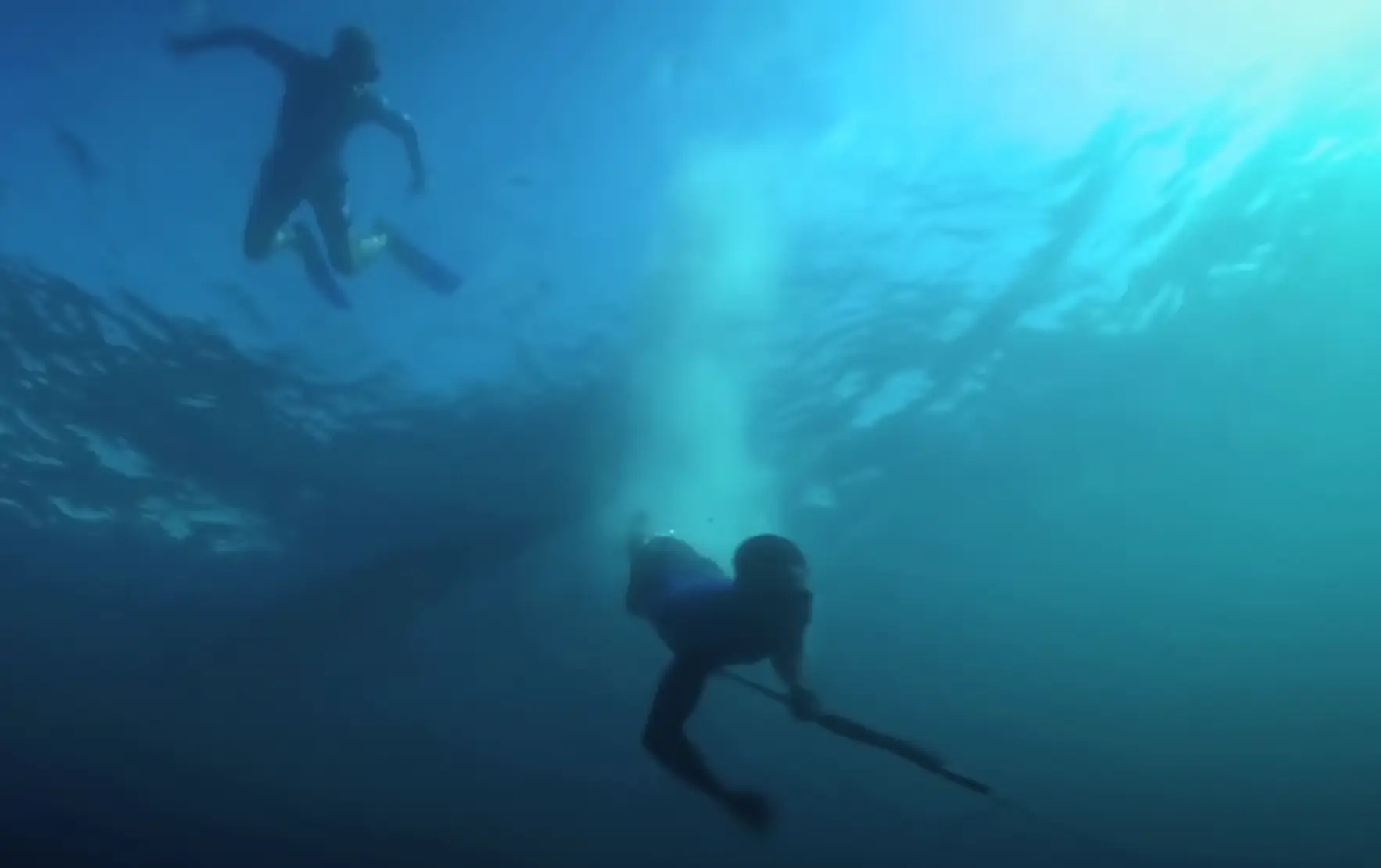
Members of the tribe can dive up to 230 feet using just a set of weights and a pair of wooden goggles.
Melissa Ilardo, from Cambridge University, has studied the Banjau people for her PhD and explained to the BBC: "They dive repeatedly for eight hours a day, spending about 60 percent of their time underwater."
However, it isn't just skills that help give Banjau people this diving advantage, as they actually have a unique genetic mutation - known as the ‘sea nomad gene’ - that also aids in their diving ability.
The Indonesian 'fish people' have extra large spleens!

The spleen plays a major role in the human dive response, which kicks in when a body is submerged in water.
During this response, the spleen contracts to inject oxygenated red blood cells into the circulation - which can up the oxygen in a human's blood by nine percent.
So it makes sense that having a larger spleen would give Banjau people a genetic advantage when it comes to holding their breath and swimming underwater.
Dr. Ilardo said: "There’s not a lot of information out there about human spleens in terms of physiology and genetics, but we know that deep diving seals, like the Weddell seal, have disproportionately large spleens.
"I thought that if selection acted on the seals to give them larger spleens, it could potentially do the same in humans."
She added: "We believe that in the Bajau they have an adaptation that increases thyroid hormone levels and therefore increases their spleen size.
"It’s been shown in mice that thyroid hormones and spleen size are connected. If you genetically alter mice to have an absence of the thyroid hormone T4, their spleen size is drastically reduced, but this effect is actually reversible with an injection of T4."
As Banjau people do not dive competitively, it's difficult to know exactly how long they remain underwater.
However, anecdotally, tribes people claim to have been under the sea for as long as 13 minutes.
Sadly, the lifestyles of these sea nomads are currently under threat.
Their nomadic ways mean they can struggle to gain citizenship, plus commercial fishing has devastated their food supply.
Nonetheless, these extraordinary people offer living proof for natural selection, which is truly remarkable.
Topics: World News, Climate Change
 Annie Walton