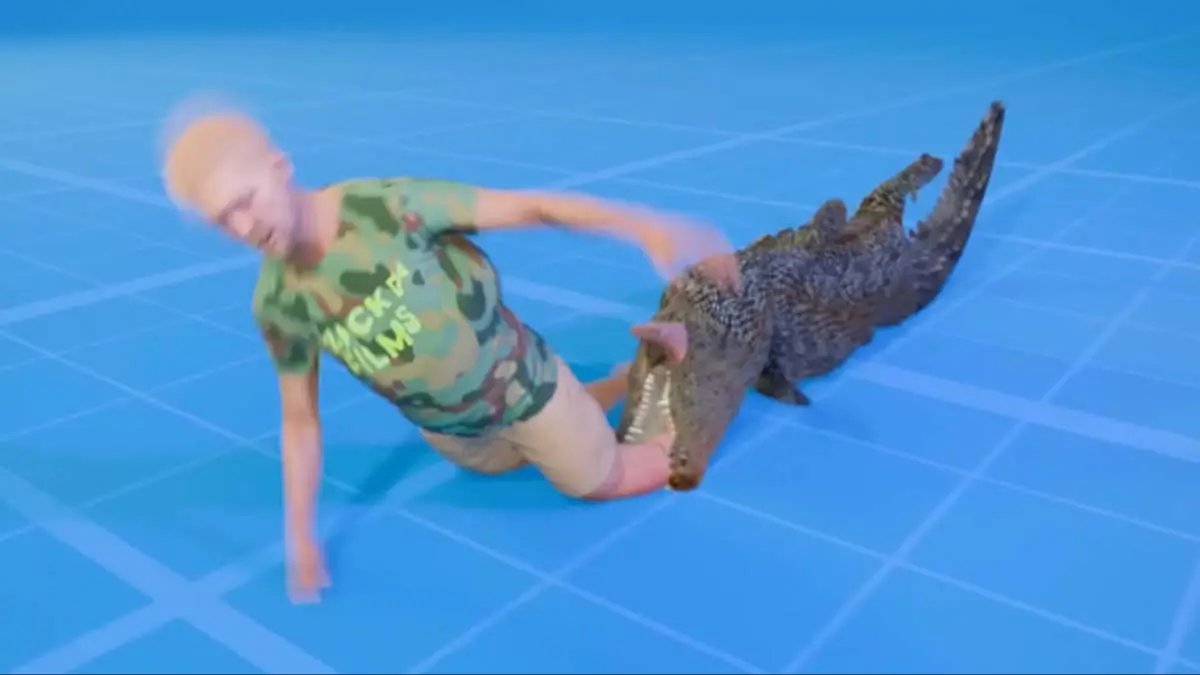
Brutal simulation shows crocodile 'death roll' after Robert Irwin was attacked by 14ft animal

A simulation has demonstrated a terrifying behavior of crocodiles after Robert Irwin was attacked by a 14ft-long beast.
Appearing on The Jimmy Fallon Show, Irwin, the son of Steve Irwin, recalled how he had been pinned down by a 'boss croc' after leaping on top of its back.
He explained that this was part of research that they were carrying out into the animals, and involves jumping onto the back and holding the jaws shut, because while the muscle to close it are very powerful, the ones that open it are weak enough that you can hold it shut.
But this time, things went wrong when he jumped on a crocodile called Jimmy Fallon.
Advert
"I jumped onto him. I kid you not, 14 foot of crocodile, big croc, death rolls me. So I’m stuck underneath him with my arm hanging out.
"I’ve got like probably, I don’t know, maybe 700 pounds on top of me. And I’m just like, ‘What do I do?’ Luckily, he rolled back the other way, and I was fine. But he’s a goer."

A terrifying simulation of the behavior posted to YouTube by Zack D. Films showed how a crocodile will grab hold of its prey in its powerful jaws, and then spin around in an effort to tear off a piece of flesh.
It advises that if you are unfortunate enough to be grabbed by a crocodile or alligator, you should try to roll in the same direction as the spins, as this will negate the twisting motion that rends flesh.
Of course, you have to think fast in the moment, and see which way the crocodile spins.
Why do crocodiles death roll?
If you've ever taken a close look at a crocodile's mouth and teeth, preferably not too close, you may have noticed that the teeth are not really evolved for cutting or chewing, more biting.
While a crocodile's bite force is extremely powerful, they don't have the same dexterity in their jaws as us, so they can't chew or use their teeth to slice away bite-sized chunks of meat like we might with our incisor teeth - their jaws are more for catching prey and then not letting go as they drag it underwater to drown it.
Lucky for us they also don't have strong arms and claws to grip it while they tears pieces off, like say a lion or a jaguar, so have to rely entirely on their mouths.
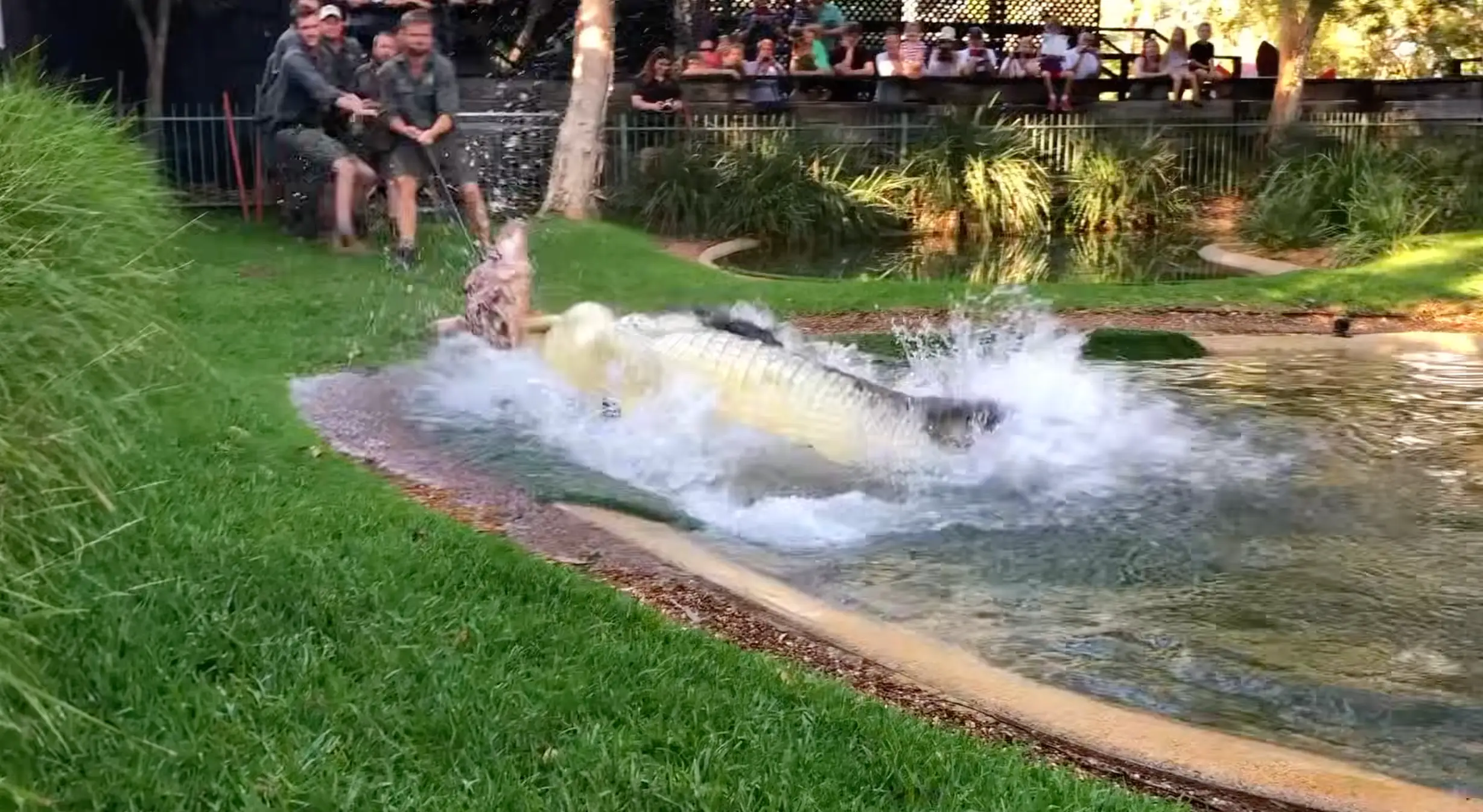
Crocodilians have this very simple but absolutely terrifying way to get a large animal down into pieces small enough for them to swallow - the infamous 'death roll'.
The animal will grip a portion of flesh in its vice-like jaws, and then spin round and round in the water along the length of its body, with the motion eventually tearing the flesh away.
This is so terrifyingly effective that even a relatively small crocodilian could potentially rip off a person's arm.
But some scientists have pointed out that the 'death roll' is as much about crocodile infighting as breaking up prey into bite-sized chunks.
Palaeontologist Stephanie Drumheller and her colleagues wrote in a 2019 study: "Death rolling behavior may have nothing to do with feeding strategy at all."
She thinks the 'death roll' is actually a 'combat roll', considering the fossil record shows crocodylians with bite marks on their head, legs and tails from other crocodylians.
So the 'death roll' may originally have been used to injure or escape from other crocodylians.
The more you know.
Topics: Steve Irwin, Animals, News, YouTube
 Kit Roberts