unilad homepage
unilad homepage
  • News
    • UK News
    • US News
    • World News
    • Crime
    • Health
    • Money
    • Sport
    • Travel
  • Music
  • Technology
  • Film and TV
    • News
    • DC Comics
    • Disney
    • Marvel
    • Netflix
  • Celebrity
  • Politics
  • Advertise
  • Terms
  • Privacy & Cookies
  • LADbible Group
  • LADbible
  • SPORTbible
  • GAMINGbible
  • Tyla
  • UNILAD Tech
  • FOODbible
  • License Our Content
  • About Us & Contact
  • Jobs
  • Latest
  • Archive
  • Topics A-Z
  • Authors
Facebook
Instagram
X
Threads
TikTok
YouTube
Submit Your Content
Most expensive item on Earth is powder which sells for $140,000,000 a gram
Home>News>World News
Published 19:09 26 Mar 2024 GMT

Most expensive item on Earth is powder which sells for $140,000,000 a gram

The material can be sold for tens of millions of dollars per gram due to its very specific uses

Kit Roberts

Kit Roberts

google discoverFollow us on Google Discover
Featured Image Credit: University of Oxford

Topics: News, World News, Science

Kit Roberts
Kit Roberts

Kit joined UNILAD in 2023 as a community journalist. They have previously worked for StokeonTrentLive, the Daily Mirror, and the Daily Star.

Advert

Advert

Advert

When you think of the most expensive substance in the world, what springs to mind?

Maybe gold? Not even close. What about luxury food items such as white truffle, caviar, or saffron?

These are also very expensive, but not a patch on the more expensive substances in the world.

Industrial materials such as platinum or tritium, which are used to make luminous signs, are higher up the list.

Advert

There are also more illicit substances such as cocaine, heroin, and LSD which all command very high prices per gram.

But none of these is a patch on a material which can sell for as much as $140 million per gram.

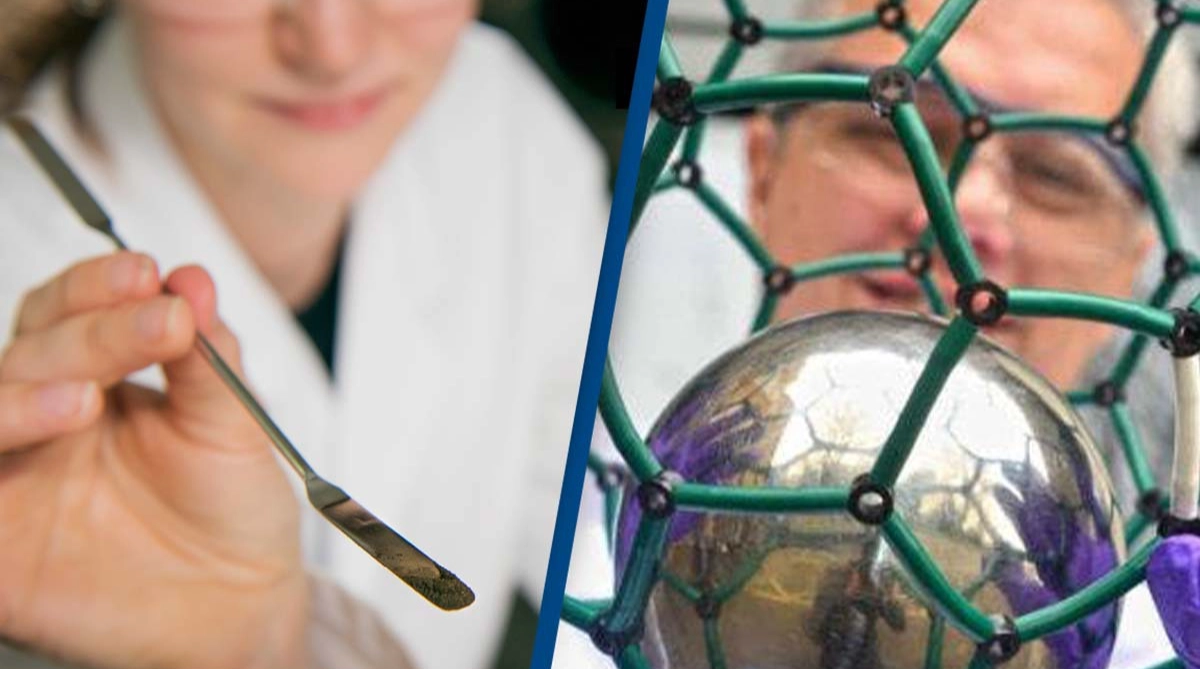
The material has been developed by Oxford scientists.
Travelpix Ltd / Getty

So what on earth is this substance which can fetch such an insanely high price?

It's been given the catchy name of 'Nitrogen Atom-Based Endohedral Fullerenes'. Now say that backwards five times.

But why is Nitrogen Atom-Based Endohedral Fullerenes so enormously expensive?

It's because of what the material could be used for in the future, or rather what technology it might enable us to develop.

You see, Nitrogen Atom-Based Endohedral Fullerenes has the potential to be used to create very small highly accurate atomic clocks.

Atomic clocks are a crucial part of how GPS systems work, making them hugely important to navigation.

The problem is that at the moment atomic clocks are rather large, we're talking the size of a room.

But using Nitrogen Atom-Based Endohedral Fullerenes could help to make current atomic clocks look like the old IBM computers next to a modern smartphone.
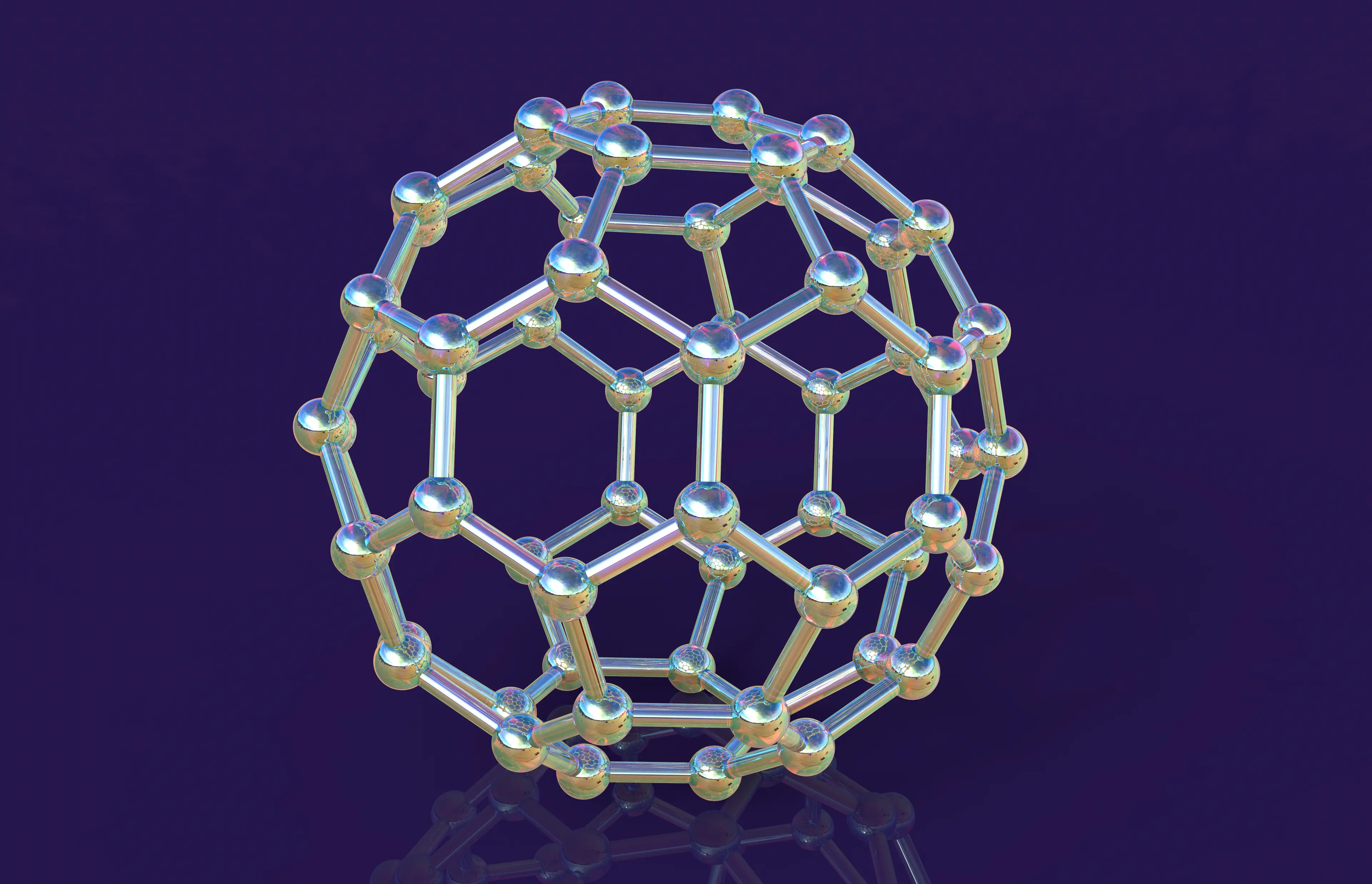
A illustration of a buckminsterfullerene atom, showing the distinctive 'cage' structure.
KATERYNA KON/SCIENCE PHOTO LIBRARY / Getty

That could have massive implications for how we use atomic clocks as well, expanding their use beyond navigation.

A small enough atomic clock could be used to pinpoint the location of something extremely accurately, as well as eliminating GPS blind spots by having an on-board atomic clock.

Nitrogen Atom-Based Endohedral Fullerenes has been developed by Oxford scientists at Designer Carbon Materials and they reckon that in the future even smartphones could have an atomic clock inside them.

Interestingly the name of the material, specifically the 'fullerenes' part, is directly related to its structure.

This is a 'cage' of carbon atoms with a nitrogen atom inside them.

The name 'fullerene' refers to this 'cage' and is a nod to architect and philosopher Richard Buckminster Fuller, who was known for his designs featuring distinctive interlocking triangles in a geodesic dome.

Choose your content:

9 hours ago
11 hours ago
  • Severe Weather Europe
    9 hours ago

    El Niño has officially begun, here's how it could affect the weather

    El Niño has a huge range of impacts on weather patterns

    News
  • Getty Stock Images
    9 hours ago

    When and how often you nap could increase your chances of dying, according to researchers

    The ideal nap lasts between 15 and 20 minutes, according to science

    News
  • Getty Stock
    9 hours ago

    Doctor issues warning against 'dirty soda' trend that could be a 'disaster' for the body

    The trend started off in Utah, gaining mainstream popularity with the help of social media

    News
  • Getty Stock Image
    11 hours ago

    Doctor explains what really happens to your body when you're in a coma

    The difference occurs after just 24 hours in a coma

    News
  • Former CIA spy reveals what he claims are locations of four alien bases on Earth
  • Experts issue terrifying warning that part of the Earth is tearing apart in a ‘train wreck’ event
  • Scientists say length of days on Earth is increasing at an 'unprecedented' rate
  • Chilling update on mysterious object aiming at Earth that Harvard scientist claims is 'not natural'