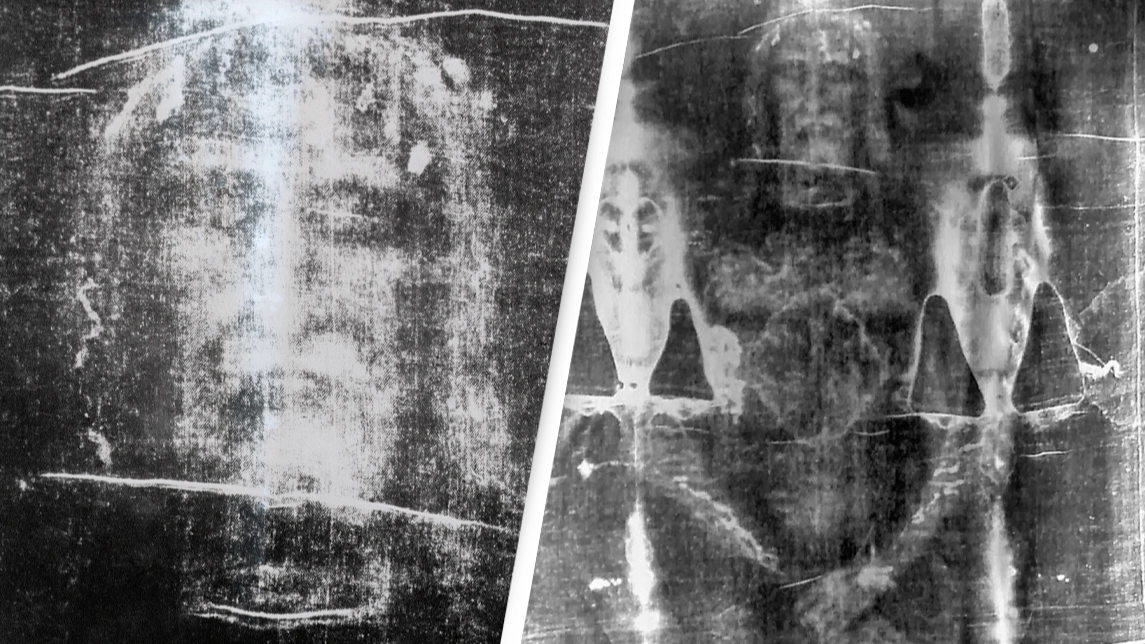
unilad homepage
unilad homepage
  • News
    • UK News
    • US News
    • World News
    • Crime
    • Health
    • Money
    • Sport
    • Travel
  • Music
  • Technology
  • Film and TV
    • News
    • DC Comics
    • Disney
    • Marvel
    • Netflix
  • Celebrity
  • Politics
  • Advertise
  • Terms
  • Privacy & Cookies
  • LADbible Group
  • LADbible
  • SPORTbible
  • GAMINGbible
  • Tyla
  • UNILAD Tech
  • FOODbible
  • License Our Content
  • About Us & Contact
  • Jobs
  • Latest
  • Archive
  • Topics A-Z
  • Authors
Facebook
Instagram
X
Threads
TikTok
YouTube
Submit Your Content
Shroud of Turin could actually be Jesus's burial cloth, new study finds
Home>News>World News
Published 17:21 22 Aug 2024 GMT+1

Shroud of Turin could actually be Jesus's burial cloth, new study finds

New findings say the Turin Shroud has likely existed since before Jesus Christ's death.

Dylan Murray

Dylan Murray

google discoverFollow us on Google Discover
Featured Image Credit: Bettmann / Contributor/Photo12/Universal Images Group via Getty Images
Dylan Murray
Dylan Murray

Advert

Advert

Advert

Seeing as it took place over 2,000 years ago, artifacts that can be traced to Jesus Christ’s life and death are scarce and fascinating to come by.

Similarly, due to how long ago Jesus walked the Earth, small details surrounding his death are often disputed in the modern day by believers and nonbelievers alike.

While these disputes come through in big and small ways, one of the most aggressively contested debates is whether the infamous Turin Shroud - currently on display at the Cathedral of St. John the Baptist in Turin, Italy - was the burial cloth of Jesus Christ when he died 2,000 years ago.

The shroud, which was first discovered in the late 14th century, has been subject to scrutiny since that initial discovery, with many believing that the theory Jesus Christ wore it was ridiculous and false.

Advert
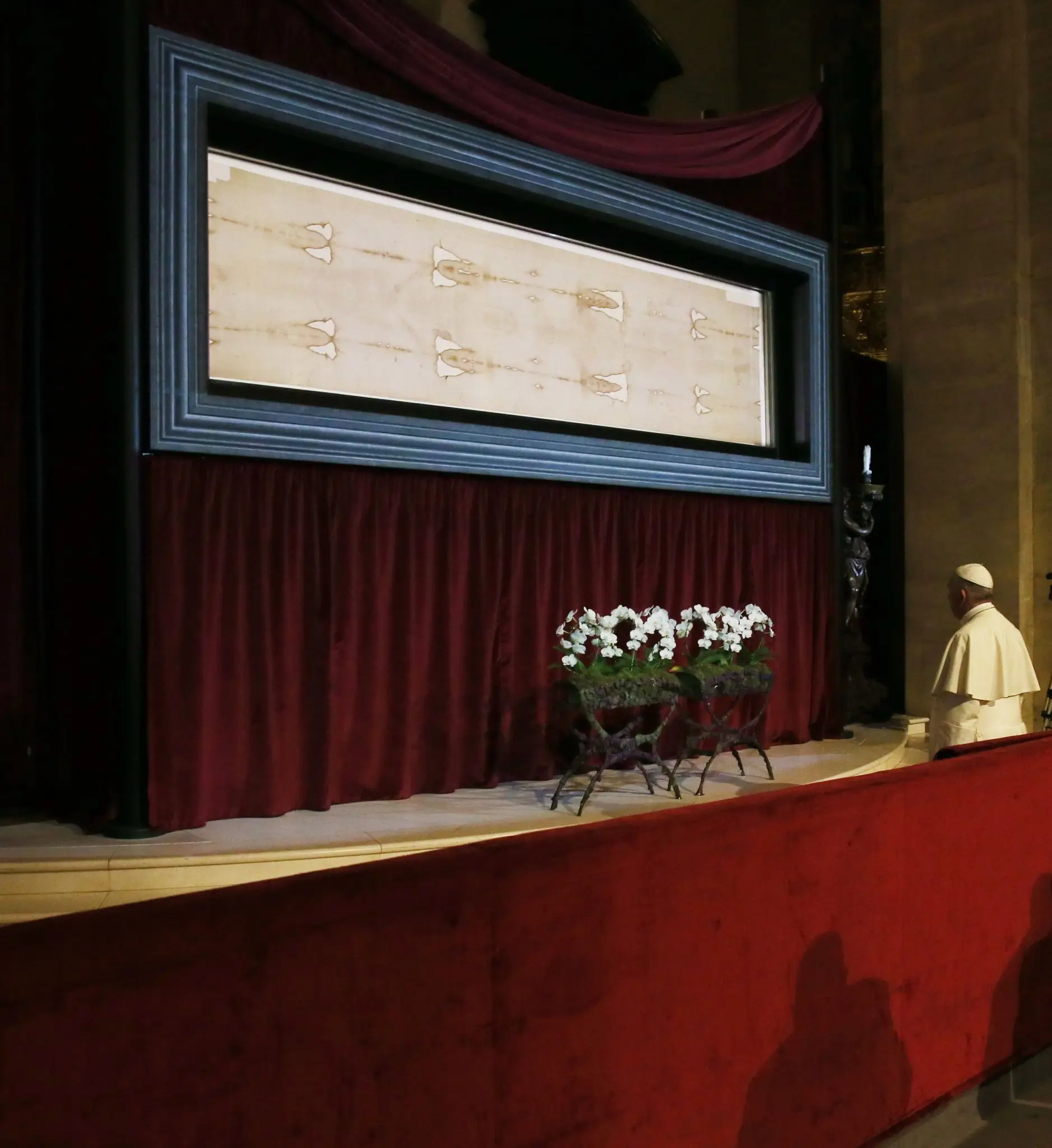
The Turin Shroud is currently being preserved at the Cathedral of St. John the Baptist in Turin, Italy. (Grzegorz Galazka/Archivio Grzegorz Galazka/Mondadori Portfolio via Getty Images)

Up until recently, many people even believed that the cloth was made during the Middle Ages, with previous studies placing its creation anywhere between 1260 and 1390 AD, centuries after the Common Era began.

However, a recent study has shown results that are contradictory to those of its predecessors.

The new study, which was published in Heritage, a public journal that covers heritage science, says that the Turin Shroud’s history would theoretically coincide with the theory that it was adorned by Jesus Christ two millennia ago.

The study utilized X-ray technology to identify that the majority of the cloth’s aging took place before its discovery by the church in 1390 AD, suggesting that it likely existed for far longer than a century before that point, as was suggested by previous studies.

Instead, the 2000-year mark was deemed to be more accurate, giving believers that the shroud was Jesus Christ’s burial cloth more standing scientifically.
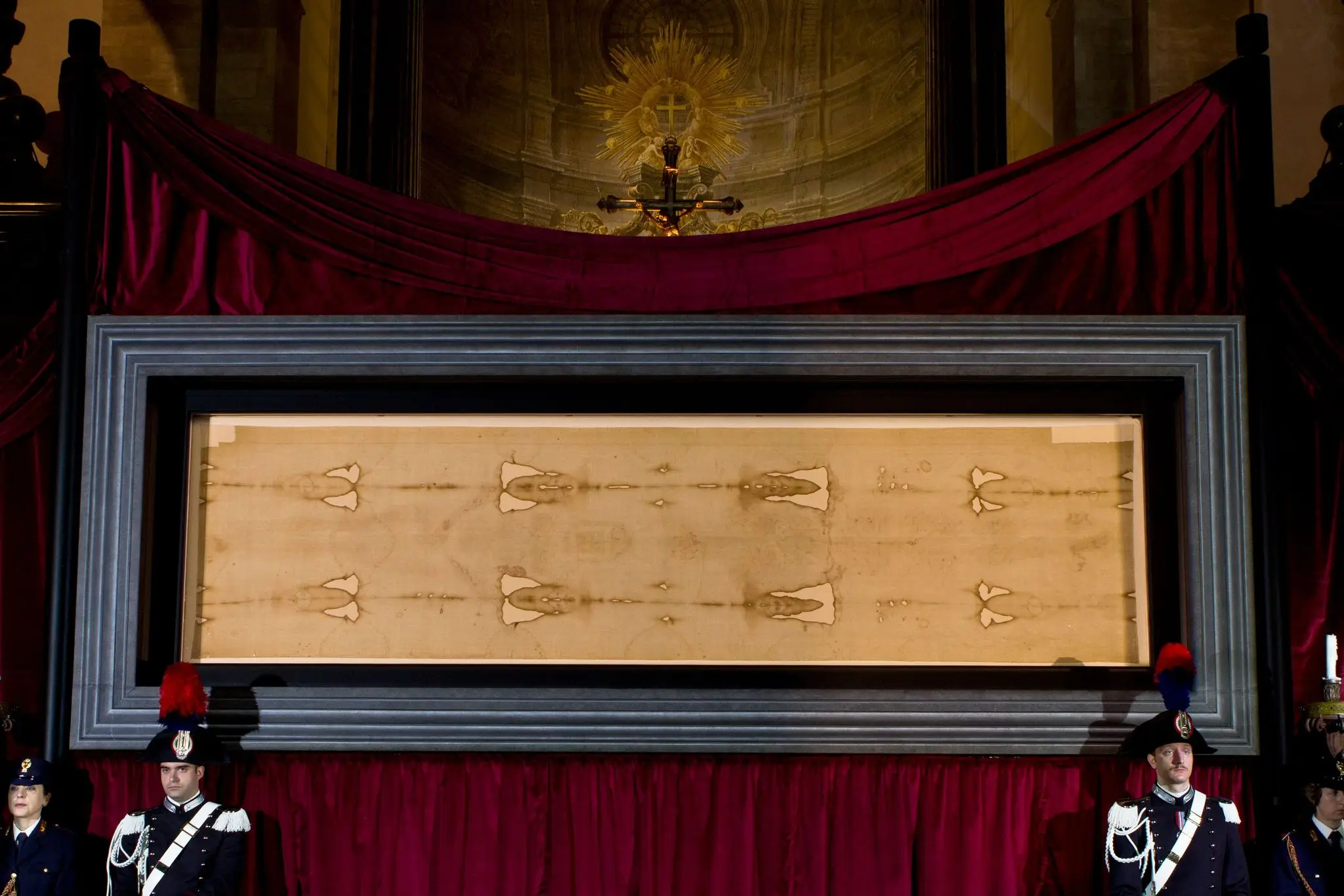
The Turin Shroud is believed by many to be the death cloth of Jesus Christ. (Marco Destefanis/Pacific Press/LightRocket via Getty Images)

However, the study does admit that they cannot say without a shadow of a doubt that the shroud’s timeline matches up with Jesus Christ’s death, noting that there are a few caveats to their findings.

Most notably, due to not knowing what could’ve happened to the cloth throughout the centuries before it was discovered and preserved by the church in 1390 AD. Most importantly, whether or not the cloth was kept at roughly 22C and with an average humidity of 55 percent for the 1300 years prior to its discovery would make or break the study’s findings.

To identify whether that was the case, the researchers would need a larger sample of the cloth than the 0.5 mm × 1 mm sample they used in this study.

The study itself concluded: “A more accurate and systematic X-ray investigation of more samples taken from the TS fabric would be mandatory to confirm the conclusions of our study."

Choose your content:

7 hours ago
11 hours ago
12 hours ago
  • Win McNamee/Getty Images
    7 hours ago

    Trump revealed to have bought over $1M in Dell stock months before Pentagon signed $9.7B deal

    The Defense Department announced its 'largest to date' $9.7 billion deal with Dell on May 28

    News
  • Getty Stock Images
    11 hours ago

    Doctors say they're seeing more GLP-1 users with rare ear disorder that can cause people to hear their own blood

    GLP-1 medications have seen a huge increase in popularity

    News
  • Supplied
    11 hours ago

    Former gambling addict reveals amount he lost in one bet and why it was the best thing that ever happened to him

    He said his 'whole world came crashing down' when he lost

    News
  • YouTube/Jesse Michels
    12 hours ago

    Former CIA spy reveals what he claims are locations of four alien bases on Earth

    Leonard 'Lyn' Buchanan worked for US Army intelligence for several years

    News
  • New study finds this specific way of cooking could actually be shortening your life
  • New study finds millions of people could have aggressive deadly disease without even knowing
  • Terrifying study finds 30% of Americans could be infected with parasite that has horrific impact on brains
  • New study finds Ozempic-like drugs could slash death rates of cancer surging in young people