
Evidence of world’s first gingers found in 10 million-year-old fossils of frogs

Whether its Catherine of Aragon or Vincent Van Gough, there's been a host of historical figures with red hair.
Even some Egyptian pharaoh mummies who lived over 3,000 years ago were found to have reddish pigments, while others have speculated some Neanderthals boasted fair skin and ginger hair.
However, the famous redhead gene is thought to date back not thousands, but millions of years - and it wasn't in humans first.
Advert
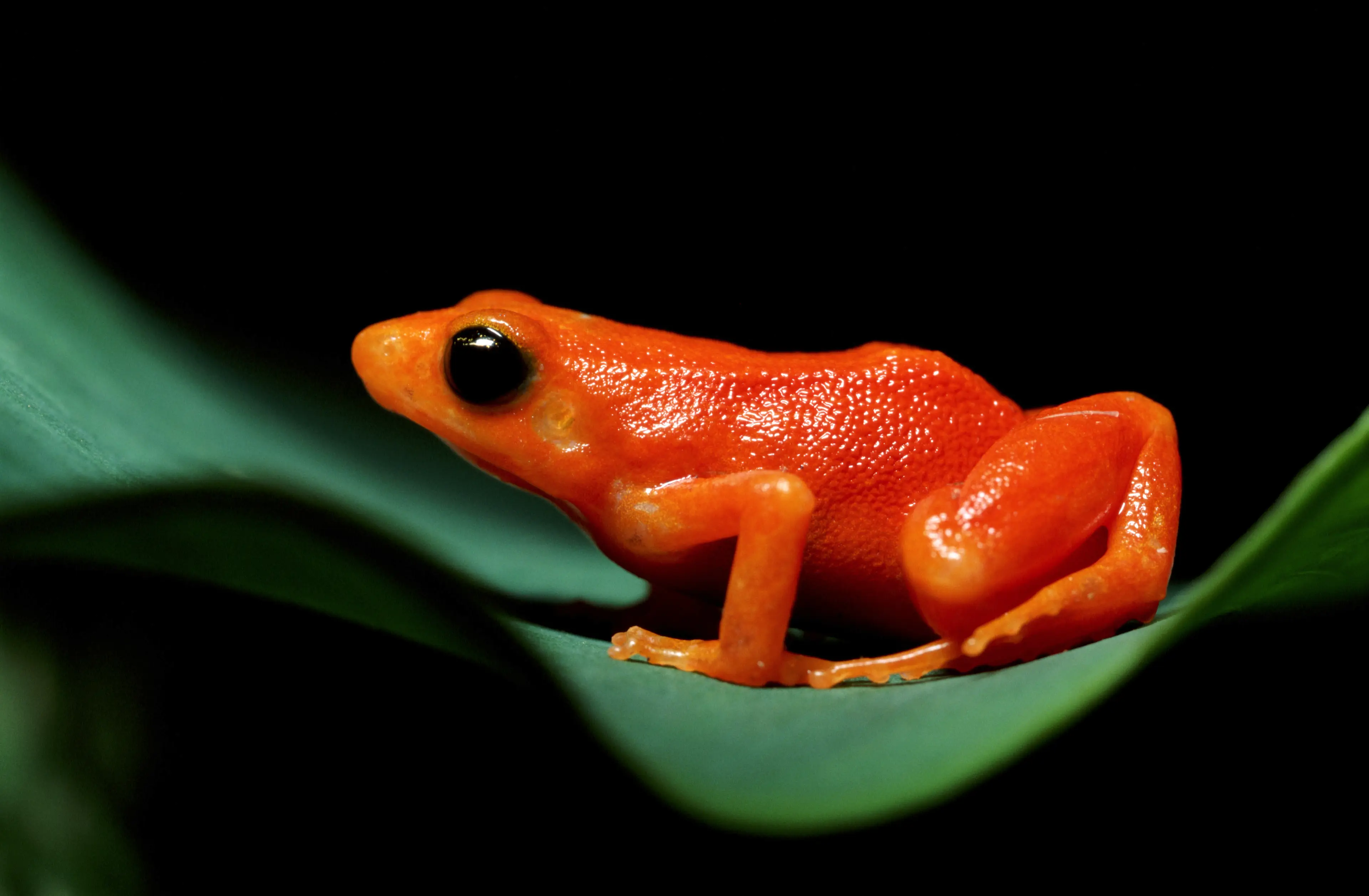
Palaeontologists at University College Cork, Ireland, have been looking at frog fossils dating back 10 million years and believe they've found the first evidence of phaeomelanin; a pigment found in red hair.
It's said that the huge discovery will help palaeontologists get a better idea of some color profiles of extinct animals.
Describing their findings as 'exciting', Dr Tiffany Slater of UCC’s School of Biological, Earth, and Environmental Sciences (BEES) and Environmental Research Institute (ERI) said in a statement: "This finding is so exciting because it puts palaeontologists in a better place to detect different melanin pigments in many more fossils.
"This will paint a more accurate picture of ancient animal colour and will answer important questions about the evolution of colours in animals.”

Dr Slater continued: "Scientists still don’t know how – or why – phaeomelanin evolved because it is toxic to animals, but the fossil record might just unlock the mystery.”
While fossils are often effected by heat and pressure during burial, Prof. Maria McNamara - senior author of the study - said that it 'doesn’t mean that we lose all original biomolecular information'.
"Our fossilization experiments were the key to understanding the chemistry of the fossils, and prove that traces of biomolecules can survive being cooked during the fossilization process," she continued.
"There is huge potential to explore the biochemical evolution of animals using the fossil record, when we account for chemical changes during fossilization.”
While the world may have once been abundant with orange frogs and red haired Neanderthals, gingers now only make up two percent of the human population - making it the rarest hair color in the world.

Most redheads are found in Ireland, Scotland and England.
But the redheads were once under threat, with the Independent reporting in 2014 that there was the possibility of the bright hair color going extinct as a result of climate change.
Dr Alistair Moffat, managing director of Galashiels-based ScotlandsDNA, said at the time: "We think red hair in Scotland, Ireland and in the North of England is adaption to the climate.
"I think the reason for light skin and red hair is that we do not get enough sun and we have to get all the Vitamin D we can.
"If the climate is changing and it is to become more cloudy or less cloudy then this will affect the gene."
He concluded that sunnier climates could result in 'fewer people carrying the gene'.
Topics: Science, Ireland, News, World News, Animals
 Niamh Shackleton