• News
  • Film and TV
  • Music
  • Tech
  • Features
  • Celebrity
  • Politics
  • Weird
  • Community
  • Advertise
  • Terms
  • Privacy & Cookies
  • LADbible Group
  • LADbible
  • SPORTbible
  • GAMINGbible
  • Tyla
  • UNILAD Tech
  • FOODbible
  • License Our Content
  • About Us & Contact
  • Jobs
  • Latest
  • Topics A-Z
  • Authors
Facebook
Instagram
X
Threads
TikTok
YouTube
Submit Your Content
China has just cost the USA $34,000,000,000 every decade after rare mineral decision taken

Home> Technology> News

Published 14:07 6 Dec 2024 GMT

China has just cost the USA $34,000,000,000 every decade after rare mineral decision taken

The move could spell big trouble for the US...

Ellie Kemp

Ellie Kemp

Featured Image Credit: Tanaonte/Getty Images/CorbalanStudio/Getty Images

Topics: China, Technology, US News

Ellie Kemp
Ellie Kemp

Ellie joined UNILAD in 2024, specialising in SEO and trending content. She moved from Reach PLC where she worked as a senior journalist at the UK’s largest regional news title, the Manchester Evening News. She also covered TV and entertainment for national brands including the Mirror, Star and Express. In her spare time, Ellie enjoys watching true crime documentaries and curating the perfect Spotify playlist.

X

@EllieKempOnline

Advert

Advert

Advert

China has just cost the US around $34,000,000,000 every decade after making a major rare mineral decision.

The country has banned all shipments of gallium and germanium, among other materials, to the United States.

The Chinese Commerce Ministry declared earlier this week: "In principle, the export of gallium, germanium, antimony, and superhard materials to the United States shall not be permitted," citing 'national security' concerns as a reason for the ban.

The move continues to escalate tensions between the two countries as China attempts to counter US policies that curb Chinese tech advancements.

Advert
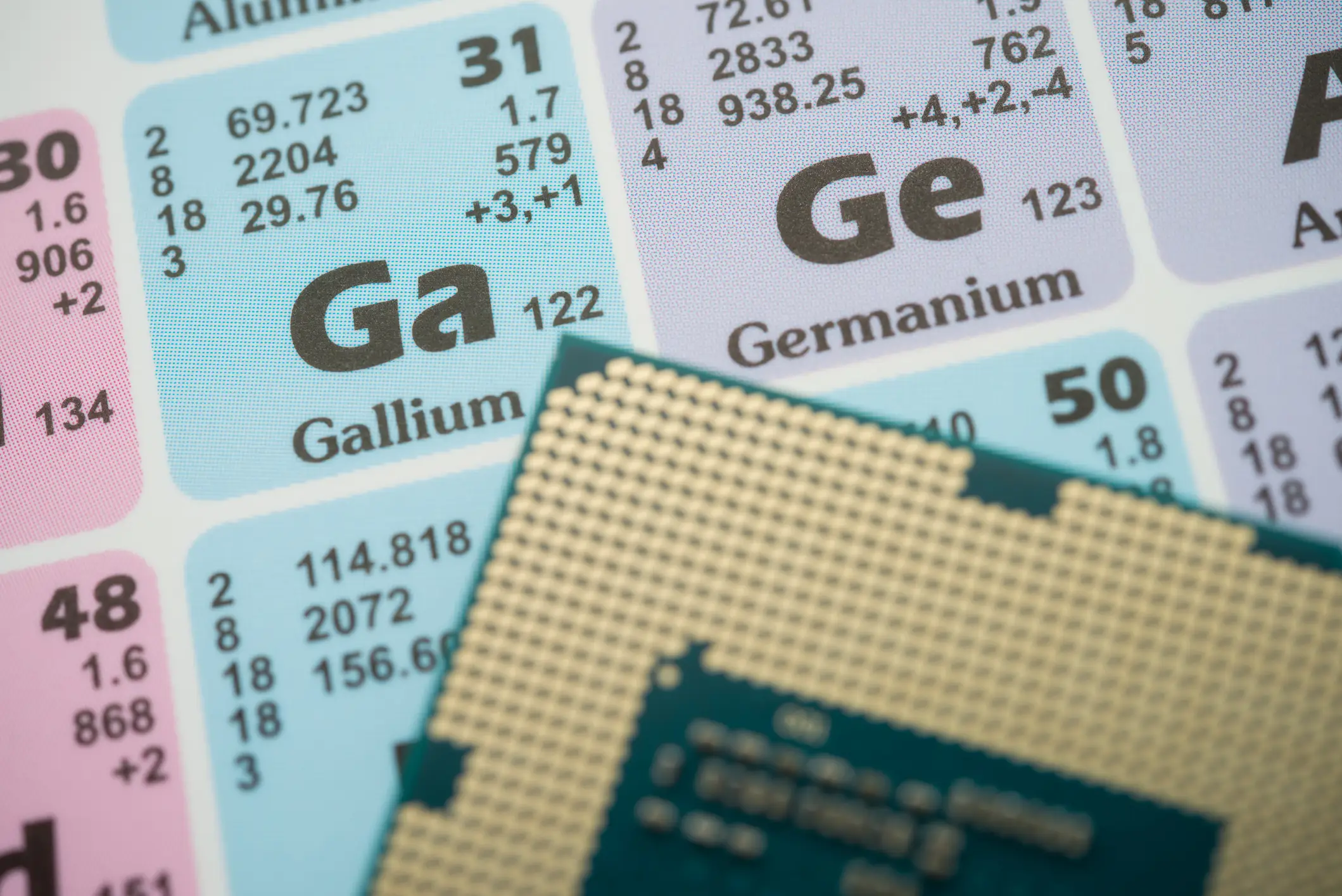
China produces the most of the world's largest producers of gallium and germanium (Pla2na/Getty Images)

China are world-leading producers of these materials, accounting for 94 per cent of gallium and 83 per cent of germanium globally.

Russia is the second-largest producer of gallium.

Antimony will also be banned, while the export of graphite will now be subject to greater scrutiny.

Why are gallium and germanium important?

Gallium and germanium are primarily used in semiconductors - the tiny components help power almost all our modern-day electronics, including smartphones and computers.

Germanium is also used for fiber optic cables, solar cells and infrared technology, while antimony is a key material in bullet manufacturing and other weaponry.

Atimony, meanwhile, helps to harden alloys for use in lead–acid batteries, which are used in emergency lighting and electrical vehicle batteries.
Electric vehicle production could be impacted by the ban (Morris MacMatzen/Getty Images)

Graphite could also be affected, which is a major component in electric vehicle batteries.

Reduced access to these materials could slow down production, increase costs and disrupt supply chains.

What impact will China's ban have on the US?

A report earlier this year from the US Geological Survey projected the impact China banning both gallium and germanium at once could have on the on the US' gross domestic product.

That's the measure of the size and health of a country's economy over a period of time - usually a year.

The results indicated that a complete restriction of China’s net exports of gallium and germanium simultaneously could cause the US GDP to decrease $3.4 billion a year.
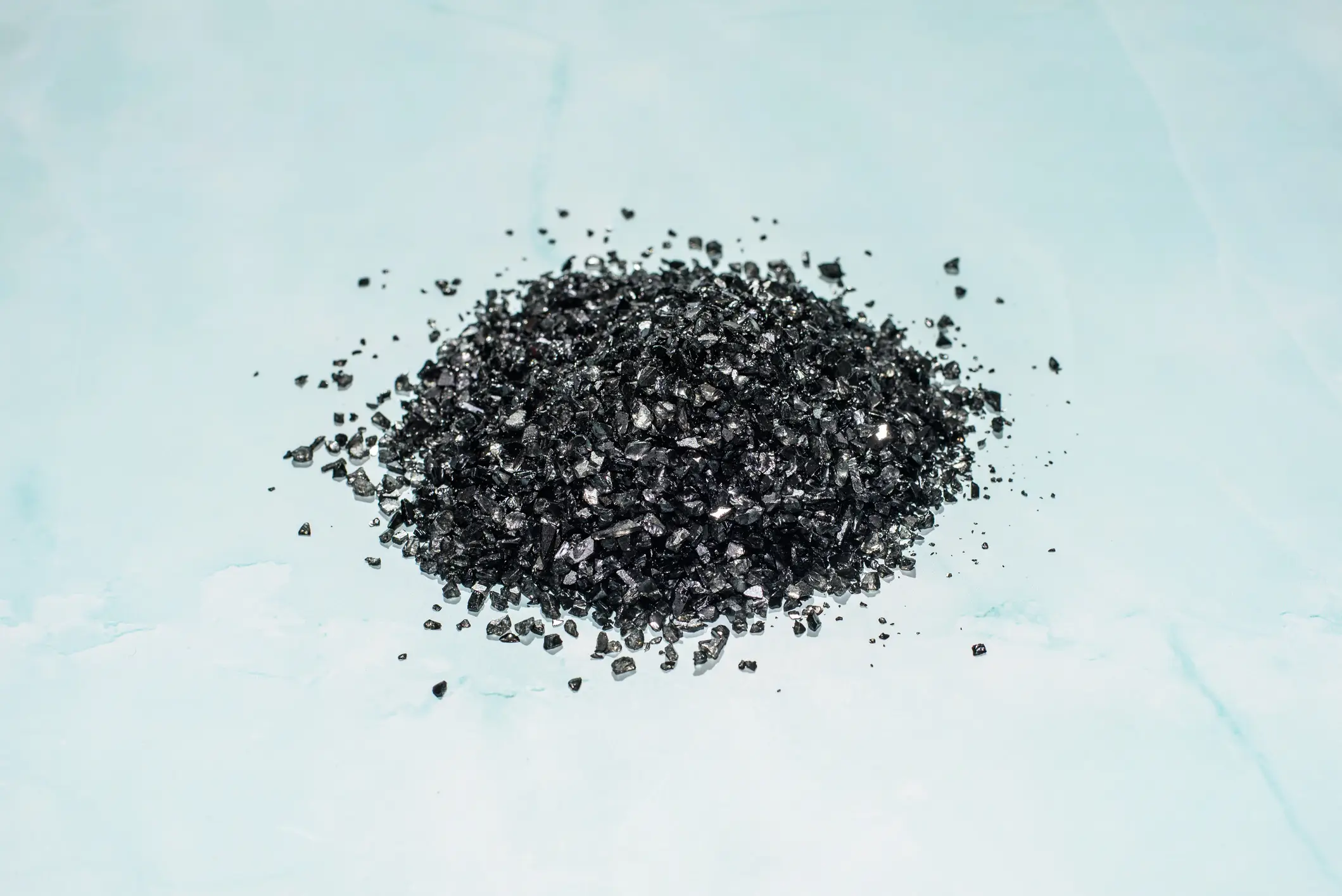
Germanium is mainly used in semiconductors (CorbalanStudios/Getty Images)

That works out at a $34 billion loss over the course of a decade, dealing a pretty big blow to the country's economy.

And that's just measuring the ban on gallium and germanium - the figure could be even larger taking antimony and superhard materials into account.

Nedal Nassar, lead author of Quantifying Potential Effects of China’s Gallium and Germanium Export Restrictions on the U.S. Economy, said of the model: "We do account for currently available production capacity outside of China and the short-term substitution potential. Our model projects the impacts in the near term and in many cases developing new supply sources or substitute materials takes far longer."

Choose your content:

10 hours ago
16 hours ago
3 days ago
6 days ago
  • YouTube/TheDiaryOfACEO
    10 hours ago

    Former CIA spy explains terrifying truth about what our phones and other devices can hear

    "It's not just the NSA/CIA/FBI that you have to worry about."

    Technology
  • Miguel J. Rodriguez Carrillo / AFP/ Getty Images
    16 hours ago

    Astronaut Suni Williams explains what she realized when looking down at the Earth after 608 days in space

    It comes as Suni confirmed her retirement from NASA, months after being rescued from space

    Technology
  • Getty Stock Images
    3 days ago

    NASA responds to wild theory Earth will lose gravity on August 12 for seven seconds after social media frenzy

    NASA has set the record straight on the wild internet theory

    Technology
  • Justin Sullivan/Getty Images
    6 days ago

    Expert issues security warning over iPhone 4 comeback that could leave people 'vulnerable'

    People are forking out a lot for an iPhone 4

    Technology
  • China and USA's rare earth mineral deal could prevent $34,000,000,000 black hole in American economy
  • Experts issue severe warning as mysterious seeds from China are being mailed to US homes
  • China retaliates to Donald Trump's tariffs just minutes after they take effect
  • China claims it has found another record-breaking gold deposit months after discovering $83,000,000,000 reserves