unilad homepage
unilad homepage
    • News
      • UK News
      • US News
      • World News
      • Crime
      • Health
      • Money
      • Sport
      • Travel
    • Music
    • Technology
    • Film and TV
      • News
      • DC Comics
      • Disney
      • Marvel
      • Netflix
    • Celebrity
    • Politics
    • Advertise
    • Terms
    • Privacy & Cookies
    • LADbible Group
    • LADbible
    • SPORTbible
    • GAMINGbible
    • Tyla
    • UNILAD Tech
    • FOODbible
    • License Our Content
    • About Us & Contact
    • Jobs
    • Latest
    • Archive
    • Topics A-Z
    • Authors
    Facebook
    Instagram
    X
    Threads
    TikTok
    YouTube
    Submit Your Content
    Scientist shows how disgusting our phones really are by putting one under a microscope

    Home> Technology> News

    Published 11:51 18 Nov 2024 GMT

    Scientist shows how disgusting our phones really are by putting one under a microscope

    If you don't frequently wipe your cellphone clean, you might want to start doing so

    Niamh Shackleton

    Niamh Shackleton

    google discoverFollow us on Google Discover
    Featured Image Credit: Twitter/@‌Rainmaker1973 / Another Perspective/YouTube

    Topics: Health, Technology, Science, Phones, YouTube

    Niamh Shackleton
    Niamh Shackleton

    Niamh Shackleton is an experienced journalist for UNILAD, specialising in topics including mental health and showbiz, as well as anything Henry Cavill and cat related. She has previously worked for OK! Magazine, Caters and Kennedy.

    X

    @niamhshackleton

    Advert

    Advert

    Advert

    You might be less inclined to put your cellphone to your ear when learning of the type of bacteria that could live in the device.

    As of this year, it was reported that over 300 million people in the US have a smartphone, as per Statista.

    Smartphones such as Androids and iPhones are used for a host of different reasons; for social media and texting, to phone calls and emails.

    With the vast amount of things we can do with our cellphones in mind, it probably comes as no surprise that we use them around 144 times a day on average, Forbes reported in 2023.

    Advert
    People use their smartphones more than 100 times a day (Getty Stock)
    People use their smartphones more than 100 times a day (Getty Stock)

    As we use them so much, it only makes sense that we should be cleaning our devices a lot and experts say we should could wipe down our smartphones once a day - but it turns out only 21 percent of Americans do this, while seven percent don't clean them at all.

    If you're part of that seven percent and don't think cleaning your smartphone regularly is needed, this scientists video will make you feel differently.

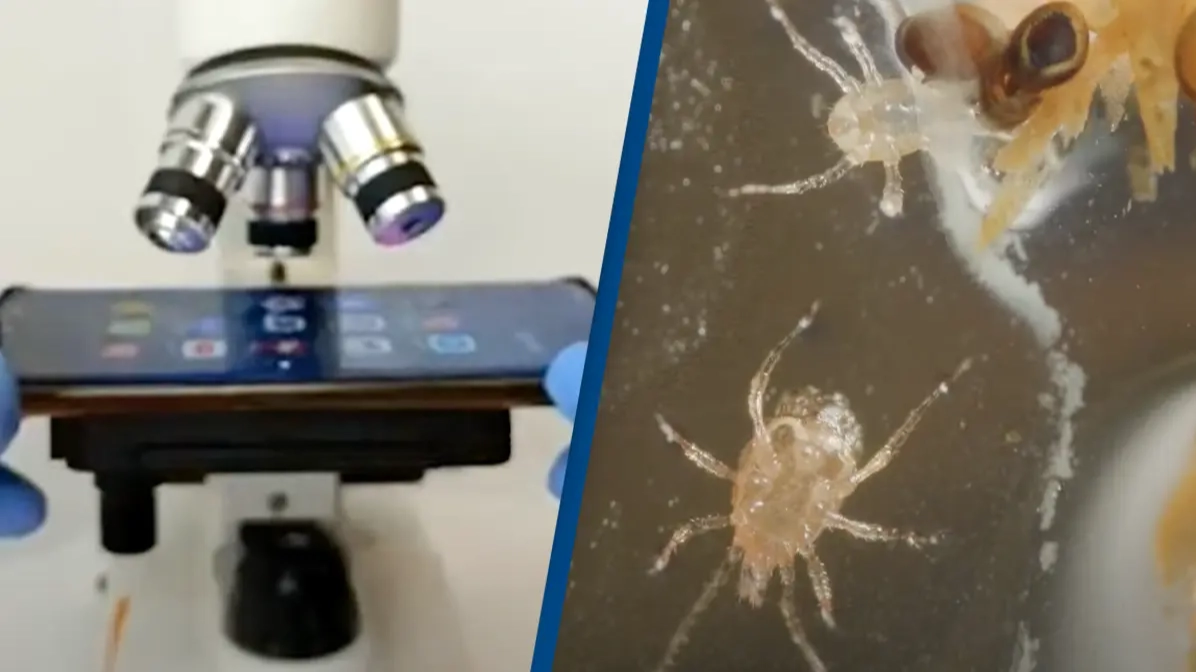
    YouTuber Jens Braun shared a clip to his channel called Another Perspective and used a microscope to look at three smartphones: one being two weeks old, another being two years old, and a third being 20 years old.

    Zooming into the two two-year-old device, Braun found a lot of dust and skin particles around its LED light. Ew.

    Going on to look at his 20-year-old Samsung phone, he discovered that the lens on the piece of tech was 'completely taken over by fungus'.

    Looking into the grooves of the cellphone, Braun says he thinks he discovered the skin of a mite, implying that one of the tiny insects once lived in it. He even found a tiny mushroom growing in the edges of it too.

    Fortunately much less horrific things were found on Braun's two-week-old cellphone, but it was still dirty and dusty.

    In regards to what might happen to you if you don't regularly clean your phone, one thing might be increasingly bad skin.
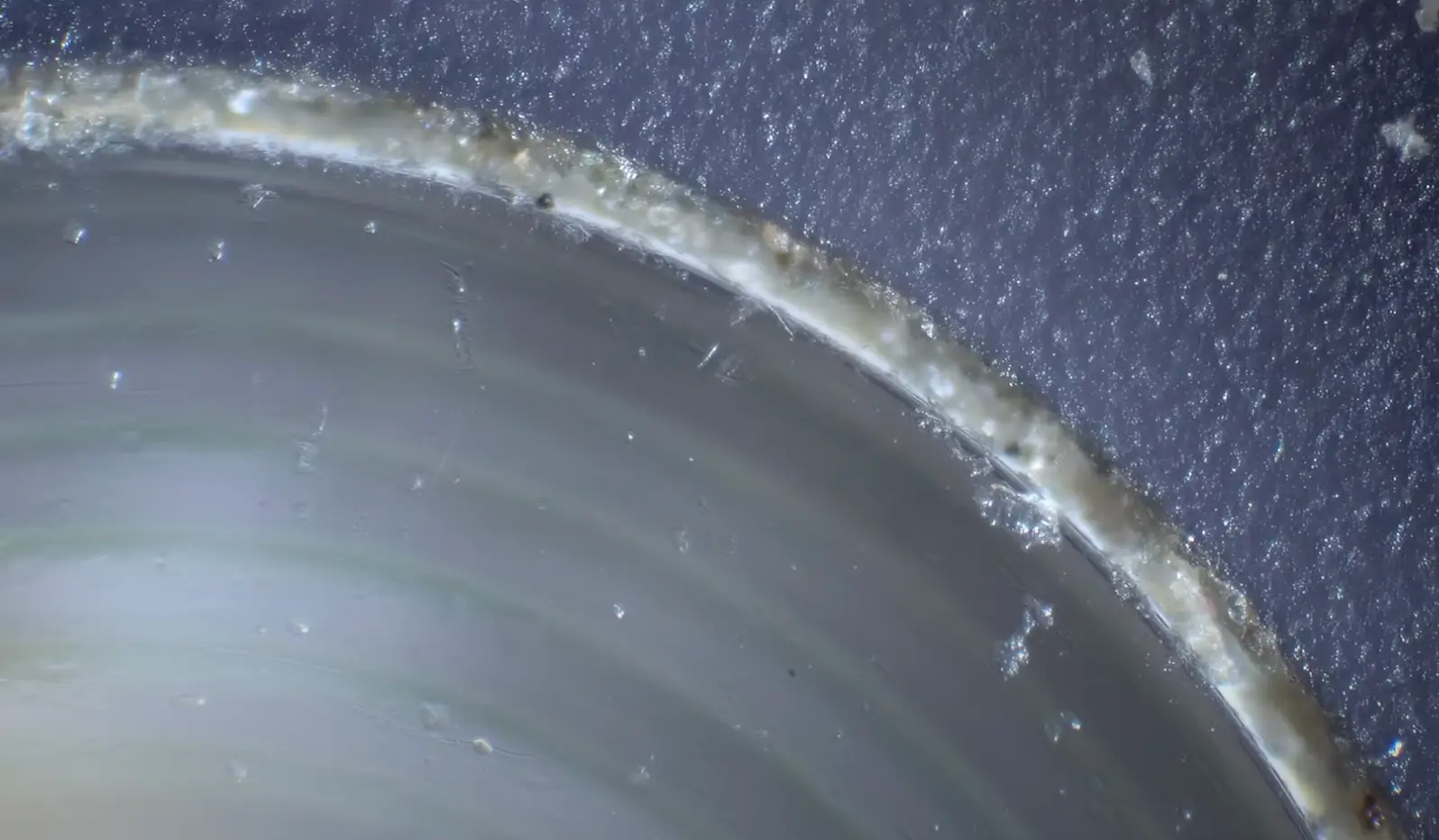
    Dust and skin particles were found around one of the phone's LED light (@anotherperspective3076/YouTube)
    Dust and skin particles were found around one of the phone's LED light (@anotherperspective3076/YouTube)

    "When you hold a dirty phone to your face for a prolonged period of time, bacteria can enter your pores, increasing your chance of getting acne, which occurs when oil and debris clog your pores," explains Northwestern Medicine.

    It can also increase your chances of contracting a viral or bacterial infection.

    Sarah Latoria, APRN, primary care clinician at Northwestern Medicine, said: "Chances are you’re not regularly getting sick from germs on your phone, but viral diseases like influenza and bacterial diseases like E.coli can spread through contact with a phone carrying viruses and bacteria."

    Experts say the best way to clean your cellphone is with a lint-free cloth slightly dampened with soap and water, and to avoid using spray cleaners.

    Also make sure your device is unplugged when you're cleaning it.

    Choose your content:

    a day ago
    3 days ago
    8 days ago
    • Christopher Willard/Disney via Getty Images
      a day ago

      Shark Tank star Lori Greiner issues warning over hidden Gmail setting and reveals how to disable it

      Lori Greiner has warned 1.8 billion Gmail users about a setting that allows access to their private emails

      Technology
    • Getty Stock
      a day ago

      Every country where ChatGPT is banned and why

      One in eight people on the planet can't access ChatGPT - and their governments want to keep it that way

      Technology
    • Getty Stock Images
      3 days ago

      Man who used AI to apply to 1,000 jobs while he was sleeping woke up to mind blowing results

      Work smart, not harder has taken on a whole new meaning

      Technology
    • Justin Sullivan/Getty Images
      8 days ago

      OpenAI names 22 industries at risk of job losses as it proposes four day week

      Two new reports suggest AI might be coming for your job - but you could also get a three day weekend

      Technology
    • Surprising reason we never use our phones during dreams
    • 'Popcorn brain' explained as study shows scrolling social media could be severely impacting our mind
    • Chilling simulation shows how someone actually dies from cancer and it's extremely eye opening
    • Scientists reveal how colon cancer is only type of cancer where deaths are increasing for people under 50