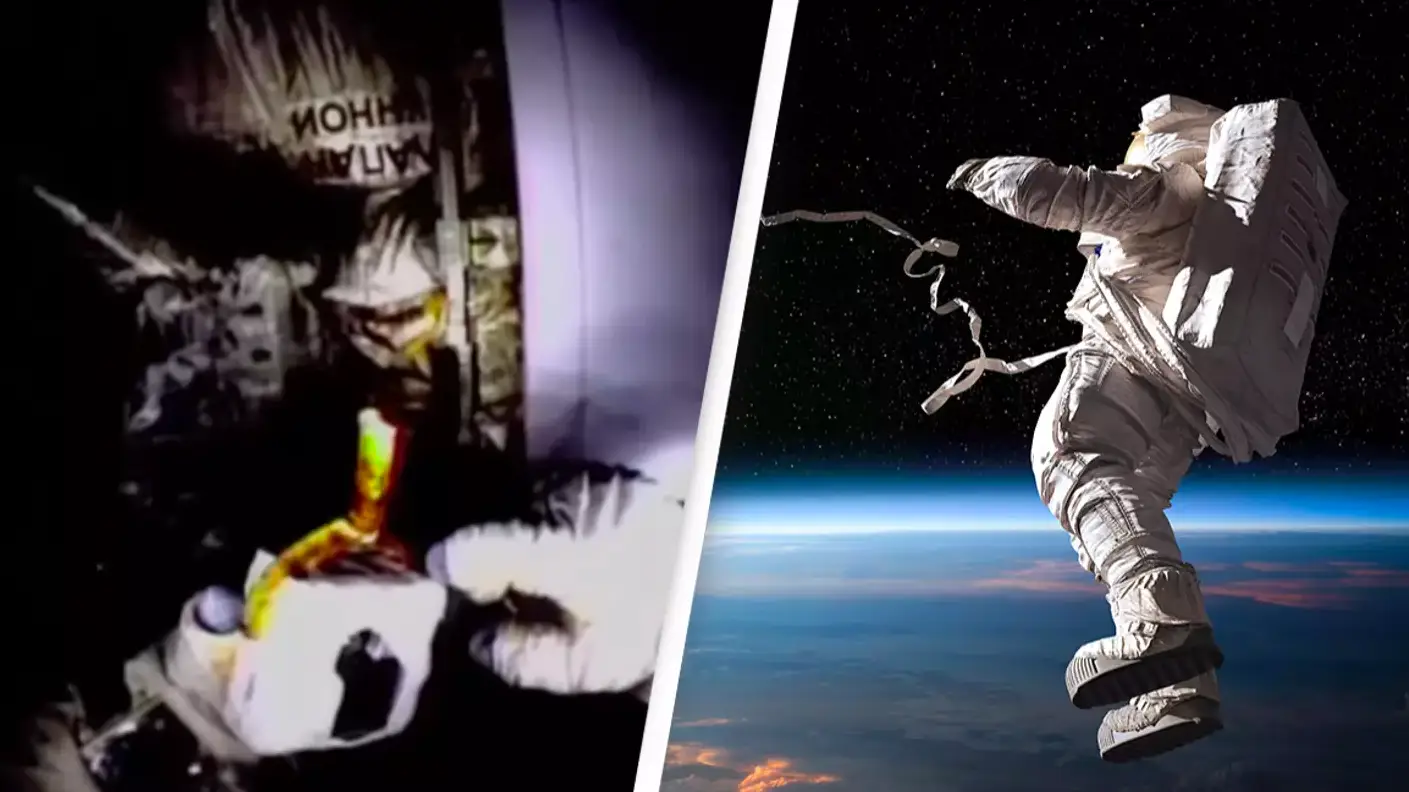
Cosmonaut told to leave area immediately after discovering blob growing outside International Space Station

Whether or not alien lifeforms exist is a debate that has been raging between scientists for decades.
Earlier this year, experts debunked the mystery of ‘non-human corpses’ and it was revealed that the US government is now taking UFO threats pretty seriously.
Elsewhere, NASA recently claimed that Mars could once have been habitable, while researchers stated a human-to-whale conversation could eventually lead to alien contact.
Advert
While scientists are yet to announce that little green men do exist, a group of Russians made an interesting out-of-world discovery last year.
The collective was on board the International Space Station (ISS) in October 2023 when they were forced to step outside to fix a leaking radiator.
The leak was reported by Roscosmos, the Russian space agency, who later scheduled a rescue spacewalk.
On Wednesday 26 October, Russian cosmonaut Oleg Kononenko was ordered to fix the backup radiator’s leak - a task that would lead him to venture outside of ISS.
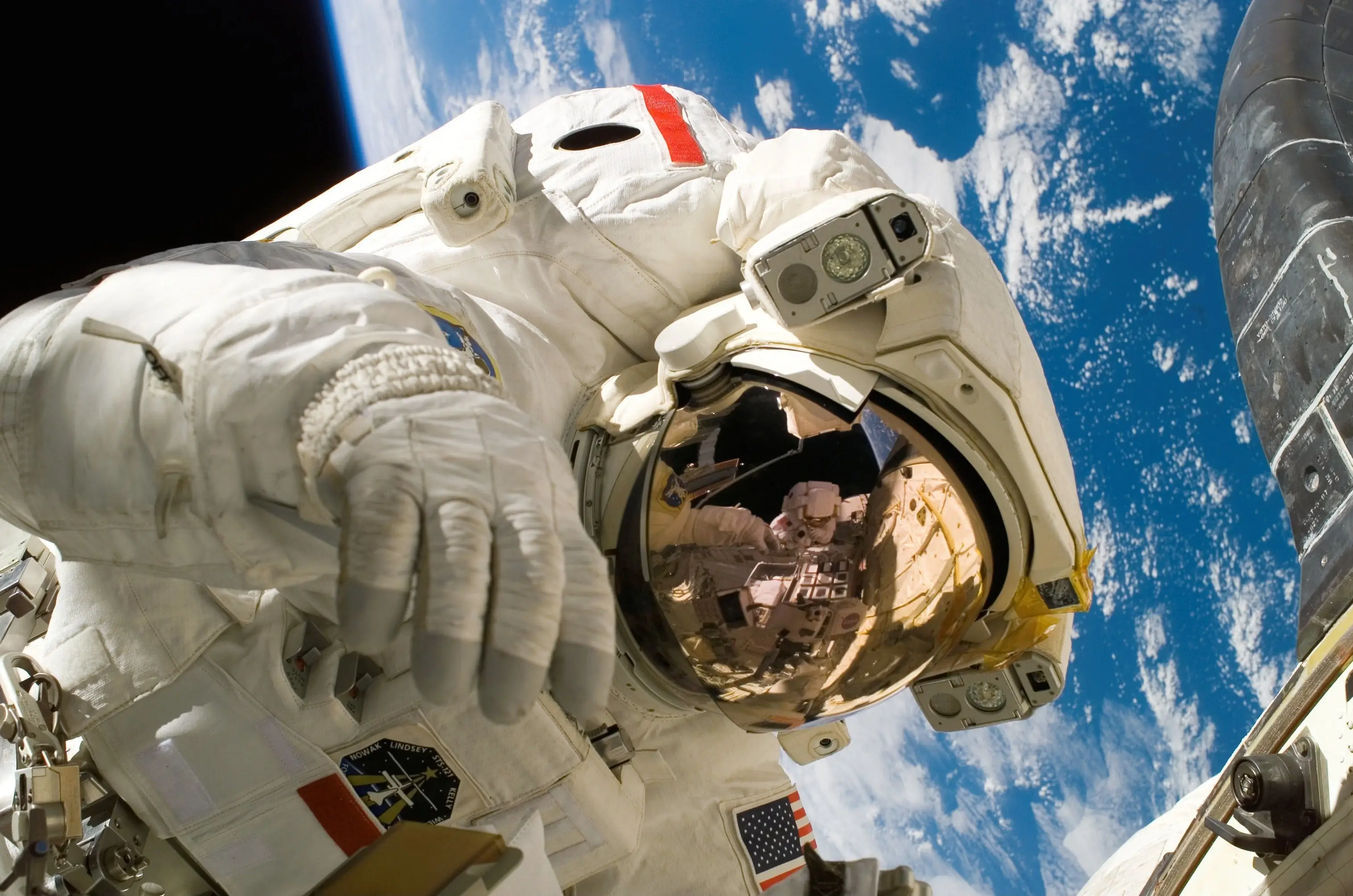
The 59-year-old claimed that, while on the spacewalk he noticed that there were various holes ‘drilled’ into the radiator panel.
Upon his discovery, the engineer radioed Moscow Mission Control to report his findings.
“The holes have very even edges like they've been drilled through,” he explained. “There are lots of them. They are spread in a chaotic manner.”
But Kononenko’s strange discoveries didn’t stop there.
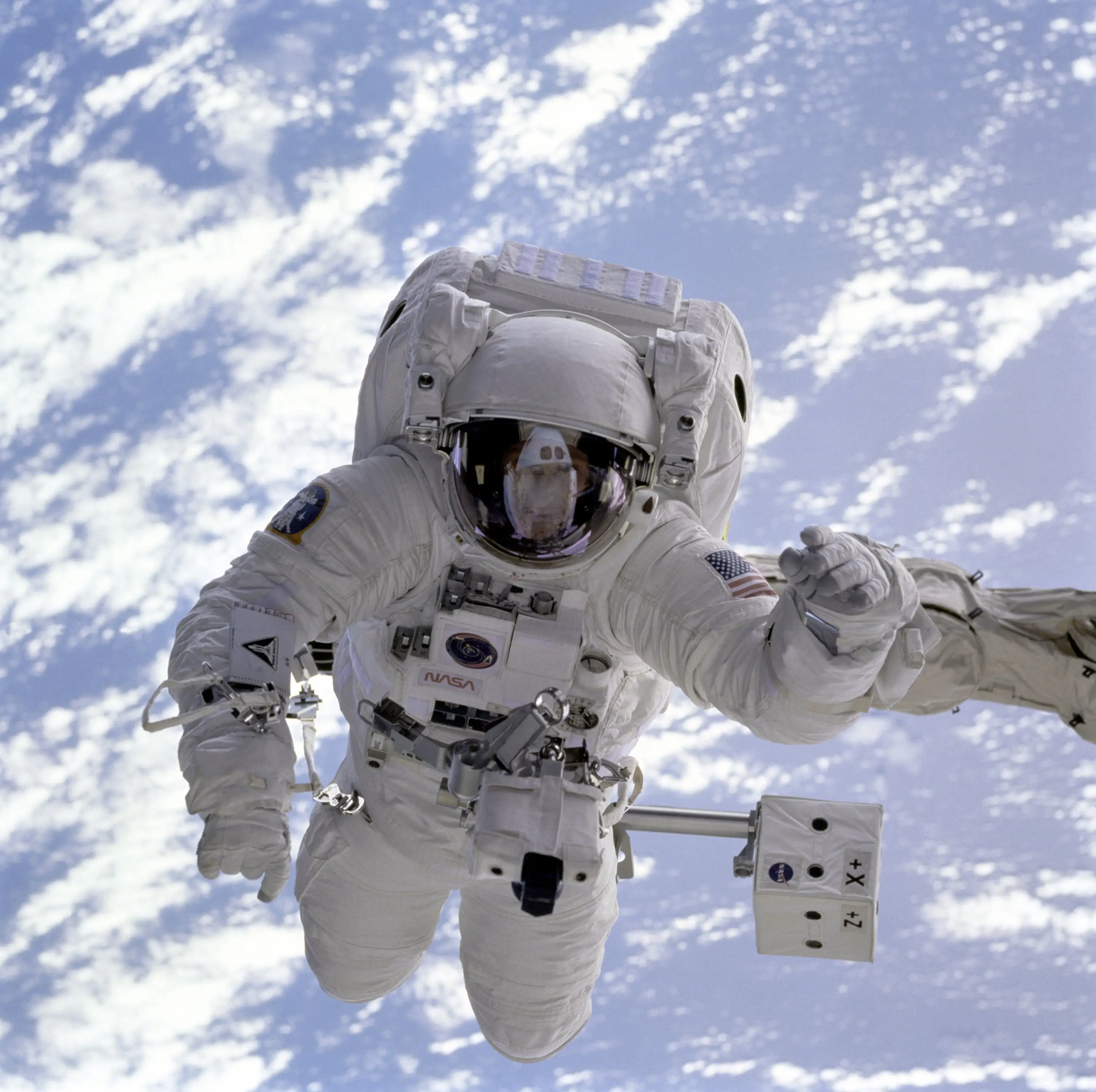
Whilst sucking up liquid from the leak, he apparently encountered a bizarre globule of coolant.
It’s said that the glob had shifted onto the cosmonaut’s safety tether, which prompted Moscow Mission Control to demand his return to ISS.
The concern came just days after the sheer speed of the space station was shown via a fantastic animation.
YouTube channel Airplane Mode posted the animation online and showed how ISS moves at an average speed of 17,150mi/h (27,600km/h).
The quick clip shows a first-person view of what it would be like to move at that sort of speed through New York City.

After watching the viral video, one YouTube user commented: “This really puts into perspective how slow sound actually is, this is crazy stuff.”
A second said: “Manhattan came and went in less than two seconds. Ha, that’s insane.”
“I think it's crazy that we as humans made an object go that fast,” pondered another.
“I bet Newton would be pretty shocked to hear we actually went fast enough to orbit Earth like he theorized back when the fastest vehicles were sailing ships.
Topics: Science, Technology, Space, International Space Station, Aliens
 Ella Scott