• News
  • Film and TV
  • Music
  • Tech
  • Features
  • Celebrity
  • Politics
  • Weird
  • Community
  • Advertise
  • Terms
  • Privacy & Cookies
  • LADbible Group
  • LADbible
  • SPORTbible
  • GAMINGbible
  • Tyla
  • UNILAD Tech
  • FOODbible
  • License Our Content
  • About Us & Contact
  • Jobs
  • Latest
  • Topics A-Z
  • Authors
Facebook
Instagram
X
Threads
TikTok
YouTube
Submit Your Content
Doctor shares 10-3-2-1-0 method that will help you get the best night’s sleep

Home> Community> Life

Updated 10:24 14 Sep 2024 GMT+1Published 15:27 13 Sep 2024 GMT+1

Doctor shares 10-3-2-1-0 method that will help you get the best night’s sleep

Turns out you can do a lot more preparation for a good night's sleep than you think

Emily Brown

Emily Brown

You may've tried meditation or breathing techniques, but have you tried the 10-3-2-1-0 to get to sleep?

If you find yourself tossing and turning, constantly checking your phone and getting worked up over something you said eight years ago in school, then this sleep hack might be for you.

Paediatritian Dr Jess Andrade regularly shares tips and information with her followers on Instagram and the 10-3-2-1-0 method is one that she brands 'sleep hygiene basics'.

However, it's 'not intended for everyone based on medical history' so prepare to do some research and speak to a doctor rather than just diving in.

Advert

However, should you be given the green light to try the technique, the method starts a whopping 10 hours before you go to bed.

And it kicks off with something you consume which has the opposite effect to winding you down.
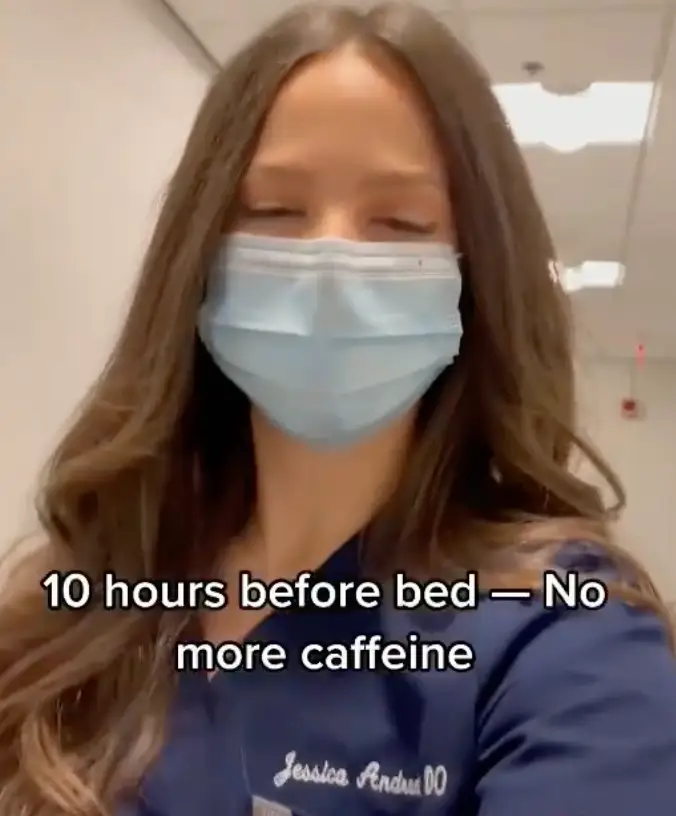
Dr Jess Andrade said preparations begin 10 hours before bed (Instagram/@doctorjesss)

Yes, I'm talking about caffeine - the drug which helps fuel our claustrophobic commuting and frantic typing after we got a measly five hours shut eye.

Advert

Dr Andrade recommends that you should stop drinking caffeine 10 hours before going to bed, explaining: "Caffeinated drinks will clear from the blood stream in around 10 hours and eliminate the stimulatory effects."

So if you're planning to go to bed at 11pm, you need to make sure your last coffee is at 1pm.

You're good for the next few hours, but Dr Andrade's method continues to count down to bedtime, the next part of the method occurring when the clock strikes three hours before bed - this is when you need to stop eating alongside drinking any alcohol.

Doing this can help reduce symptoms of reflux, and reduce the chance of alcohol impairing your natural sleep cycle.

Advert

An hour later, when you have two waking hours left, you need to put down your pencils and make sure you stop doing any work or homework - you probably won't need too much convincing for that one.

Dr Andrade explains: "2ish hours before, relax the brain and write down all tasks for the next day and give your brain a mental rest."
If you've been struggling to fall asleep this hack could be for you (Getty Stock Images/ Guido Mieth)

This will help your mind wind down before you go to bed, though Dr Andrade says you can only use your phone for one of those hours.

Advert

The '1' part of the method relates to your final hour before bed, when you should turn off all of your screens, including phones, TVs and laptops.

Turning off devices before bed can prevent the blue light from your screens from disrupting your body’s natural sleep cycle.

If you do all that, Dr Andrade says, then you'll achieve the '0' part of the method.

She explains: "Zero is the number of times you'll hit the snooze button in the morning."

Advert

Dr Andrade adds under her video that the information is for 'educational purposes only', adding: "Not intended to diagnose or treat any illness. Speak with your doctor with any medical concerns."

Still, if your only concern is the big circles under your eyes each morning, then the method is definitely worth a go!

Featured Image Credit: Oleg Breslavtsev/Elena Noviello/Getty Images

Topics: Health, Instagram, Life, Sleep, Science

Emily Brown
Emily Brown

Emily Brown is UNILAD Editorial Lead at LADbible Group. She first began delivering news when she was just 11 years old - with a paper route - before graduating with a BA Hons in English Language in the Media from Lancaster University. Emily joined UNILAD in 2018 to cover breaking news, trending stories and longer form features. She went on to become Community Desk Lead, commissioning and writing human interest stories from across the globe, before moving to the role of Editorial Lead. Emily now works alongside the UNILAD Editor to ensure the page delivers accurate, interesting and high quality content.

Advert

Advert

Advert

Choose your content:

3 days ago
4 days ago
5 days ago
  • Neale Haynes/Getty Images
    3 days ago

    Truth behind viral post of writer's wild daily routine including cocaine, champagne and hot tubs

    The legendary author and journalist is claimed to have done cocaine for nine hours before he even started writing

    Community
  • PA Real Life
    3 days ago

    Polyamorous quad break down how their unconventional four-way relationship works

    The polyamorous quad insist it's not an 'unlimited sex fest'

    Community
  • Getty Images/Anadolu
    4 days ago

    Expert reveals 11 AI-proof jobs that will keep you in demand for decades

    AI may still assist in these sectors, however

    Community
  • niabasic/Instagram
    5 days ago

    Disturbing truth behind influencer labeled ‘the world’s most beautiful girl’

    Not is all as it seems with a model that's gone viral online

    Community
  • Doctor reveals '3-2-1 sleep rule' that can stop you from waking up at 3am ever again
  • Sleep expert shares three warning signs you may have condition that affects 30 million Americans
  • Scientists reveal what happens to your body if you get less than 6 hours of sleep at night
  • Doctor shares six vital but easy habits that could help prevent dementia later in life