unilad homepage
unilad homepage
  • News
    • UK News
    • US News
    • World News
    • Crime
    • Health
    • Money
    • Sport
    • Travel
  • Music
  • Technology
  • Film and TV
    • News
    • DC Comics
    • Disney
    • Marvel
    • Netflix
  • Celebrity
  • Politics
  • Advertise
  • Terms
  • Privacy & Cookies
  • LADbible Group
  • LADbible
  • SPORTbible
  • GAMINGbible
  • Tyla
  • UNILAD Tech
  • FOODbible
  • License Our Content
  • About Us & Contact
  • Jobs
  • Latest
  • Archive
  • Topics A-Z
  • Authors
Facebook
Instagram
X
Threads
TikTok
YouTube
Submit Your Content
Doctor warns holding in your poop can have serious health consequences
Home>News>Health
Published 14:34 16 Nov 2024 GMT

Doctor warns holding in your poop can have serious health consequences

We've all been guilty of 'voluntary withholding' at some point in our lives...

Ellie Kemp

Ellie Kemp

google discoverFollow us on Google Discover
Featured Image Credit: Getty Stock Images

Topics: Health, Science, Fitness

Ellie Kemp
Ellie Kemp

Ellie joined UNILAD in 2024, specialising in SEO and trending content. She moved from Reach PLC where she worked as a senior journalist at the UK’s largest regional news title, the Manchester Evening News. She also covered TV and entertainment for national brands including the Mirror, Star and Express. In her spare time, Ellie enjoys watching true crime documentaries and curating the perfect Spotify playlist.

X

@EllieKempOnline

Advert

Advert

Advert

A doctor has warned against an everyday habit which we're probably all guilty of doing - maybe without even realizing.

With so many distractions, it can be quite easy to ignore nature's call to use the restroom.

Maybe you're at work and feel too awkward to dash to the toilet, or you just don't like pooping in public toilets.

Or perhaps you're too comfortable tucked up in bed and simply can't be bothered to move.

Advert

Either way, Australian gastroenterologist Professor Peter Katelaris has warned the habit can be bad for our health.
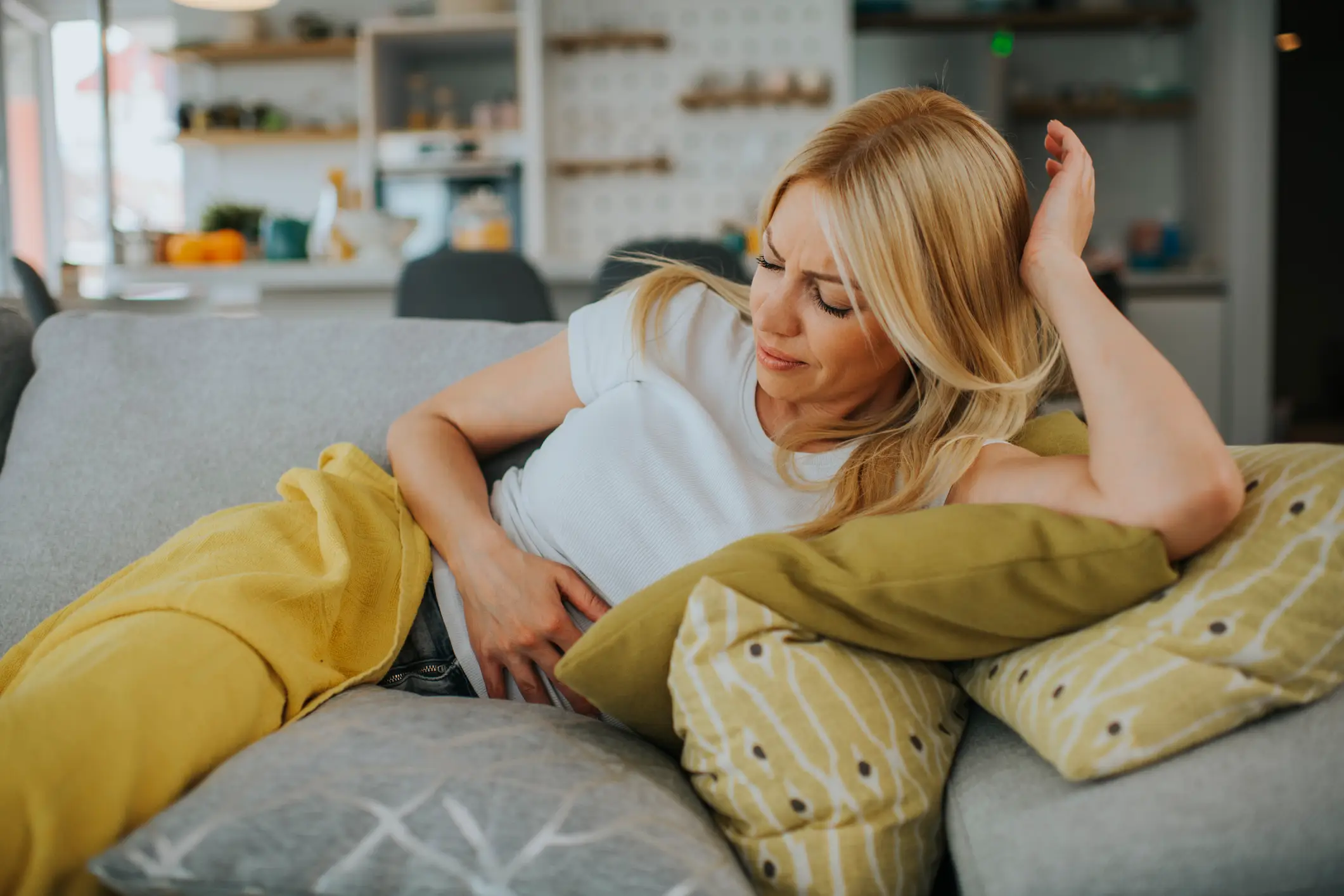
Ignoring the urge to poop does more harm than good (Milos Dimic/Getty Images)

He told news.com.au that young, female office workers are most guilty of resisting the urge to pass stool, known as 'voluntary withholding.'

“People may try and override the urge to pass a bowel motion,” Prof Katelaris explained.

“Some people do this as they may consider it inconvenient or embarrassing to go to the toilet during a busy day at work.

"Others don’t like to use a shared public toilet, and much prefer to use their own toilet, so suppress the urge which then passes.”

Doing so can cause some uncomfortable symptoms, including 'bloating, fullness and discomfort,' the Sydney professor explained.

People might then try and poop when it's convenient for them, despite their body not signaling for them to, leading to constipation.
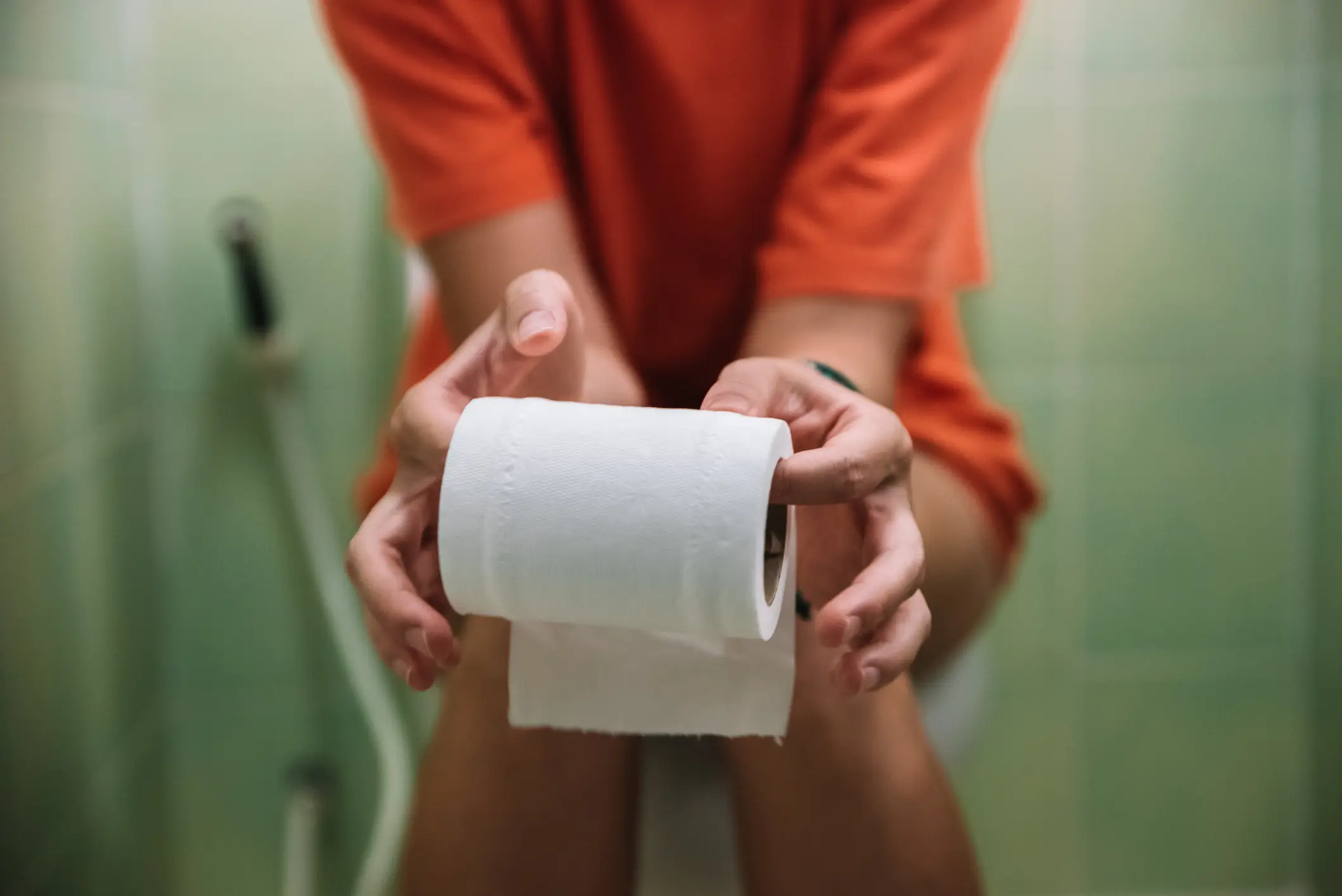
Everyone's bowel movements are different, but we shouldn't be ignoring the urge to poop (Antonio Hugo Photo/Getty Images)

Prof Katelaris explained: “Some people expect their bowels to open when they want them to, typically after breakfast and before work.

"They sit in hope and expectation, sometimes for a long time, waiting for something to happen.”

The forced straining can then cause painful splits in the skin of the anus, known as fissures, as well as itchy, uncomfortable hemorrhoids.

In older people, straining can cause blood pressure to spike, which could in some cases result in a heart attack or a stroke.
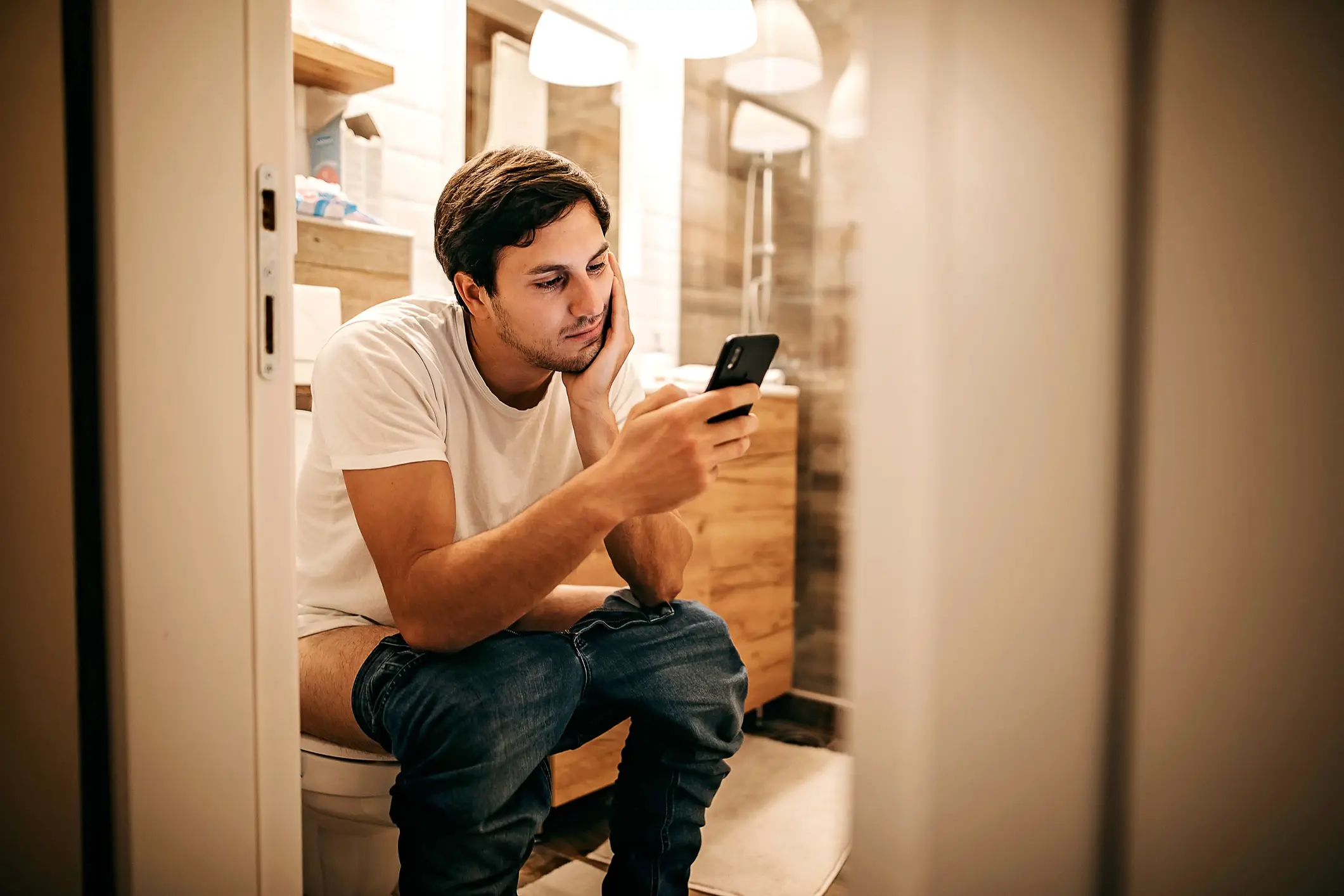
Spending more time than we need straining on the toilet is also bad for us (Stefa Nikolic/Getty Images)

So, how often should we be passing stool?

Prof Katelaris issued an important reminder: that 'our bodies are not machines.'

He added that people shouldn't worry if they're not pooping every single day.

“What is normal for one person may not be normal for another. In general, the majority of adults open their bowels between three times a day and three times a week,” he explained.

To keep your bowel movements regular, Katelaris recommends eating a balanced, portion-controlled, wholefood diet with minimal ultra-processed foods.

He also stresses the importance of drinking enough water to stay hydrated and getting an adequate amount of exercise.

However, if you notice any unusual, sustained changes with your bowel movement and poop, you should visit your general practitioner.

Choose your content:

9 mins ago
12 mins ago
2 hours ago
  • Peter Dazeley/Getty
    9 mins ago

    Hospice doctor reveals the main thing people get wrong about death

    It's something that comes to all of us, but what are we getting wrong about dying?

    News
  • Claire-Lise Havet/Getty Images for Kering
    12 mins ago

    Julianne Moore gets backlash after saying she avoids movies with ‘explosions and guns’

    Hollywood movies have too many 'easy stakes' and explosions, Oscar winner Julianne Moore told the Cannes Film Festival

    Film & TV
  • Getty stock image
    2 hours ago

    WHO declare global health emergency over new Ebola strain that has no cure and high fatality rate

    The WHO has declared the highest level of global health emergency as the virus spreads to a second country

    News
  • Getty Stock
    2 hours ago

    Ex-CIA researcher makes bombshell claim 4 types of aliens have been pulled from UFO crashes

    The American government has identified four distinct types of alien life, a former CIA-backed advanced weapons researcher has claimed

    News
  • Scientists reveal impact of one night without sleep that can cause serious health issues
  • Doctor warns of four everyday habits that could be increasing your risk of cancer
  • Doctor warns of the one hair change you should never ignore and what it could mean for your health
  • Doctor warns eating too much protein could cause painful condition suffered by 1 in 10 Americans