unilad homepage
  • News
  • Film and TV
  • Music
  • Tech
  • Features
  • Celebrity
  • Politics
  • Weird
  • Community
  • Advertise
  • Terms
  • Privacy & Cookies
  • LADbible Group
  • LADbible
  • SPORTbible
  • GAMINGbible
  • Tyla
  • UNILAD Tech
  • FOODbible
  • License Our Content
  • About Us & Contact
  • Jobs
  • Latest
  • Archive
  • Topics A-Z
  • Authors
Facebook
Instagram
X
Threads
TikTok
YouTube
Submit Your Content
Doctor shares warning to people whose fingers and toes change color and feel numb in the cold

Home> News> Health

Published 15:10 18 Mar 2025 GMT

Doctor shares warning to people whose fingers and toes change color and feel numb in the cold

YouTuber Doctor O'Donovan shared insight on what the symptoms could be a sign of

Emily Brown

Emily Brown

google discoverFollow us on Google Discover
Featured Image Credit: Getty Images/Yuliya Movchan

Topics: Health, YouTube

Emily Brown
Emily Brown

Emily Brown is UNILAD Editorial Lead at LADbible Group. She first began delivering news when she was just 11 years old - with a paper route - before graduating with a BA Hons in English Language in the Media from Lancaster University. Emily joined UNILAD in 2018 to cover breaking news, trending stories and longer form features. She went on to become Community Desk Lead, commissioning and writing human interest stories from across the globe, before moving to the role of Editorial Lead. Emily now works alongside the UNILAD Editor to ensure the page delivers accurate, interesting and high quality content.

Advert

Advert

Advert

A doctor and popular YouTuber has warned that people whose hands and feet change color and go numb in the cold - beyond the usual feeling of being chilly - might actually have a specific condition.

Doctor O'Donovan, a licensed doctor in the UK, shared a video offering insight to the disease which can affect certain parts of your body not only in the cold, but also sometimes in stressful situations.

Most people will have experienced cold hands or feet at some point in their lives - hopefully not right before they walk down the aisle - but this particular disease causes symptoms beyond simply 'being cold'.
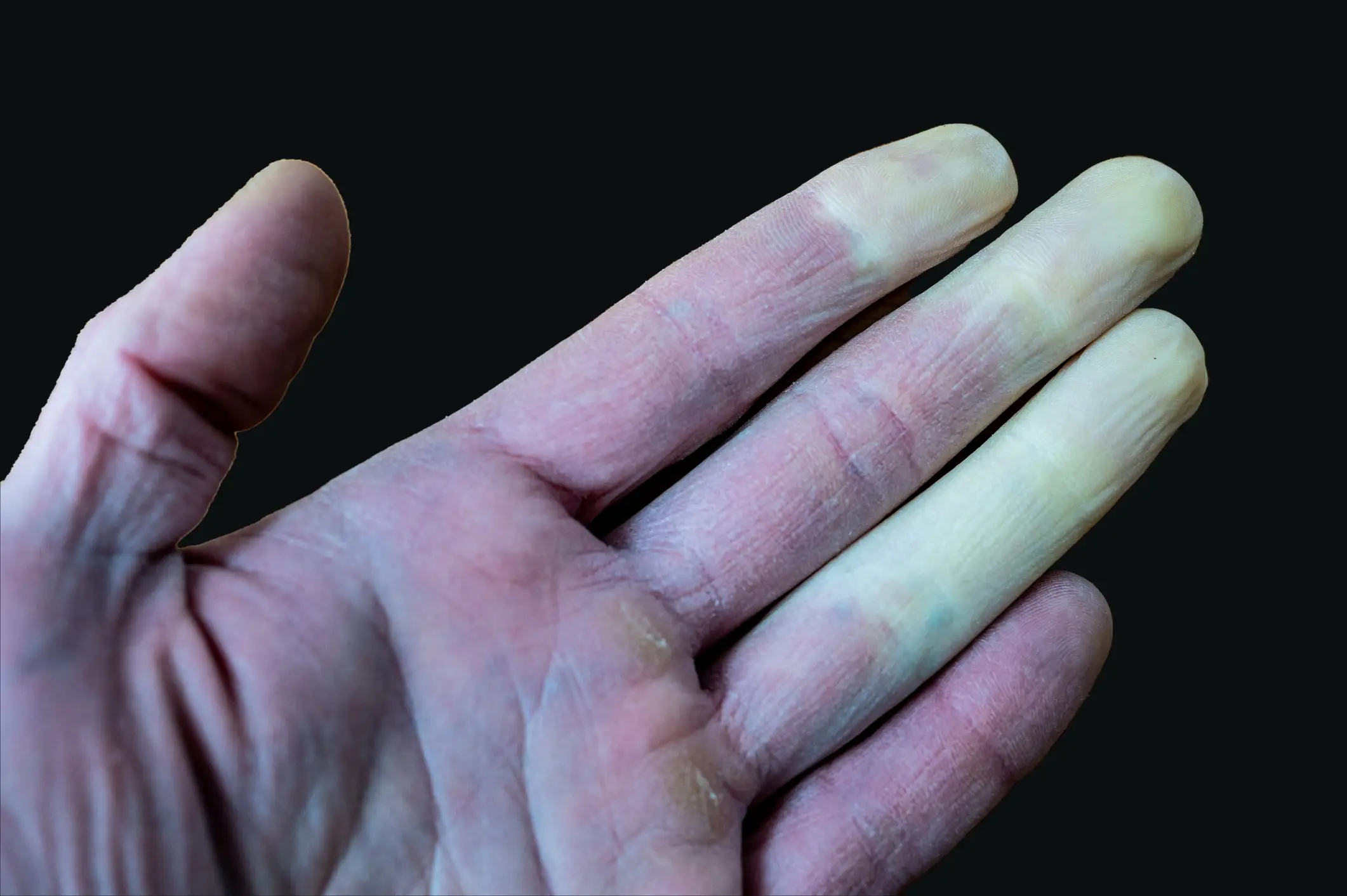
Raynaud's disease can cause your fingers to change color (Getty Stock Photo)

What is Raynaud's disease?

Raynaud's disease, Doctor O'Donovan explained, happens when smaller arteries narrow in response to cold weather or stress, limiting blood flow to certain areas. As a result, sections of your fingers or toes can turn white, then blue. They might feel particularly cold, or start to exhibit a 'numb, prickly feeling'.

Advert

When the blood flow improves, the affected areas might tingle or swell.

Experts don't fully understand what causes Raynaud's, though situations such as being in cold air, taking something from a freezer or putting your hands in cold water may cause it to flare up.

There are two types of Raynaud's disease - Primary Raynaud's, which is not the result of another medical condition; and Secondary Raynaud's, which develops because of another health condition such as connective tissue or artery diseases, or high blood pressure.

Secondary Raynaud's is less common, and symptoms usually appear after the age of 40.
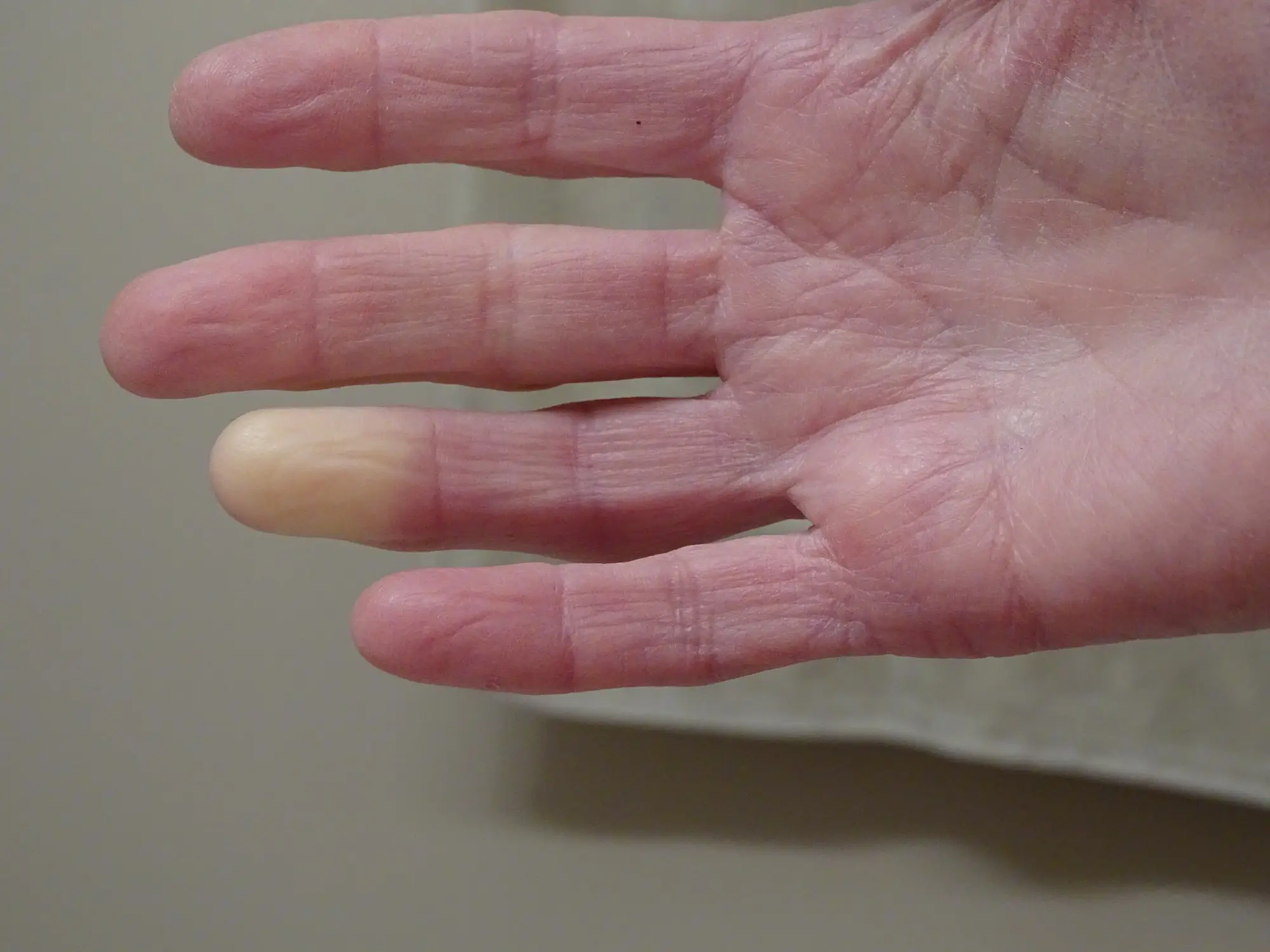
Raynaud's symptoms can be prevented by attempting to keep warm (Getty Stock Photo)

What are the risk factors associated with Raynaud's?

In his YouTube video, O'Donovan explained that Raynaud's is more commonly associated with women. Primary Raynaud's typically develops between the ages of 15 and 30, and is more common in people who live in colder climates.

Chances of developing the disease also seem to be slightly increased if you have a family member with it.

Risk factors for Secondary Raynaud's include having one of the diseases which can result in the condition, or having a job which may result in 'repeated trauma' to the areas, such as typing a lot or using work tools that vibrate.

Smoking, as well as the use of medicines that affect the blood vessels, can also increase the risk of Secondary Raynaud's.

How can you prevent and treat Raynaud's?

People with Raynaud's can try and avoid symptoms by wrapping up warm in cold weather, with the help of a hat, scarf and gloves to keep up your body temperature.

If your symptoms appear to be worsening, O'Donovan said there are medicines that can be prescribed to help treat the condition. The doctor advised visiting a professional if symptoms worsen, or if the symptoms are affecting your daily life.

Choose your content:

8 hours ago
9 hours ago
  • (Getty Stock)
    8 hours ago

    Three simplest TSA hacks which will help travelers survive airport chaos

    Hours-long queues have been reported due to the partial government shutdown

    News
  • Getty Stock Images
    8 hours ago

    Scientists tested people using AI as their therapist with disturbing results

    Using artificial intelligence for mental health counseling might be cheaper than going to a therapist, but it might be making things worse

    News
  • Getty Stock Images
    9 hours ago

    How long you can keep leftover food and which are most 'high risk'

    An expert says you should think twice before tucking into four specific leftovers

    News
  • Matthew Horwood/Getty Images
    9 hours ago

    Groundbreaking new study finds vaping likely causes cancer as experts issue warning

    The authors of the study have urged vapers to remember the dangers of the habit

    News
  • Doctor reveals the one part of your body you should never shave and warns of dangers
  • Doctor shares shocking video of 'worst' skin cancer he's ever seen and issues urgent warning
  • Doctor explains real reason you keep getting up to pee in the middle of the night and it's not your bladder
  • Doctor shares technique to help men last longer in bed as he reveals potential causes behind issue