unilad homepage
unilad homepage
    • News
      • UK News
      • US News
      • World News
      • Crime
      • Health
      • Money
      • Sport
      • Travel
    • Music
    • Technology
    • Film and TV
      • News
      • DC Comics
      • Disney
      • Marvel
      • Netflix
    • Celebrity
    • Politics
    • Advertise
    • Terms
    • Privacy & Cookies
    • LADbible Group
    • LADbible
    • SPORTbible
    • GAMINGbible
    • Tyla
    • UNILAD Tech
    • FOODbible
    • License Our Content
    • About Us & Contact
    • Jobs
    • Latest
    • Archive
    • Topics A-Z
    • Authors
    Facebook
    Instagram
    X
    Threads
    TikTok
    YouTube
    Submit Your Content
    Scientists reveal the chilling truth behind what could happen if you die in a dream
    Home>News>Health
    Published 16:30 12 Nov 2024 GMT

    Scientists reveal the chilling truth behind what could happen if you die in a dream

    Some experts have suggested that dreaming about dying indicates that some part of your life is coming to an end

    Niamh Shackleton

    Niamh Shackleton

    google discoverFollow us on Google Discover
    Featured Image Credit: Getty Stock Images / New Line Cinema

    Topics: Sleep, Psychology, Health, Science

    Niamh Shackleton
    Niamh Shackleton

    Niamh Shackleton is an experienced journalist for UNILAD, specialising in topics including mental health and showbiz, as well as anything Henry Cavill and cat related. She has previously worked for OK! Magazine, Caters and Kennedy.

    X

    @niamhshackleton

    Advert

    Advert

    Advert

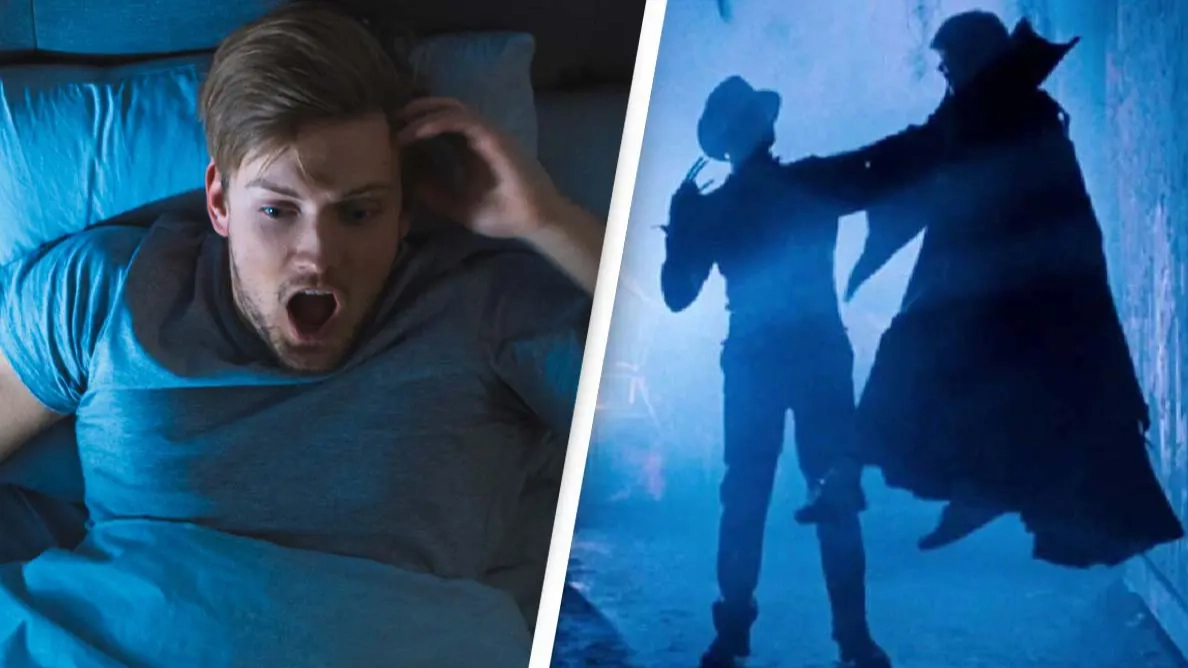
    You might want to be cautious about using the phrase 'frightened to death' in the future, as you could actually end up meeting such a fate.

    Nightmares are far from uncommon and, while it might seem like more of a childhood thing, around 20 percent of adults have reported to having frequent unpleasant dreams.

    Whether it's being chased by a werewolf through the forest or simply learning the news that your mother-in-law in moving in with you permanently, nightmares can come in all shapes and sizes.

    Advert

    One type of nightmare that almost everyone is likely to have experienced at least once in their life is the one where you die (not quite the Friends episode you were expecting).

    As to what this means, some experts have suggested that it's because you're experiencing change in your conscious life.

    Lauri Loewenberg, a certified dream analyst, says of these kind of dreams: "If a part of your life is coming to a close, your subconscious presents it to you as death so you can more easily let it go and open yourself up to the growth that will come from moving on from something that is no longer viable."

    But, unlike Leonardo DiCaprio's movie Inception, if you die in your dream you don't actually die in real life - usually.
    20 percent of adults reported to having frequent nightmares (Getty Stock Image)
    20 percent of adults reported to having frequent nightmares (Getty Stock Image)

    As you dream about a life-or-death moment, cortisol and adrenaline will be rushed around your body as if it was actually happening to you.

    Professor Tiina Paunio, a sleep expert from the University of Helsinki, explained to the Mail Online: "Generally, the health risks of nightmares are typically indirect and are linked to the causative factors that underly nightmares."

    But for more vulnerable people, it could have more serious consequences.

    Professor Paunio went on: "In vulnerable individuals, for example, those with a heart disease, nightmares can indirectly contribute to death, although this is rare."

    So, in theory, dying in your dream could lead to you dying in real life.
    There's a small chance that a nightmare could scare you to death (Getty Stock Image)
    There's a small chance that a nightmare could scare you to death (Getty Stock Image)

    Also commenting on the possibility of being scared to death, the American Heart Association says that while it's possible, it is 'extraordinarily unlikely to happen'.

    Echoing similar sentiments to Professor Paunio, Dr. Mark Estes, a cardiologist and professor of medicine at the University of Pittsburgh Medical Center, added: "Swings of emotion and roller coasters are OK for people who are young, who have a healthy heart.

    "But certainly, in people with pre-existing risk factors or pre-existing cardiovascular disease, you want to reduce the environments in which you might be suddenly stressed like this."

    Choose your content:

    12 mins ago
    an hour ago
    2 hours ago
    • Al Drago/Bloomberg via Getty Images
      12 mins ago

      Frontier Airlines flight with 231 people onboard kills pedestrian on runway during takeoff at popular airport

      The Frontier Airlines flight was bound for LA

      News
    • Aaron Schwartz/CNP/Bloomberg via Getty Images
      an hour ago

      Trump sparks backlash after sharing 'selfish' Mother's Day post that has 'nothing to do' with mothers

      Mother's Day will be celebrated across the US this Sunday

      News
    • Getty Stock Photo
      an hour ago

      The top 10 most popular US baby names for 2025 revealed

      To mark Mother's Day in the US, the Social Security Administration have revealed which names were the most popular last year

      News
    • SWNS
      2 hours ago

      Girl left unable to walk after doctors dismissed seizures as anxiety

      Rubie Boynton was walking in the park with friends when something triggered a rare genetic disorder

      News
    • Scientists reveal exactly what happens when your mind goes blank
    • Scientists reveal hidden clues that show how long you will live and if you have 'serious problems'
    • Truth behind 5,000-year-old Stonehenge mystery as scientists reveal how it was actually built
    • Scientists reveal what your favorite way to eat eggs really says about you