unilad homepage
unilad homepage
    • News
      • UK News
      • US News
      • World News
      • Crime
      • Health
      • Money
      • Sport
      • Travel
    • Music
    • Technology
    • Film and TV
      • News
      • DC Comics
      • Disney
      • Marvel
      • Netflix
    • Celebrity
    • Politics
    • Advertise
    • Terms
    • Privacy & Cookies
    • LADbible Group
    • LADbible
    • SPORTbible
    • GAMINGbible
    • Tyla
    • UNILAD Tech
    • FOODbible
    • License Our Content
    • About Us & Contact
    • Jobs
    • Latest
    • Archive
    • Topics A-Z
    • Authors
    Facebook
    Instagram
    X
    Threads
    TikTok
    YouTube
    Submit Your Content
    Study determines whether you have a resting 'rich face' or 'poor face'

    Home> News> Money

    Published 17:16 28 Jan 2024 GMT

    Study determines whether you have a resting 'rich face' or 'poor face'

    The University of Glasgow study suggests you don't need to see their bank account to work out whether someone is wealthy.

    Harley Young

    Harley Young

    google discoverFollow us on Google Discover
    Featured Image Credit: University of Glasgow

    Topics: Science, Money

    Harley Young
    Harley Young

    Advert

    Advert

    Advert

    People probably think they can determine someone's wealth by how they dress, what they do for a job, where they live, or even perhaps what perfume they wear.

    But did you know that a recent study suggests people make judgements about if you're 'rich' or 'poor' just from the shape of your face?

    Move over 'resting bitch face'. There's a new sheriff in town and it's known as 'resting rich face'.

    According to a study conducted by researchers from the University of Glasgow, the shape of your face could influence what people think about your wealth and background.

    Advert

    Pictured is the face of Jeff Bazos, one of the richest men in the world.
    Gareth Cattermole/Getty Images

    Thirty young, white, native English-speaking people with an average age of 22 took part in the study.

    They were asked to look at 3D models of faces and make judgements on their wealth and social standing, along with deciding if that person seemed competent, warm, dominant and trustworthy.

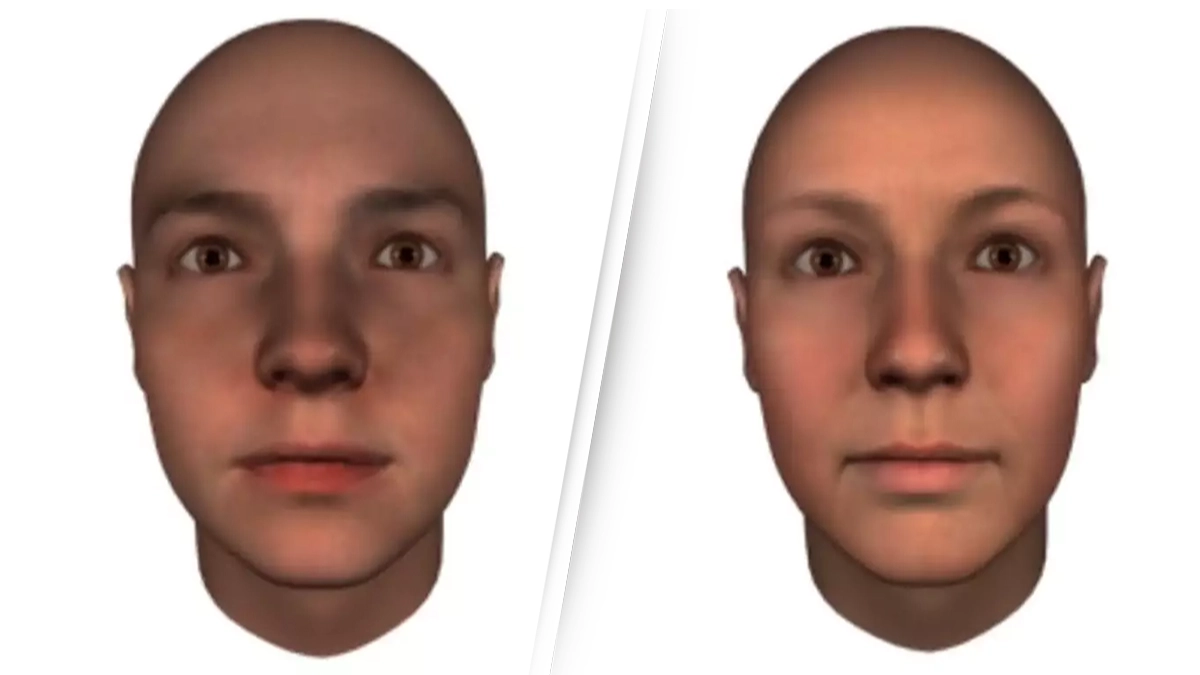
    The study found that faces deemed 'rich' were also considered to be more trustworthy, with chiselled features, raised brows and rosy cheeks among other characteristics.

    However, faces that are considered as 'poor' have lowered eyebrows, shorter chins, downturned mouths and cooler skin tones, making them appear cold and untrustworthy apparently.

    Lead author of the study, Dr Thora Bjornsdottir says these types of judgements solely based on appearance can have long-lasting effects on those individuals.
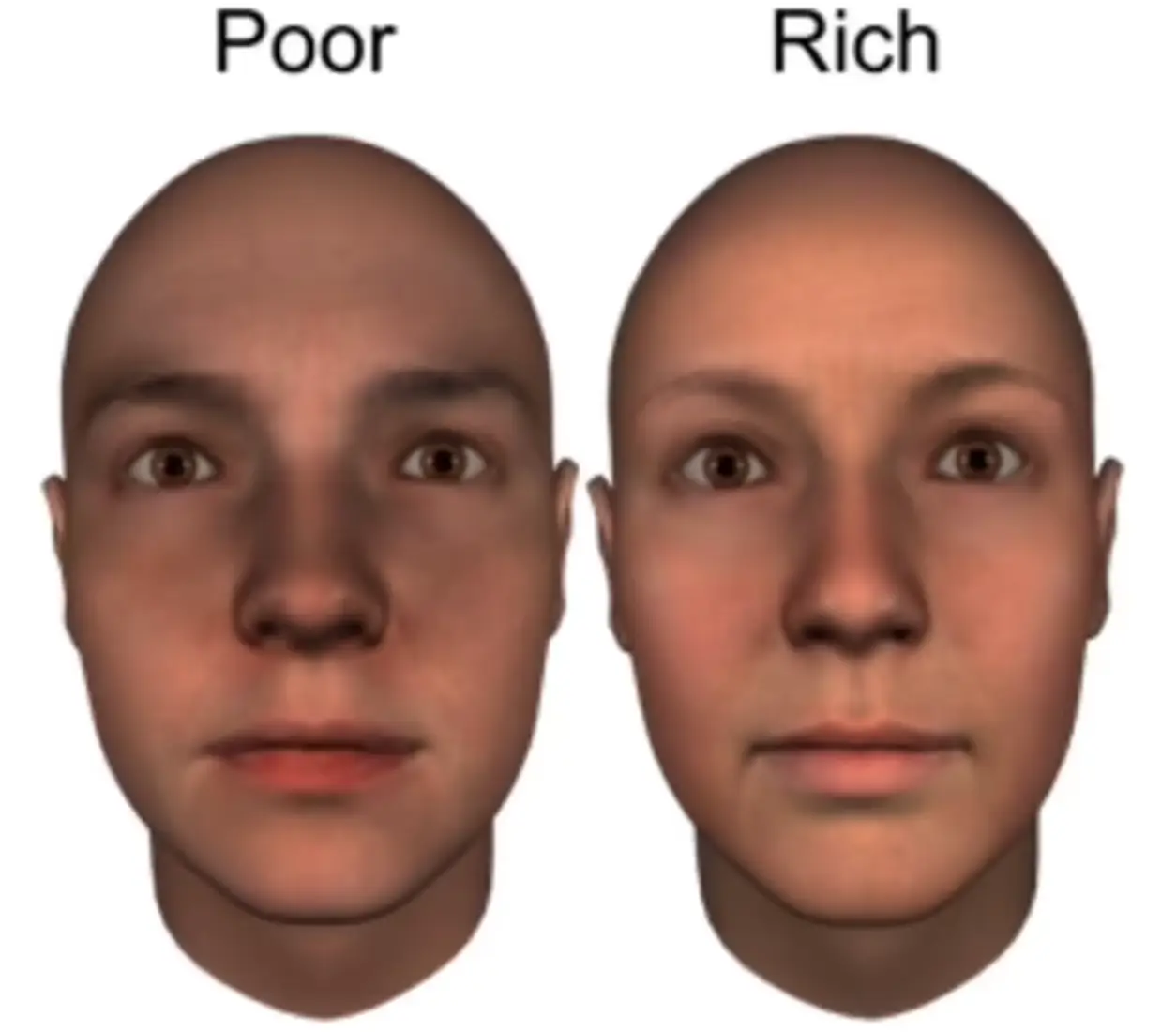
    'Poor' face (left) and 'rich' face (right) comparison.
    University of Glasgow

    She said: "People who are perceived to be of high or low social class are also often judged as having advantageous or unfavourable traits, respectively.

    "Such judgements are formed even just from facial appearance, and this can have substantial consequences, including disadvantaging those who are perceived to be of lower social class.

    "The stereotypes we hold bias our perceptions.

    "Our impressions of other people can lead to particular advantages or disadvantages for them."

    The research also showed that faces which are considered to be 'poor-looking' appeared more 'infantile' and had rounded features, similar to that of a child's face.

    At the same time, 'rich' faces were recognised as longer and more defined. They typically had protruding noses, upturned 'smiley' mouths and high foreheads. Those surveyed said that these characteristics made them look more dominant, capable and honest.

    Professor Rachael Jack said: "Our research demonstrates how specific facial attributes play a pivotal role in connecting social class perceptions with related stereotypes.

    "These findings are not only valuable for advancing our understanding of central social perception theories but could also help with future interventions designed to interrupt biased perceptions."

    Choose your content:

    8 hours ago
    10 hours ago
    11 hours ago
    • Instagram/@thenycsleepdoctor
      8 hours ago

      Doctors reveal how 7:1 sleep rule could add years to your life

      A study found that following the sleep rule could cut risk of early death by nearly a quarter

      News
    • Europa Press/Europa Press via Getty Images
      10 hours ago

      Woman, 71, who used dead son's sperm to have his child shares update 3 years later

      Ana Obregon said she was following her dead son's wishes when she used his frozen sperm to have his son and her granddaughter

      News
    • CEN
      10 hours ago

      Man was saved from horrific bear attack after his phone played Justin Bieber

      A 'joke' by the man's granddaughter ended up saving his life

      News
    • Colombia’s National Police Press
      11 hours ago

      Monster truck drives into crowd in Colombia leaving at least 3 people dead

      Popayán mayor Juan Carlos Muñoz Bravo said he was 'deeply saddened' in a statement

      News
    • Study reveals whether you have a resting 'rich face' or 'poor face'
    • New study finds you might be a narcissist if you have this specific mentality
    • Study finds eight or more alcoholic drinks per week can have drastic effect on brain function
    • New study finds common sex habit done by 69% of men could have horrific effect on brain function