
unilad homepage
unilad homepage
    • News
      • UK News
      • US News
      • World News
      • Crime
      • Health
      • Money
      • Sport
      • Travel
    • Music
    • Technology
    • Film and TV
      • News
      • DC Comics
      • Disney
      • Marvel
      • Netflix
    • Celebrity
    • Politics
    • Advertise
    • Terms
    • Privacy & Cookies
    • LADbible Group
    • LADbible
    • SPORTbible
    • GAMINGbible
    • Tyla
    • UNILAD Tech
    • FOODbible
    • License Our Content
    • About Us & Contact
    • Jobs
    • Latest
    • Archive
    • Topics A-Z
    • Authors
    Facebook
    Instagram
    X
    Threads
    TikTok
    YouTube
    Submit Your Content
    Scientists explain negative impact not having enough sex can have on men's bodies
    Home>News>Sex & Relationships
    Published 19:03 11 Mar 2025 GMT

    Scientists explain negative impact not having enough sex can have on men's bodies

    Some 63 percent of men are more likely to be in danger of health concern if they are not active in the sheets

    Joe Yates

    Joe Yates

    google discoverFollow us on Google Discover
    Featured Image Credit: Getty stock

    Topics: News, Science, Sex and Relationships, Health, Cancer

    Joe Yates
    Joe Yates

    Joe is a journalist for UNILAD, who particularly enjoys writing about crime. He has worked in journalism for five years, and has covered everything from murder trials to celeb news.

    X

    @JMYjourno

    Advert

    Advert

    Advert

    If you aren't having sex frequently, it could be having a negative impact on your health.

    A study of more 5,772 people, 2,577 of which were men, revealed the detrimental impact not getting freaky under the covers can have on males over the age of 50.

    Titled, Declines in Sexual Activity and Function Predict Incident Health Problems in Older Adults: Prospective Findings from the English Longitudinal Study of Ageing, the paper found that men who aren't 'active' in the sheets are two-thirds more likely to develop a serious illness than those that are.

    Advert

    The team of researchers from Anglia Ruskin University, in Cambridge, England, found that men who become less interested in engaging in intercourse are some 63 percent more likely to be diagnosed with cancer.

    They also found that they have a 41 percent increase in developing a chronic illness.

    The male participants who noted that their sex drive had gone down had a 47 percent increased risk of believing their health had deteriorated, while those who reported that they struggled to gain an erection found that there was a 66 percent higher risk of self-rated health deterioration.
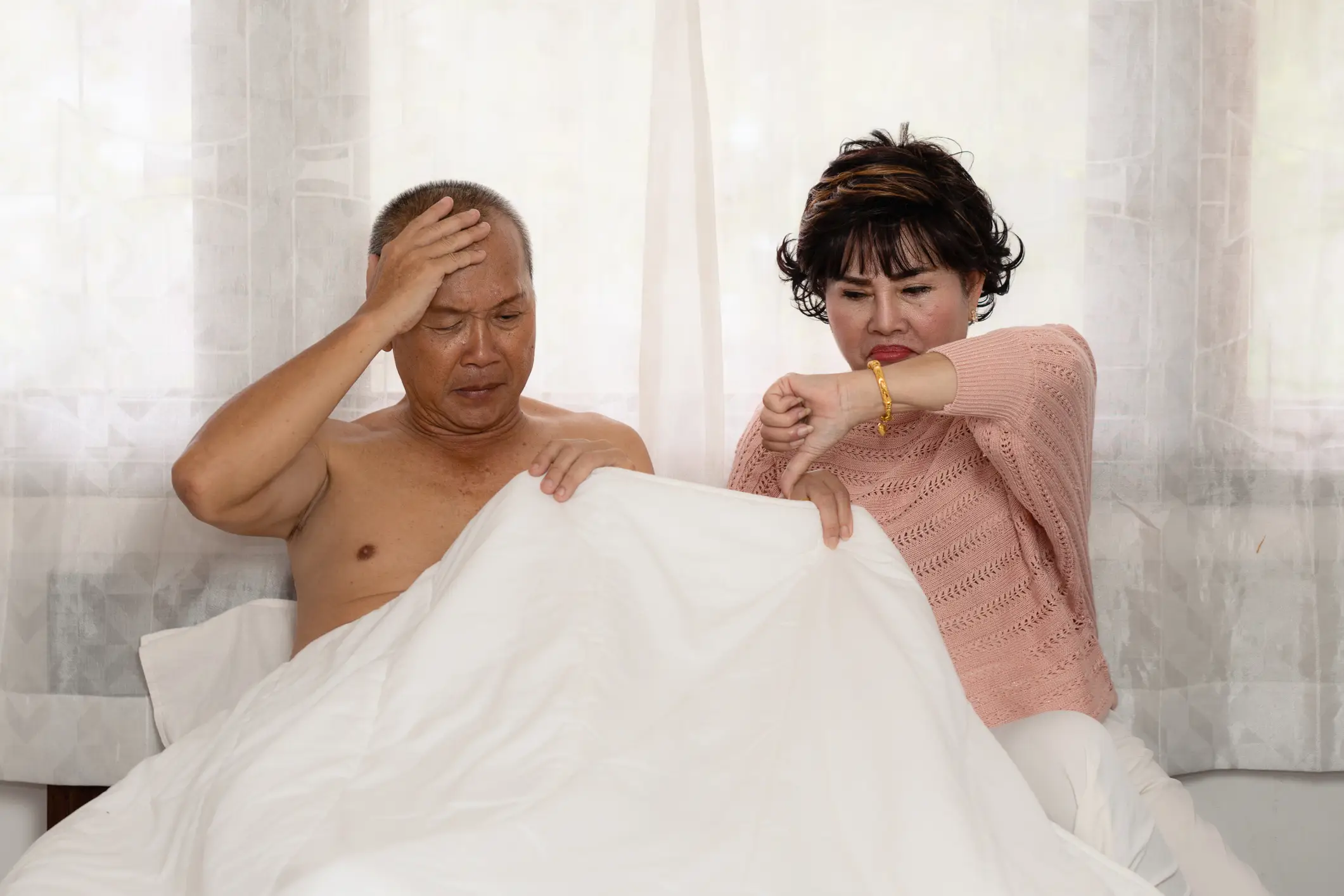
    Men over 50s who aren't having frequent sex face more negative health impacts than those who are (Getty stock)
    Men over 50s who aren't having frequent sex face more negative health impacts than those who are (Getty stock)

    Meanwhile, participants who stated that they were less inclined to get physical with a partner had a 33 percent higher risk of being diagnosed with coronary heart disease at baseline, compared to those that maintained a high sex drive.

    A low sex drive, or at least a decline in the frequency in which participants were having sex, resulted in a 41 percent higher risk of developing an incident limiting long-term sickness, with a worrying 63 percent increased chance of incident cancer.

    It concluded that a past-year decline in your sex drive, and how many times you act on it, as well as the ability to maintain an erection, was linked to a number of negative health impacts.

    Meanwhile, a recent study in Japan has revealed a potential connection between having a lack of interest in sex and how long you live.

    If you want your parents to live a while more, maybe book them a romantic trip away for Mother's Day! (Getty stock)
    If you want your parents to live a while more, maybe book them a romantic trip away for Mother's Day! (Getty stock)

    A study of 20,969 people in Japan looked at the link between sexual interest as an indicator of 'positive sexual relationships and sexual function' and how these have been 'recognized as important indicators of good health and quality of life'.

    Titled, Association between lack of sexual interest and all-cause mortality in a Japanese general population: The Yamagata prospective observational study was published in Journals.

    It reflected on the results of previous studies showing positive psychological factors aid living longer (longevity) and 'decrease the risks of cardiovascular disease and cancer'.

    The study resolved: "Lack of sexual interest is suggested to be a risk factor for all-cause mortality in Japanese males over 40 years old. This finding has implications for the importance of sexual interest in increasing longevity in this population."

    • 11 cancers on the rise in under 50s as scientists claim they may have explanation
    • Expert reveals the best time of day to have sex and how it can impact your performance
    • How a woman's uterus can 'taste' bad sperm as experts explain what it means
    • Doctor reveals exact amount of oral sex that can raise your risk of throat cancer as it becomes leading cause

    Choose your content:

    8 mins ago
    an hour ago
    2 hours ago
    • Sean Krajacic - Pool/Getty Images
      8 mins ago

      Gun rights activist Kyle Rittenhouse hospitalized following bite from venomous spider

      Rittenhouse gained fame after opening fire at a 2020 civil rights rally in Wisconsin

      News
    • FOX 5 Atlanta
      an hour ago

      Three charged with killing 12-year-old's therapy pig as family reveal details

      Garrett Cox has ADHD and autism, and Bootsy was a major source of comfort for the Hoschton boy

      News
    • Getty Stock Image
      2 hours ago

      Three signs of ovarian cancer doctor says can be dismissed as 'digestive issues'

      One of the symptoms is something 24 percent of all US women will experience at some point in their lives

      News
    • AFP via Getty Image
      2 hours ago

      WHO shares how to prevent the spread of hantavirus after three people die

      The World Health Organization urged people to minimize their likelihood of catching the Andes virus strain with a 40 percent chance of death

      News