unilad homepage
  • News
    • UK News
    • US News
    • World News
    • Crime
    • Health
    • Money
    • Sport
    • Travel
  • Film and TV
    • Netflix
  • Music
  • Tech
  • Features
  • Celebrity
  • Politics
  • Advertise
  • Terms
  • Privacy & Cookies
  • LADbible Group
  • LADbible
  • SPORTbible
  • GAMINGbible
  • Tyla
  • UNILAD Tech
  • FOODbible
  • License Our Content
  • About Us & Contact
  • Jobs
  • Latest
  • Archive
  • Topics A-Z
  • Authors
Facebook
Instagram
X
Threads
TikTok
YouTube
Submit Your Content
Artemis II makes history as first crewed moon flight launches in half a century

Home> News> US News

Published 23:38 1 Apr 2026 GMT+1

Artemis II makes history as first crewed moon flight launches in half a century

The milestone mission is just one component of NASA's Moon to Mars initiative and brings mankind one step closer to the red planet.

Phoebe Tonks

Phoebe Tonks

google discoverFollow us on Google Discover

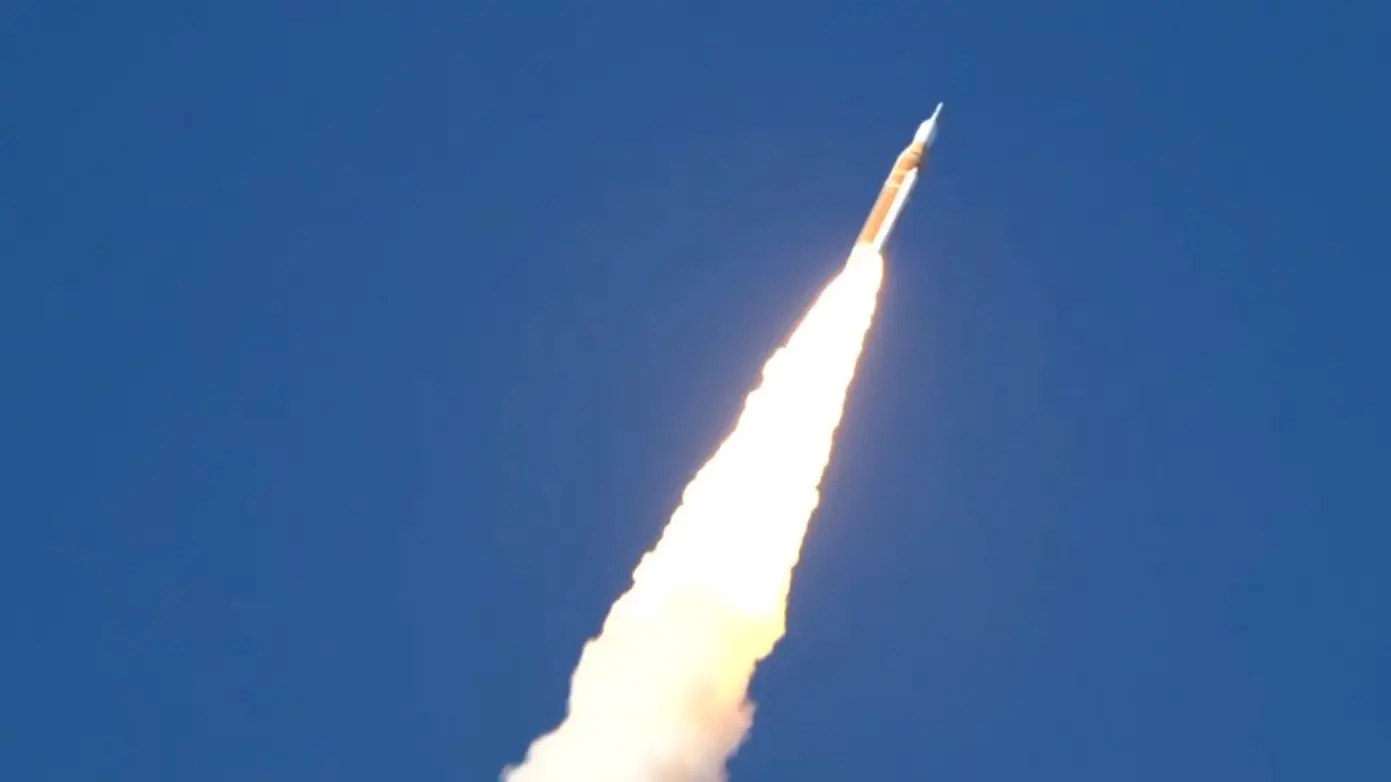
Almost sixty years since NASA made history with the moon landing, once again the US has boldly ventured into space with a manned moon mission as the Artemis II successfully launched on Wednesday evening.

Taking off from Cape Canaveral at 6:35pm ET, millions of people around the world tuned in to witness the historic moment, which saw three Americans and one Canadian undertake the first manned moon mission in almost half a century.

Just hours before the launch a number of technical hitches threatened to abort the mission, including an issue with a battery temperature and a problem with the flight termination system (FTS), a crucial safety system designed to destroy the rocket if it veers off course or poses a safety threat.

Thankfully, the issues were able to be fixed in rapid time, and while the specifics behind the fix weren’t made public, mission control did confirm that it had successfully worked.

Advert
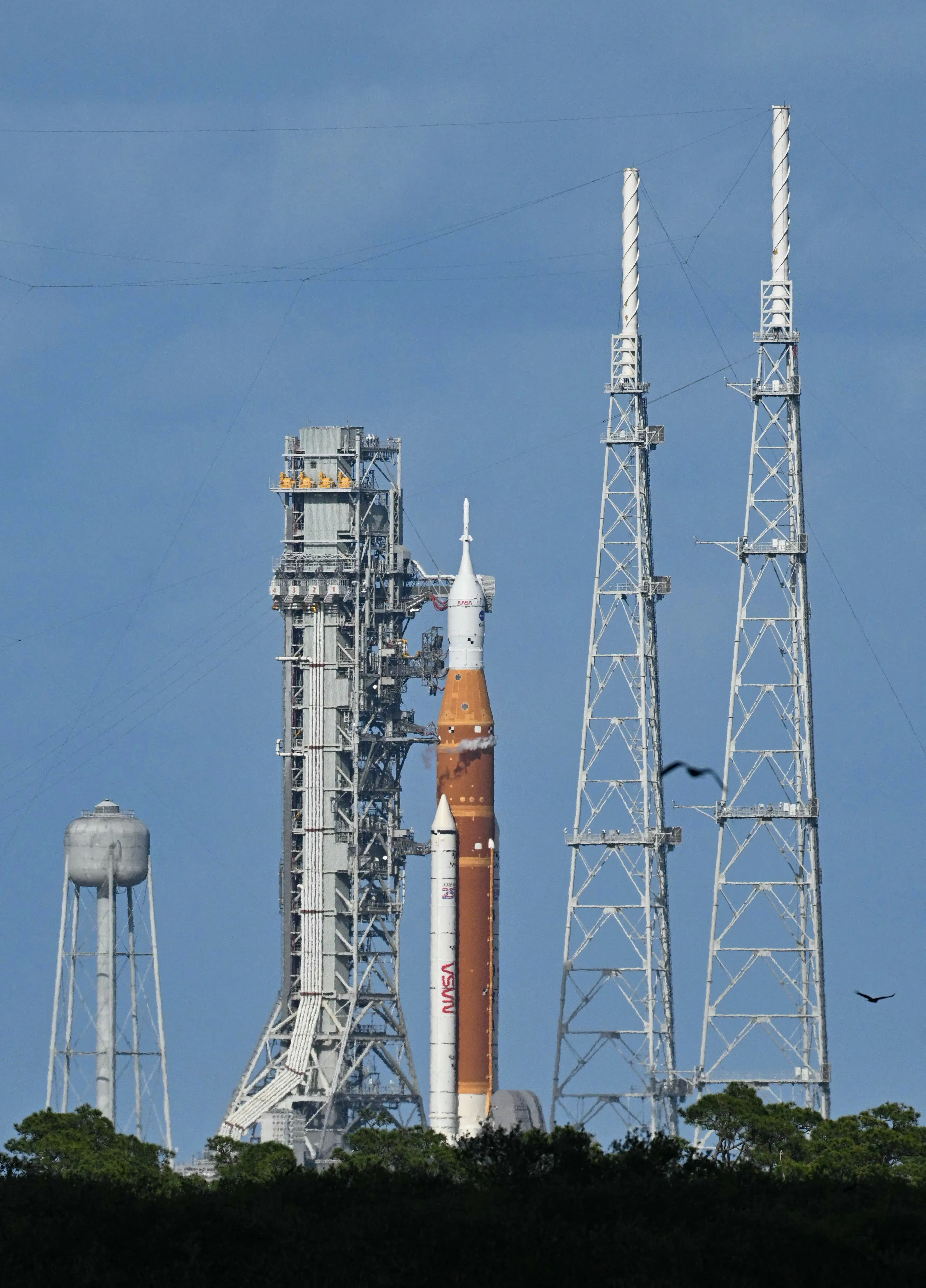
NASA's Artemis II Space Launch System rocket and Orion spacecraft rest on Launch Pad 39B at Kennedy Space Center in Cape Canaveral, Florida (Jim Watson/Getty Images)

“It was a fix to clear the range and work the FTS. That is no longer a constraint,” NASA’s launch commentator, Derrol Nail, explained. “It’s great news. The range is green and we’re continuing with the countdown”.

Artemis II is the second flight and first crewed mission that forms part of NASA’s Moon to Mars initiative which hopes to eventually build a permanent habitable lunar base that could pave the way to human flights to the red planet.

Stretching across 10 days, the mission will involve a fly past of the moon with no landing, but will see four astronauts, Reid Wiseman, Victor Glover, Christina Koch and Jeremy Hansen, break records by travelling farther than any other human has ever travelled before, whopping 253,000 miles into space.

 NASA astronauts Reid Wiseman, commander; Christina Koch, mission specialist; Victor Glover, pilot; and CSA (Canadian Space Agency) astronaut Jeremy Hansen, mission specialist wave to family and friends as they prepare to depart (NASA/Getty Images)
NASA astronauts Reid Wiseman, commander; Christina Koch, mission specialist; Victor Glover, pilot; and CSA (Canadian Space Agency) astronaut Jeremy Hansen, mission specialist wave to family and friends as they prepare to depart (NASA/Getty Images)

Given the eventual aim to reach Mars in the not too distant future, the main objectives of the mission are to test crucial spacecraft and life support systems, extensively monitor the astronauts’ health during a long-duration spaceflight, and specifically look at the the enhanced effects of radiation and microgravity on the brave souls out in space.

The mission also aims to confirm the ability of the Orion capsule to withstand temperatures up to 3,000F (1650C) at re-entry.

If all goes well, six days into the mission, the Orion capsule will slingshot around the moon and pass between 4,000 and 6,000 miles from the lunar surface, offering a prime opportunity to snap photos of the moon’s South Pole, the location of the next human landing which is slated to take place as early as 2028.

Featured Image Credit: NBC News

Topics: NASA, Space, Moon, Florida

Phoebe Tonks
Phoebe Tonks

Advert

Advert

Advert

Choose your content:

an hour ago
a day ago
  • Chip Somodevilla/Getty Images
    an hour ago

    Artemis II astronauts share concerning update as they notice unexpected malfunction moments after lift off

    Although the mission seems to be going according to plan at present, the team have had some issues with the toilet system

    News
  • Gilbert Carrasquillo/Getty Images
    a day ago

    Chuck Norris' family condemn AI videos claiming to know star's cause of death

    The family have repeatedly stated that any video making such claims is ‘entirely untrue’

    Celebrity
  • Randy Holmes via Getty Images
    a day ago

    Jack Black issues update on Tenacious D reunion after Kyle Gass’ Trump shooting controversy

    The Jumanji star gave an update regarding the band's future in a recent interview

    Celebrity
  • MS Now
    a day ago

    Pam Bondi's portrait spotted in Justice Department trash one day after Trump firing

    The President announced Bondi was being let go from her role on April 2.

    News
  • Everything that went wrong on Artemis II launch as NASA rushed to fix major issues
  • NASA's Artemis II crew will feel 'pressure' briefly as they travel into space for moon mission
  • Artemis II astronauts share concerning update as they notice unexpected malfunction moments after lift off
  • Terrifying warning Artemis II astronauts heard during crucial part of mission