unilad homepage
unilad homepage
    • News
      • UK News
      • US News
      • World News
      • Crime
      • Health
      • Money
      • Sport
      • Travel
    • Music
    • Technology
    • Film and TV
      • News
      • DC Comics
      • Disney
      • Marvel
      • Netflix
    • Celebrity
    • Politics
    • Advertise
    • Terms
    • Privacy & Cookies
    • LADbible Group
    • LADbible
    • SPORTbible
    • GAMINGbible
    • Tyla
    • UNILAD Tech
    • FOODbible
    • License Our Content
    • About Us & Contact
    • Jobs
    • Latest
    • Archive
    • Topics A-Z
    • Authors
    Facebook
    Instagram
    X
    Threads
    TikTok
    YouTube
    Submit Your Content
    Saturn’s moon could support alien life, new evidence proves

    Home> News> World News

    Published 17:39 17 Dec 2023 GMT

    Saturn’s moon could support alien life, new evidence proves

    Analysis of Saturn's moon has suggested it may be hospitable enough for alien life for develop.

    Gerrard Kaonga

    Gerrard Kaonga

    google discoverFollow us on Google Discover
    Featured Image Credit: Getty Stock Image

    Topics: Science, Space, NASA, World News, Technology

    Gerrard Kaonga
    Gerrard Kaonga

    Gerrard is a Journalist at UNILAD and has dived headfirst into covering everything from breaking global stories to trending entertainment news. He has a bachelors in English Literature from Brunel University and has written across a number of different national and international publications. Most notably the Financial Times, Daily Express, Evening Standard and Newsweek.

    Advert

    Advert

    Advert

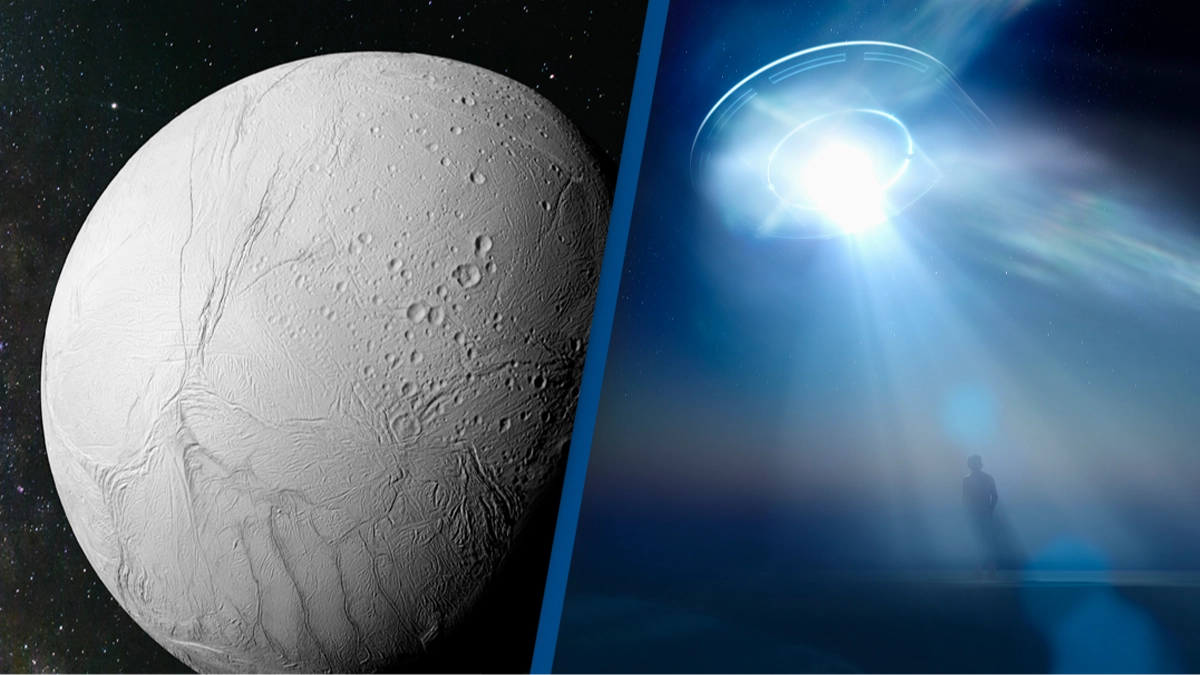
    Alien life may be a lot closer to home than previously thought, following new evidence provided regarding a moon of Saturn.

    When a lot of people think of aliens they tend to think of little gray or green big-headed figures. But for NASA scientists, this rarely appears to be the case.

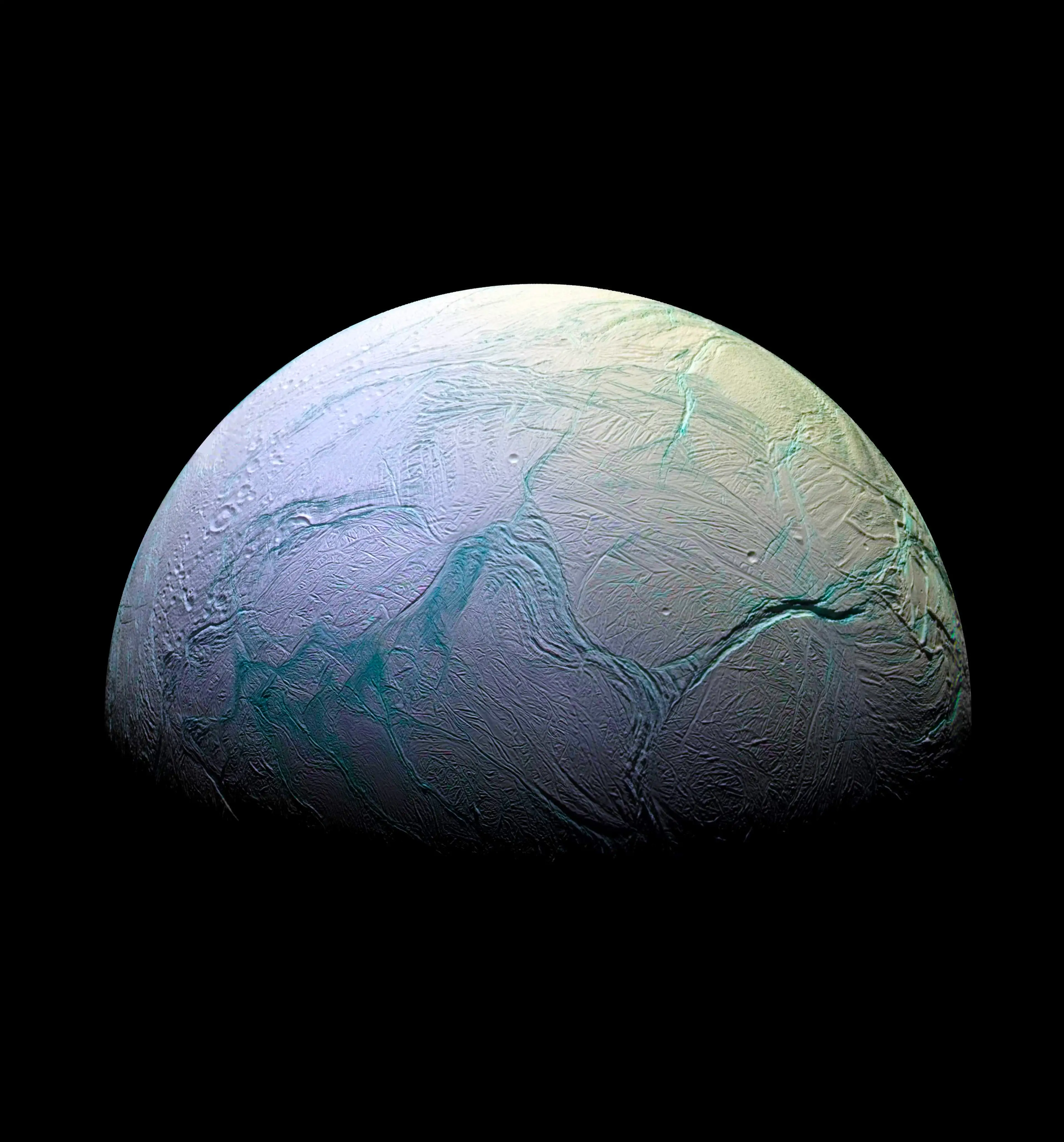
    A new study that has been sifting through data gathered on Saturn’s moon Enceladus, has suggested the moon may have conditions suitable for other worldly life to develop.

    Advert

    To put things into perspective, Enceladus is ‘rich with organic compounds, some of which are important for life as we know it’, according to a press release by NASA’s Jet Propulsion Laboratory (JPL) department.

    And they have known the moon releases giant plumes of ice grains and water vapor.

    NASA scientists have said, through their analysis of the data they have, there is ‘strong confirmation of hydrogen cyanide, a molecule that is key to the origin of life’ in the plume.

    “The researchers also uncovered evidence that the ocean, which is hiding below the moon’s icy outer shell and supplies the plume, holds a powerful source of chemical energy. Unidentified until now,” according to the department.
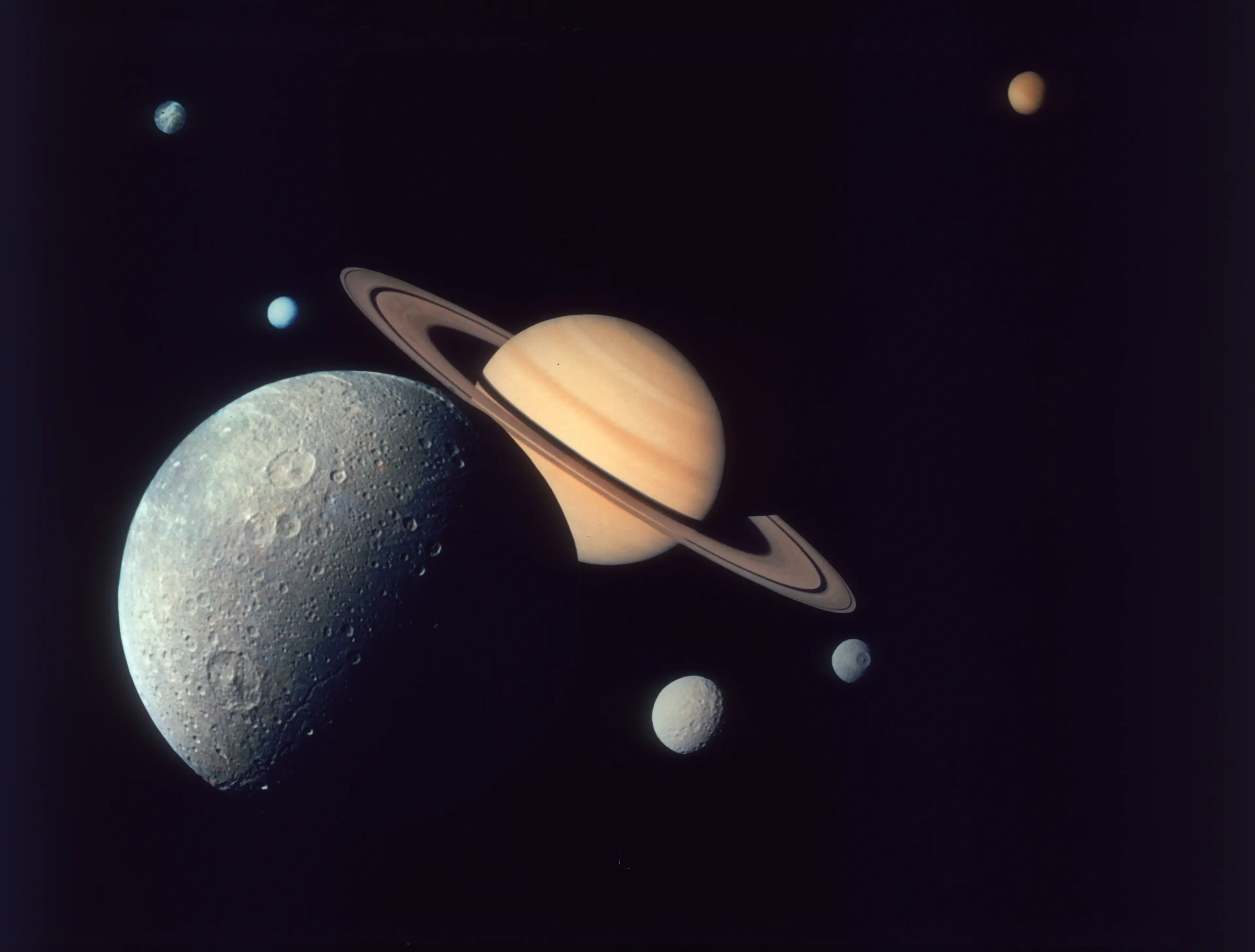
    A study on Saturn’s moon Enceladus has suggested the moon may have conditions suitable for other worldly life.
    Space Frontiers/Hulton Archive/Getty Images

    While this doesn’t quite confirm the existence of saucer-piloting intelligent beings, it could mean the moon could have the building blocks of life and sustain it.

    Lead author of the study Jonah Peter, a doctoral researcher at Harvard, formerly from NASA’s JPL department, said: “Our work provides further evidence that Enceladus is host to some of the most important molecules for both creating the building blocks of life and for sustaining that life through metabolic reactions.

    “Not only does Enceladus seem to meet the basic requirements for habitability, we now have an idea about how complex biomolecules could form there, and what sort of chemical pathways might be involved.”
    Kevin Hand, co-author of the study and principal investigator of the team also explained just how hospitable the moon.
    Universal History Archive/Universal Images Group via Getty Images

    JPL’s Kevin Hand, co-author of the study and principal investigator of the team also explained just how hospitable the moon might be.

    In 2017, scientists believed the combination of carbon dioxide, methane, and hydrogen in the plume was suggestive of methanogenesis, a metabolic process that produces methane on the moon.

    This process happens on Earth and is believed to have been critical to the origin of the planet.

    “If methanogenesis is like a small watch battery, in terms of energy, then our results suggest the ocean of Enceladus might offer something more akin to a car battery,” Hand said.

    “[It could be] capable of providing a large amount of energy to any life that might be present."

    Choose your content:

    2 hours ago
    5 hours ago
    9 hours ago
    • Aaron Schwartz/CNP/Bloomberg via Getty Images
      2 hours ago

      Donald Trump refuses to wear bulletproof vest over fears of looking heavier

      The US president expressed his concerns over the life saving equipment adding 20lbs to his appearance

      News
    • Rick Friedman/Corbis via Getty Images
      5 hours ago

      Jeffrey Epstein’s cellmate claims to have read his suicide note that's been sealed from the public

      The note was allegedly left with Epstein's cellmate, Nicholas Tartaglione, according to a new report

      News
    • Joseph Okpako/WireImage
      9 hours ago

      Influencer claims she poisoned herself by eating one common food every day

      The content creator said doctors called to tell her she had 'dangerously high arsenic levels'

      News
    • State Department
      9 hours ago

      New passports with Donald Trump's face are raising huge concern for Americans

      The face of President Trump could be on your passport long after he leaves office

      News
    • NASA's Curiosity rover makes groundbreaking discovery that suggests Mars can support life
    • NASA reveals significant new evidence that shows potential signs of previous life on Mars
    • Bill Nye issues stern warning to Trump over concerns he could 'end NASA'
    • Shocking new study reveals ‘possible hostile’ alien threat could be attacking Earth in a few months