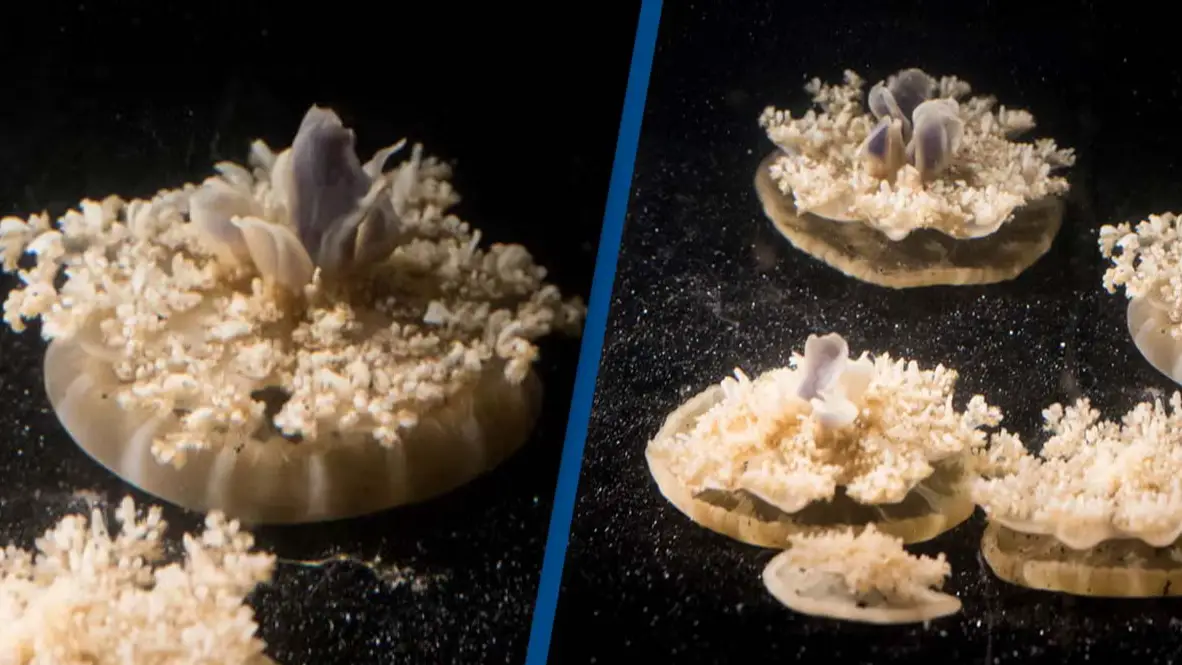
Scientists discover first brainless animal that sleeps

Scientists have successfully identified the first brainless animal to sleep.
Cue the tags, shares and comments - "Bro, I thought you were the first brainless animal to sleep!" Go on, get it out of the way - you know you want to.
Now if you're still keen to hear about the sciencey bit, it all comes from a team of researchers at the California Institute of Technology, aka Caltech, who carried out a study in secret to avoid getting in trouble with their PhD advisers.
Advert
Michael Abrams, Claire Bedbrook and Ravi Nath were focused on sleep - a behavior exhibited across the animal kingdom, and which is known to help with memory consolidation and REM cycles in the brain.
With that in mind, the trio wondered whether jellyfish, which don't have a brain, would share in the need to sleep.
Discussing the reasoning behind the study, Nath told The Washington Post: "Sleep is this period where animals are not doing the things that benefit from a natural selection perspective."
Bedbrook added: "We know it must be very important. Otherwise, we would just lose it."
Scientists have previously proven that animals as simple as the roundworm C. elegans, with a brain of just 302 neurons, need sleep to survive, so the team set out to determine whether the same could be said for jellyfish.
Their research involves the jellyfish Cassiopea, which has a 'net' of nerve cells instead of a brain. They first arose approximately 700 million years ago, making them some of Earth's first animals, as well as the perfect test subject.
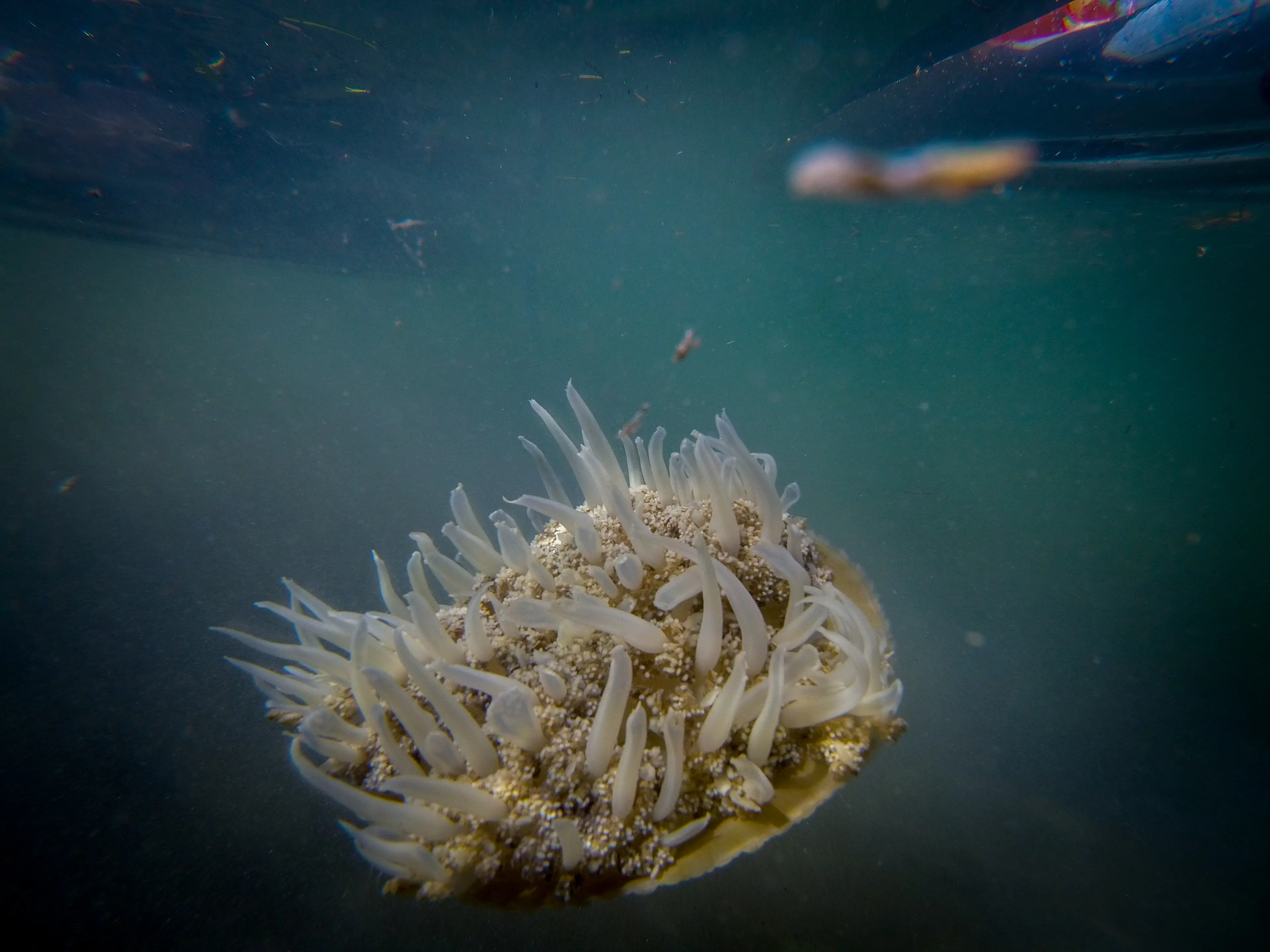
They tested for three behavioral criteria associated with sleep, starting with reversible quiescence, which determined whether the jellyfish were simply inactive, paralzed or in a coma.
The creatures were found to be 30 percent less active at night, but they perked up when food was dropped into the tank.
The second behaviour was an increased arousal threshold, which means it's more difficult to get their attention as they have to be 'woken up'.
To do this, the team put the jellyfish in containers before moving the bottom of them. If they were 'asleep', the researchers noted they'd 'float around in the water', rather than swimming to the floor of the tank.
Finally, they looked at whether the animals suffered if they didn't sleep, which they tested by 'poking' them with pulses of water every 20 minutes.
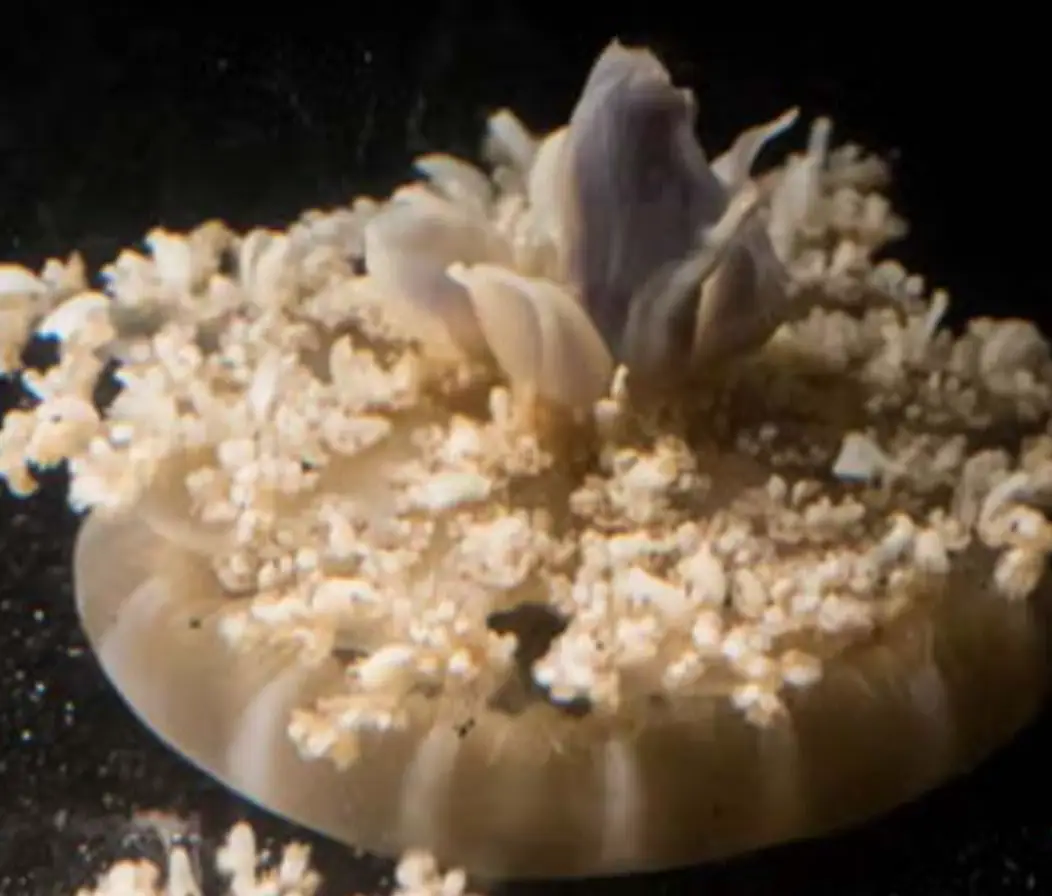
The following day the jellyfish appeared to be in a daze, and they slept even more deeply that night.
After informing their professors of their findings, the trio wrote a Current Biology paper reporting that Cassiopea exhibit sleep-like behavior, making them the first animals without a brain known to do so.
Paul Sternberg, Caltech and Howard Hughes Medical Institute biologist, commented on the importance of the research.
"It's important because it's [an organism] with what we think of as a more primitive nervous system... It raises the possibility of an early evolved fundamental process," he said.
The revelations indicate that sleep likely arose early in life's history, and could lead scientists to more information about the function of sleep in humans.
Topics: Animals, Science, US News, World News
 Emily Brown