
unilad homepage
  • News
    • UK News
    • US News
    • World News
    • Crime
    • Health
    • Money
    • Sport
    • Travel
  • Film and TV
    • Netflix
  • Music
  • Tech
  • Features
  • Celebrity
  • Politics
  • Advertise
  • Terms
  • Privacy & Cookies
  • LADbible Group
  • LADbible
  • SPORTbible
  • GAMINGbible
  • Tyla
  • UNILAD Tech
  • FOODbible
  • License Our Content
  • About Us & Contact
  • Jobs
  • Latest
  • Archive
  • Topics A-Z
  • Authors
Facebook
Instagram
X
Threads
TikTok
YouTube
Submit Your Content
Why NASA can't track every meterorite as agency misses huge blast over Ohio

Home> Technology> Space

Published 10:25 18 Mar 2026 GMT

Why NASA can't track every meterorite as agency misses huge blast over Ohio

It's pretty unsettling stuff...

Ellie Kemp

Ellie Kemp

google discoverFollow us on Google Discover
Featured Image Credit: Ignatiev/Getty Images

Topics: NASA, Ohio, Space, Science

Ellie Kemp
Ellie Kemp

Ellie joined UNILAD in 2024, specialising in SEO and trending content. She moved from Reach PLC where she worked as a senior journalist at the UK’s largest regional news title, the Manchester Evening News. She also covered TV and entertainment for national brands including the Mirror, Star and Express. In her spare time, Ellie enjoys watching true crime documentaries and curating the perfect Spotify playlist.

X

@EllieKempOnline

Advert

Advert

Advert

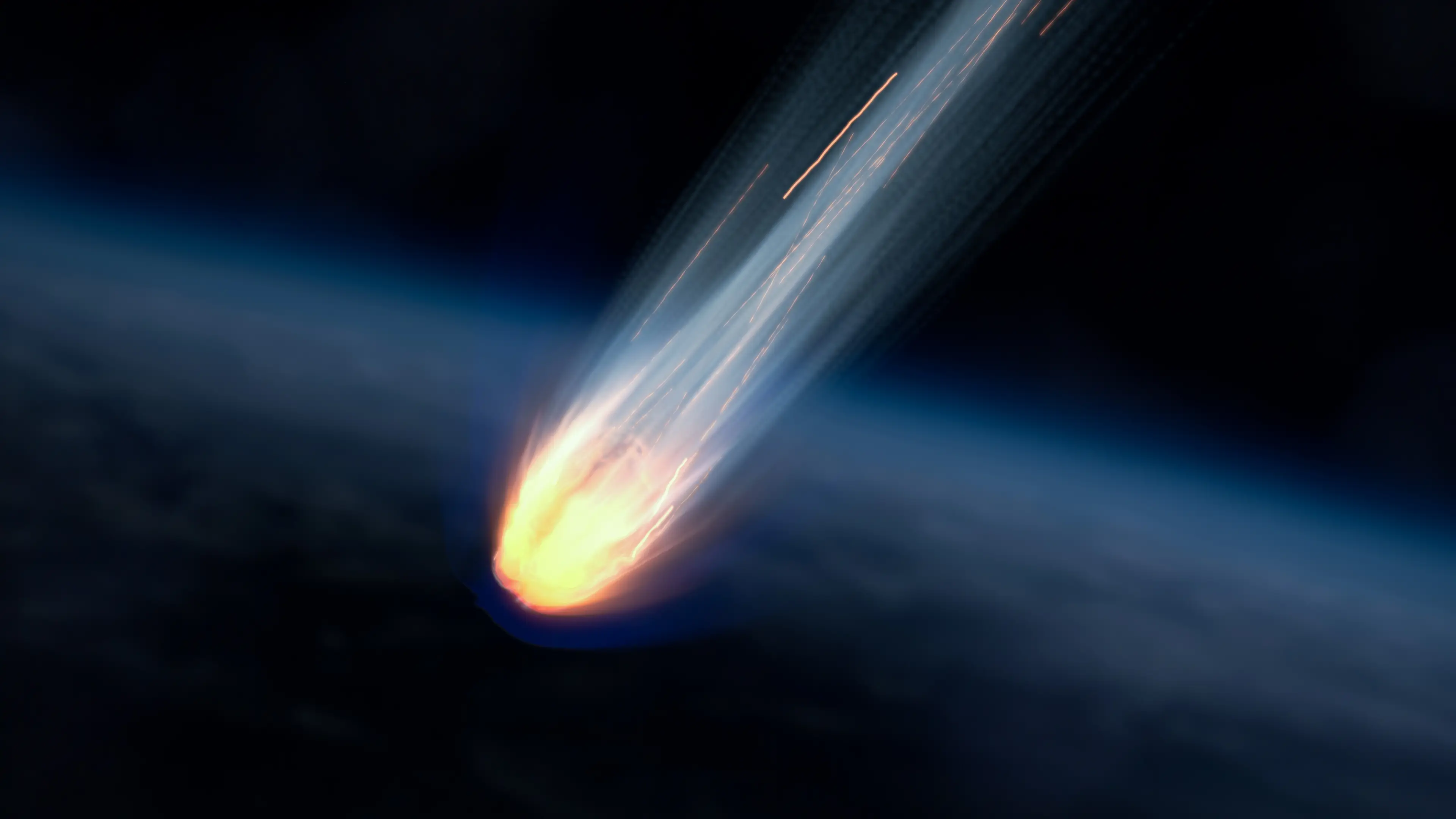
NASA managed to miss a meteor explosion over Cleveland, Ohio, on Tuesday (March 17), not long after a scientist explained why it's impossible to track each and every one.

The blast, which produced a shockwave equivalent to around 250 tons of TNT, came from an object just two metres wide and weighing roughly seven tonnes, as National Today reports.

Despite its size being large enough to create a significant boom across multiple states, it was still too small to be picked up by current tracking systems.

That’s because NASA’s planetary defence efforts are mainly focused on larger near-Earth objects - the kind that could pose more of a serious threat to us.

Advert

The meteor entered the atmosphere at approximately 8.57 am EDT, first becoming visible at an altitude of around 50 miles above Lake Erie.

It then traveled more than 30 miles through the upper atmosphere before breaking apart at roughly 30 miles above northern Ohio.

The meteor broke up over Ohio (WKYC Channel 3/YouTube)

As it fragmented, it released a huge burst of energy, generating a pressure wave that was heard across parts of Ohio, Pennsylvania and Michigan.

Residents reported a loud boom and a bright fireball streaking across the sky, with sightings quickly spreading online.

The National Weather Service later confirmed the event, saying: “We’re receiving reports across western Pennsylvania and eastern Ohio of a loud boom and a fireball in the sky.

"Our satellite data suggest it was possibly a meteor entering the atmosphere.”

NASA also confirmed that a fireball had fallen over northeast Ohio near Cleveland.

So why wasn’t it detected sooner? In short, it comes down to size.
NASA missed the explosion (Kevin Carter/Getty Images)

While Hollywood tends to focus on planet-ending asteroids, those are actually the least of NASA’s worries.

Large objects are relatively easy to track and are usually identified years - sometimes decades - in advance.

Smaller meteoroids, however, are far more common and much harder to detect.

Many only become visible once they hit Earth’s atmosphere and begin to burn up, producing the bright streaks we see from the ground.

Kelly Fast, head of planetary defence at NASA, has previously explained that the real concern lies somewhere in between.

"What keeps me up at night is the asteroids we don’t know about," she said while speaking to the American Association for the Advancement of Science.


"Small stuff is hitting us all the time so we’re not so much worried about that.

"And we’re not so worried about the large ones from the movies because we know where they are.

"It’s the ones in between, about 140 metres and larger, that could really do regional rather than global damage and we don’t know where they are."

She added that there are around 25,000 such asteroids, and scientists have only identified about 40 percent of them so far.

"It takes time to find them, even with the best telescopes," she said.

Sometimes, the less we know the better...

Choose your content:

a day ago
2 days ago
  • Chip Somodevilla/Getty Images
    a day ago

    Terrifying warning Artemis II astronauts heard during crucial part of mission

    Artemis II astronauts are flying further than their predecessors 60 years ago

    Technology
  • Getty Stock Images
    a day ago

    Space expert explains how 'lava tubes' could help us one day live on the Moon

    It may be possible to live on the Moon one day...

    Technology
  • Jim WATSON / AFP via Getty Images
    2 days ago

    Everything that went wrong on Artemis II launch as NASA rushed to fix major issues

    The milestone space mission had its share of mishaps

    Technology
  • Aubrey Gemignani/NASA/Getty Images
    2 days ago

    How astronauts use the bathroom in space as Artemis II crew faced toilet issue

    The crew aboard Artemis II faced toilet difficulties just hours into the mission

    Technology
  • NASA releases world's biggest dark matter map and it's more detailed than ever before
  • NASA takes major steps to protect Earth from mysterious 'Manhattan-size' comet
  • Asteroid worth $10,000,000,000,000,000,000 that NASA is capturing could have a devastating impact
  • NASA astronaut explains why humanity is 'living a lie' after living in space for 178 days