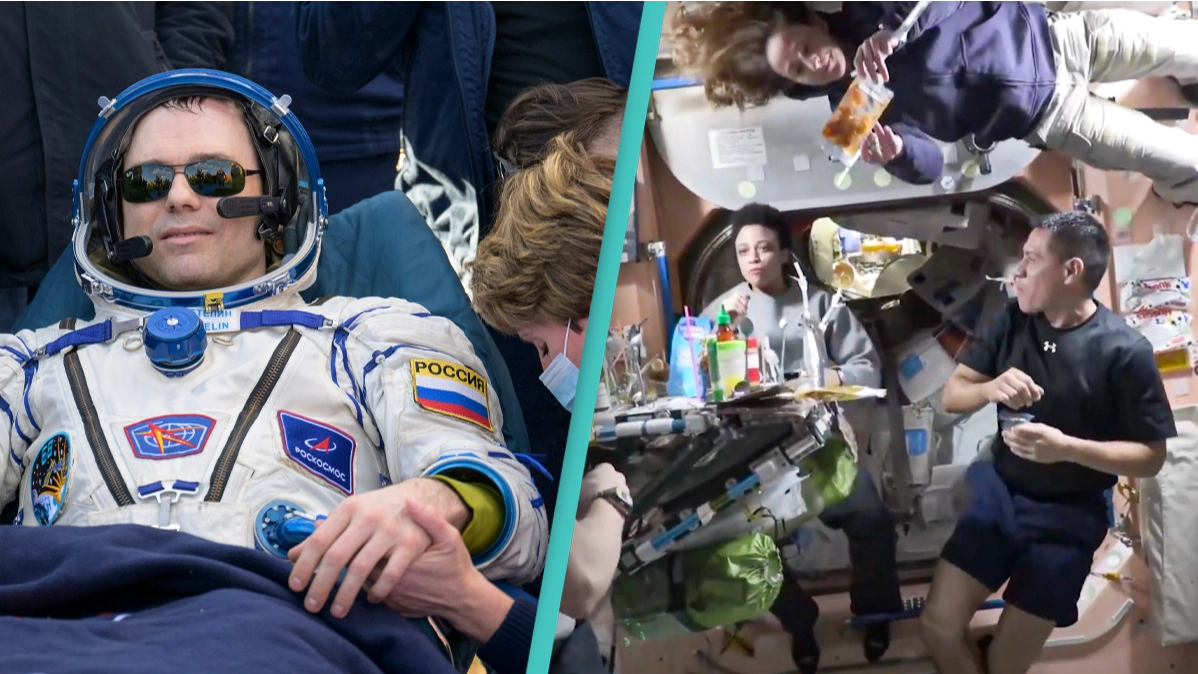
NASA astronaut reveals major changes to his body after setting record for longest time spent in space

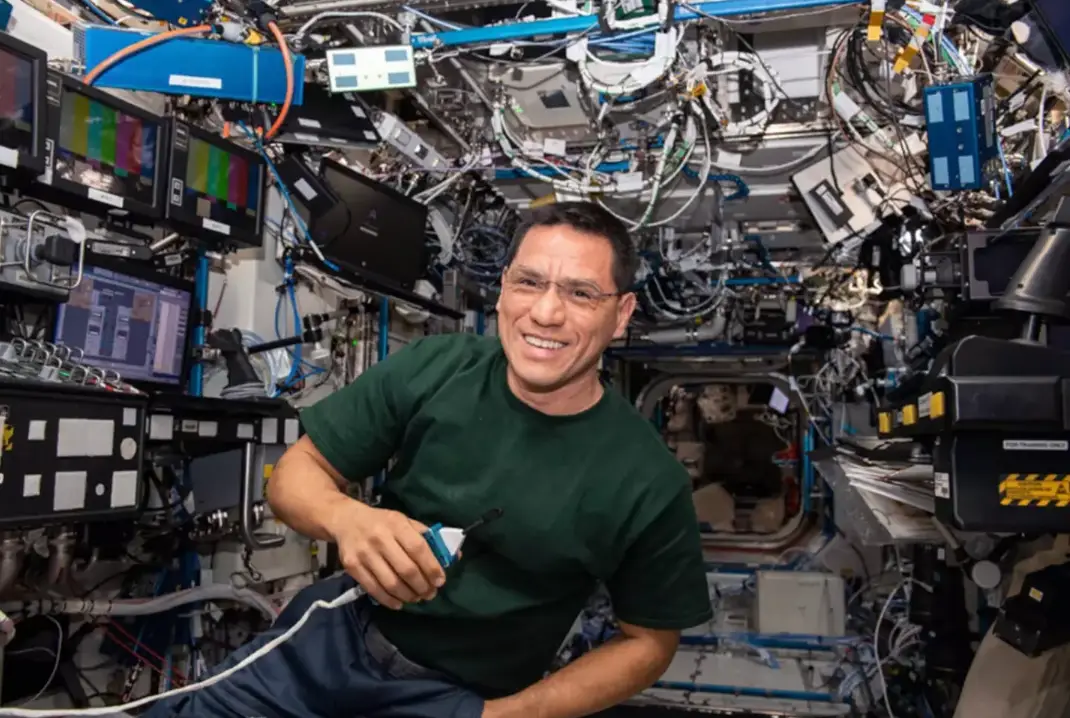
Last year, NASA astronaut Frank Rubio set a world record for the longest time spent in space by a US astronaut after an impressive 371 days.
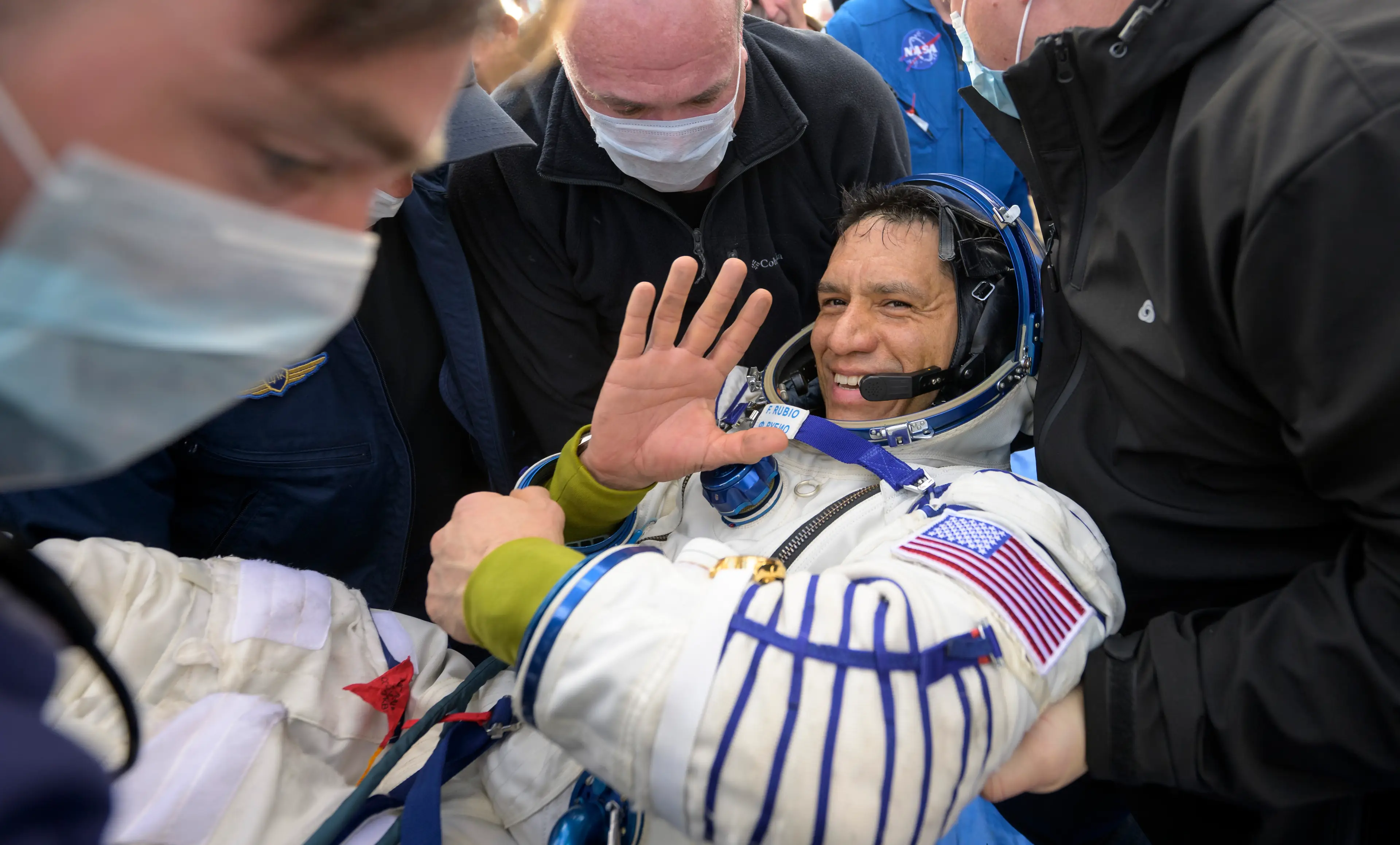
The 48-year-old returned to Earth on September 27, 2023, landing in Kazakhstan after his six-month mission was extended by a further six months.
Upon his landing back on Earth, Rubio said he would be assessed by a medical team and that he would need time to re-adjust to Earth's gravity.
Advert
But while the incredible record will cement the astronaut's time in space in history, his year-long escapade had some effects on the astronaut.
While most of us Earth-dwellers would never even think of the consequences of such a long time in space, it was revealed what the cost of living without gravity for such an extended period of time actually is.
In actual fact, the lack of gravity will cause a decrease in muscle mass and even bone loss within the first few months of a mission.
Dr Jennifer Fogarty, chief scientific officer at Baylor College of Medicine's Translational Research Institute for Space Health, told ABC News at the time: "How do you coordinate movement like walking, which you haven't done for a long period of time, and then the idea of balance?
"When you put those two together, it can kind of create a little bit of a precarious situation and something that's very well-monitored with the crew members when they land on Earth."
Dr Fogarty went on to explain that the longer the mission goes on for, the longer it will likely take for the astronaut to reacclimatize when back on Earth.
Not only this, but a person's blood flow can also be heavily affected when living in space, which can cause symptoms such as blurred vision or eye swelling, due blood and cerebrospinal fluid shifting up the body - known as Spaceflight Associated Neuro-Ocular Syndrome.
According to Dr Michael Decker, co-director of the Center for Aerospace Physiology at Case Western Reserve University School of Medicine, the veins in our body have valves in them to ensure 'blood doesn't flow backwards when we stand up'.
Remove gravity from the equation and it has a impact on blood flow.
"Some of this increased intracranial pressure can actually impact the eye and lead to visual impairment. Sometimes when astronauts land, that visual impairment does not necessarily resolve." he further explained.
The isolated environment could also cause fatigue, stress and lack of sleep.
During his time in space, Rubio's mental and physical health would have been assessed by scientists, as well as his immune system and any changes to his genes.
And in January of this year, Rubio revealed he'd spent four months back on Earth recovering and 'reincorporating [himself] back into Earth.'
"You adapt incredibly quickly to being in space, but then unfortunately, the readaptation process back to earth can sometimes be a little bit longer and more difficult." he told TIME.
"And that's just, I think, because the forces of gravity and the forces at play here on Earth tend to have a stronger effect on your body. So it takes two to three months to get yourself back to where you were pre-flight. I'm feeling pretty normal."
"At this point, I feel like I'm back to 90-95%. So lots of exercise, lots of testing, and science."
 Emma Rosemurgey