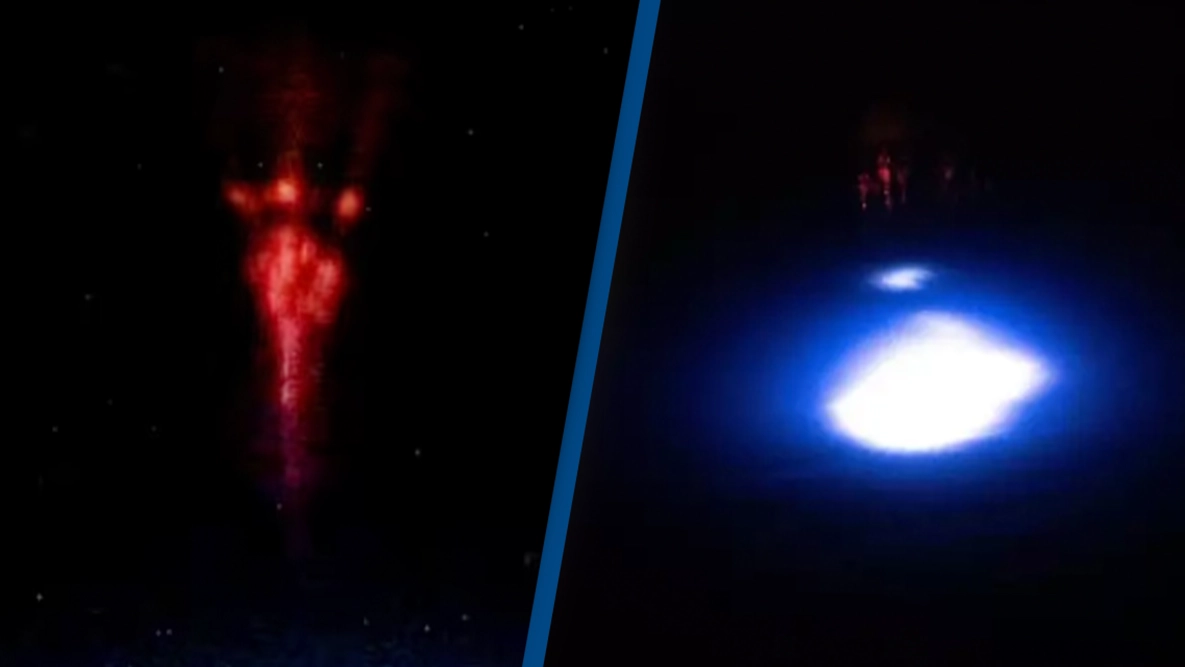
Astronauts spot eerie red lights glowing in Earth's atmosphere

Space is a crazy place to be as an astronaut, especially when you see things that look like they should be in a sci-fi movie.
And when one member aboard the International Space Station (ISS) snapped a shot a glowing red lights in the Earth’s atmosphere, they were right to be baffled.
Advert
The image, taken by commander of SpaceX Crew-8 mission Matthew Dominick, shows the eerie lights hanging in space on June 3.
According to NASA, these aren’t alien life forms… OK then.
Apparently, they are ‘red sprites’ which typically form above thunder clouds in the mesosphere - the upper part of the atmosphere.
At around 53 miles above the surface, the red lights stand vertically like some weird kind of space craft.
According to the coordinates, they were right above the coast of South Africa.
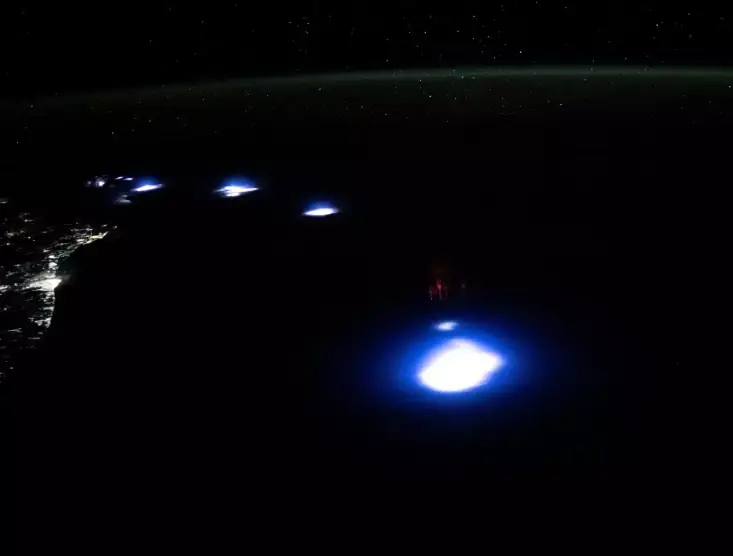
By sharing this picture, NASA aims to encourage people to send their own images of sprites or other oddities in the sky to its 'Spritacular' citizen project which is a citizen-crowdsourced database.
Dominick posted the picture to X and asked for further information: “Super lucky a few weeks ago when shooting a timelapse of a lightning storm off the coast of South Africa.
“One of the frames in the timelapse had a red sprite,' said Dominick, who previously served as a naval test pilot and fighter pilot commander prior to joining NASA.
“If there are any red sprite experts out there I would enjoy tips on how to capture more of these.
“Clearly, look for lightning storms, but I'm thinking the stronger the storm the better.”
Space physicist Dr Burcu Kosar, principal investigator for Spritacular, explained what the project aims to achieve: "People capture wonderful images of sprites, but they're shared sporadically over the internet.
"Most of the scientific community is unaware of these captures."
In a press release about the red sprites, the space agency asked followers to share information to help their scientists study the phenomena in greater detail.
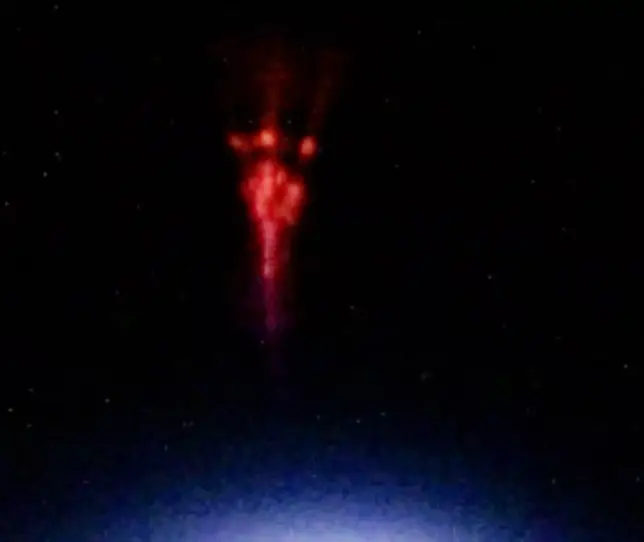
It said: "While space station crew hunt for TLEs from space, you can help right here on Earth: send your photographs of sprites and other TLEs to NASA’s citizen science project, Spritacular, to contribute to a crowdsourced database that professional scientists can use for research."
Dominick snapped up his picture hundreds of miles above high-altitude electrical discharges, which are in orbit within the International Space Station around 250 miles above Earth's surface.
NASA’s press release explained that 'Transient Luminous Events (TLEs), including red sprites, are colorful bursts of energy that appear above storms as a result of lightning activity occurring in and below storms on Earth'.
These types of TLEs and others tend to be snapped by accident, especially when taking a time lapse of the Earth using a wide focal-length lens.
However, when on the ISS, they tend to capture time lapses using the Atmosphere-Space Interactions Monitor (ASIM) which is typically used to collect data for scientific research.
Hopefully someone else will be able to capture the red electrical bursts in the future.
Topics: International Space Station, NASA, Science, Space, Weird
 Britt Jones