unilad homepage
unilad homepage
    • News
      • UK News
      • US News
      • World News
      • Crime
      • Health
      • Money
      • Sport
      • Travel
    • Music
    • Technology
    • Film and TV
      • News
      • DC Comics
      • Disney
      • Marvel
      • Netflix
    • Celebrity
    • Politics
    • Advertise
    • Terms
    • Privacy & Cookies
    • LADbible Group
    • LADbible
    • SPORTbible
    • GAMINGbible
    • Tyla
    • UNILAD Tech
    • FOODbible
    • License Our Content
    • About Us & Contact
    • Jobs
    • Latest
    • Archive
    • Topics A-Z
    • Authors
    Facebook
    Instagram
    X
    Threads
    TikTok
    YouTube
    Submit Your Content
    NASA released recording of what a black hole actually sounds like

    Home> Technology> NASA

    Published 17:40 17 Sep 2023 GMT+1

    NASA released recording of what a black hole actually sounds like

    Black holes do make a noise and NASA have released the sound

    Joe Harker

    Joe Harker

    google discoverFollow us on Google Discover
    Featured Image Credit: NASA

    Topics: NASA, Space, Technology, Science

    Joe Harker
    Joe Harker

    Joe graduated from the University of Salford with a degree in Journalism and worked for Reach before joining the LADbible Group. When not writing he enjoys the nerdier things in life like painting wargaming miniatures and chatting with other nerds on the internet. He's also spent a few years coaching fencing. Contact him via [email protected]

    X

    @MrJoeHarker

    Advert

    Advert

    Advert

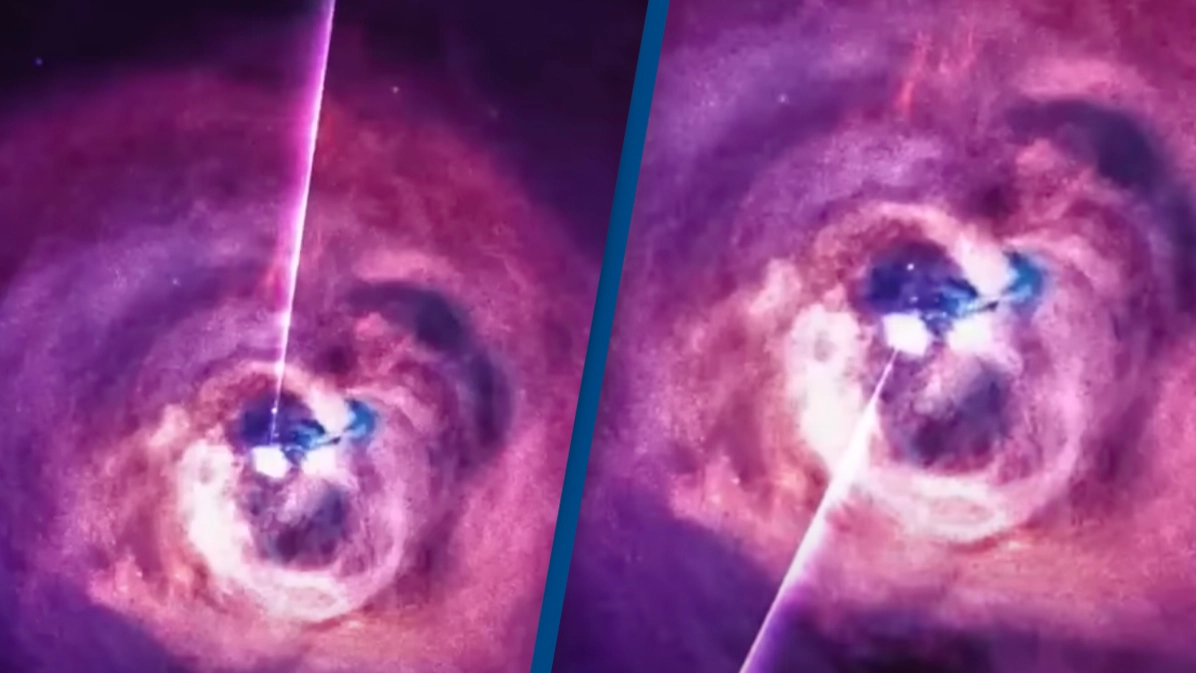
    NASA have managed to record the sounds of a black hole which lies at the heart of a cluster of galaxies.

    You might think that black holes make no noise because sound can't travel through space and normally, you'd be correct as sound certainly cannot travel through a vacuum.

    However, according to NASA, a galaxy cluster such as the one in the constellation Perseus is enveloped by so much gas that sound waves can travel through it.

    Advert

    That's pretty handy for astronomers who identified sound waves from the cluster and subjected them to something called 'sonification', which means using non-speech sound to convey information or give a new perspective on data.

    However, lots of work went into making the sound waves of Perseus audible to human ears as the soundwaves are 144 quadrillion (that's 15 zeroes) and 288 quadrillion times higher than their original frequency to get them into the range of human hearing.

    With the sound waves from the black hole at the center of the constellation made audible you can now have the incredible chance to hear noises from 250 million light years away, which is pretty heckin' cool.
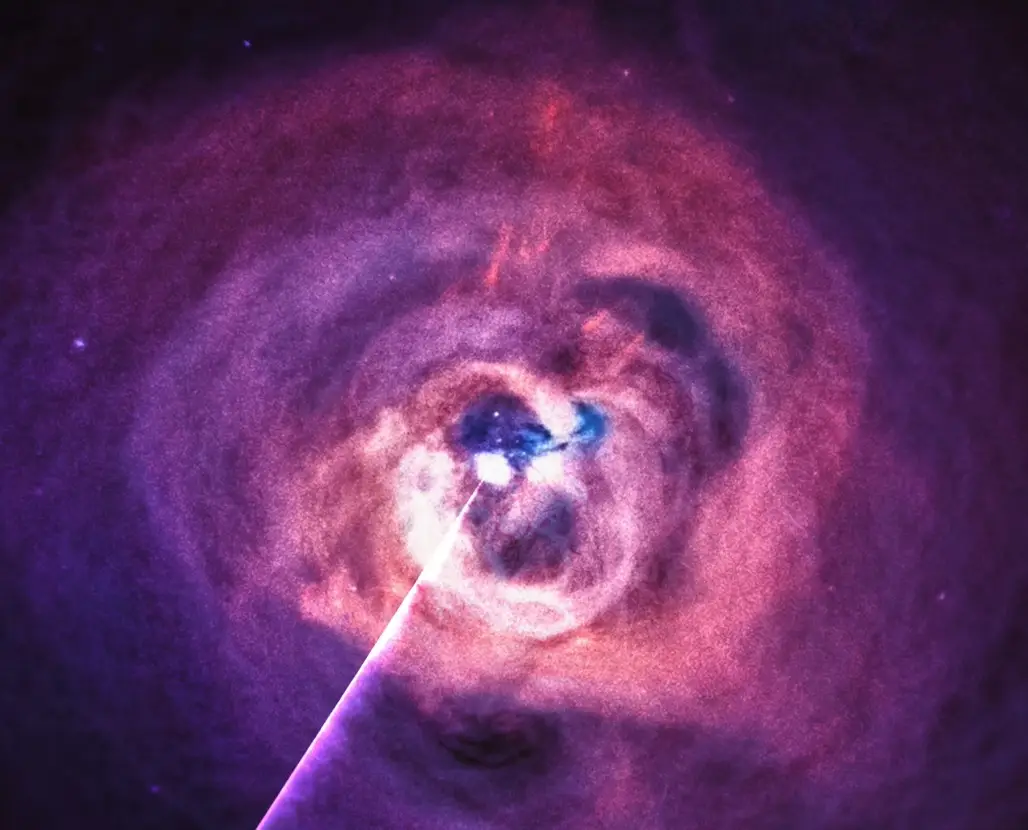
    NASA can turn the waves of pressure coming from a black hole into sound.
    NASA

    According to NASA, while light cannot escape from a black hole as it sucks in and devours all, the material around it can produce bursts of electromagnetic radiation which travel out and can bounce off clouds of gas.

    These create 'light echoes' and experts can turn those into notes which the human ear can hear and thus a black hole can become a musical instrument, albeit one that plays itself by sending out waves.

    NASA has released plenty of information on black holes over the years and laid out the scale for the gargantuan size that some of them can reach.

    Some of them can be 60 billion times the mass of the sun which sits at the heart of our solar system.

    There are as many as 10 million to a billion black holes in our own galaxy, the Milky Way, though only one of ours is of truly monstrous proportions.
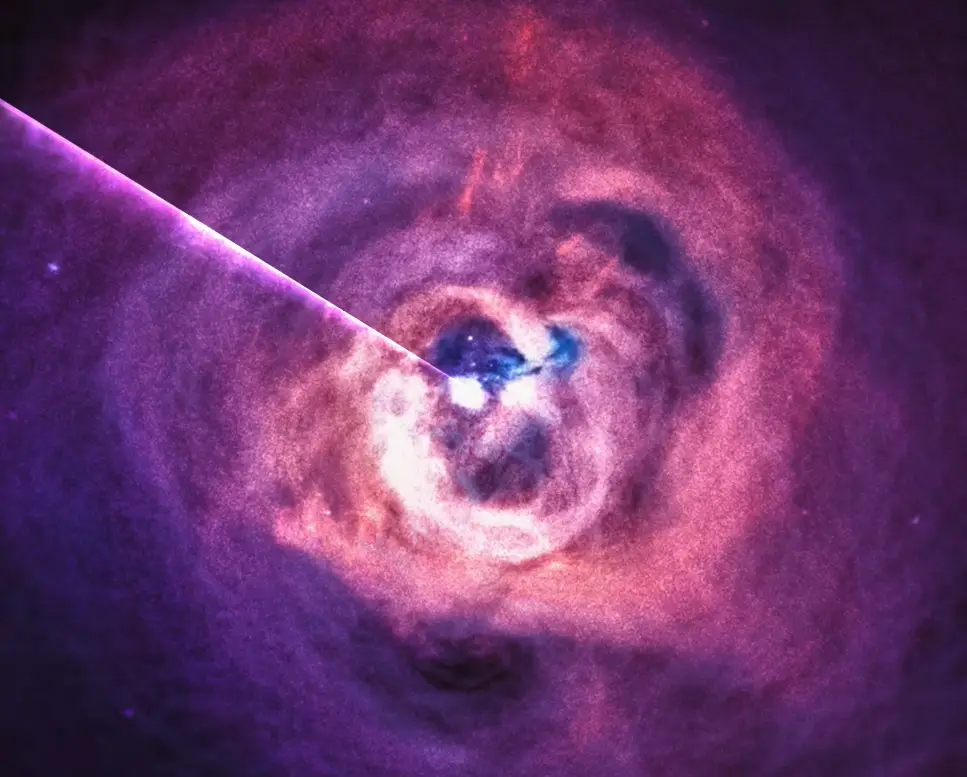
    The sound created by NASA is quite eerie.
    NASA

    However, even a small one would be enough to ruin everyone's day if it was close enough to our planet.

    Scientists simulated what a nine millimetre black hole would do if it was near Earth, and to start off with such a tiny thing would have the same mass as our entire planet.

    If close enough to the Earth the tiny black hole would be strong enough to rip 'large chunks' of the planet away in a process known as 'spaghettification', meaning those big chunks would be stretched out long and thin the closer it got to the black hole.

    As you might have guessed that'd be the end of humanity if such a thing were to happen, so let's be glad we're not sharing a solar system with a black hole.

    Choose your content:

    a day ago
    6 days ago
    9 days ago
    11 days ago
    • Getty Stock Images
      a day ago

      Man who used AI to apply to 1,000 jobs while he was sleeping woke up to mind blowing results

      Work smart, not harder has taken on a whole new meaning

      Technology
    • Justin Sullivan/Getty Images
      6 days ago

      OpenAI names 22 industries at risk of job losses as it proposes four day week

      Two new reports suggest AI might be coming for your job - but you could also get a three day weekend

      Technology
    • Kayla Bartkowski/Bloomberg via Getty Images
      9 days ago

      Congressman Tim Burchett claims he has seen UFO footage that ‘defies logic’

      Tim Burchett says he has seen UFO footage that couldn't be man made - and he wants answers from the government

      Technology
    • NASA/JPL-Caltech/MSSS
      11 days ago

      NASA's Curiosity rover makes groundbreaking discovery that suggests Mars can support life

      An expert has claimed the new reveal 'increases the prospect that Mars offered a home for life in the ancient past'

      Technology
    • Bill Nye issues stern warning to Trump over concerns he could 'end NASA'
    • NASA's Curiosity rover makes groundbreaking discovery that suggests Mars can support life
    • NASA explains stunning Earth phenomenon captured from ISS that looks like something from a movie
    • Scientists studying NASA’s James Webb Space Telescope discover black hole 300 million times bigger than the sun