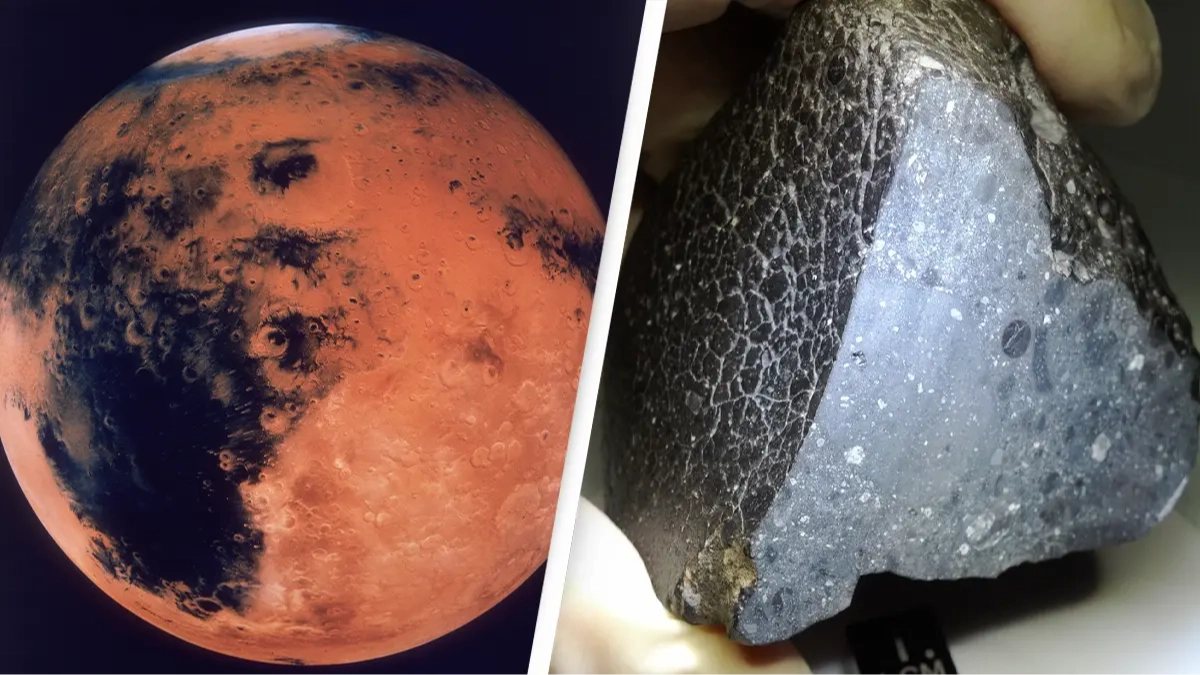
Asteroid from 4,500,000,000 years ago unlocks breakthrough about life on Mars

Scientists have made a groundbreaking discovery which could be the proof needed to confirm the existence that life once occurred on Mars.
With Mars being scouted for the next possible space mission, it'd be handy to know if humans could comfortably dwell there - even if that's looking like that's an impossible feat.
However, experts have discovered what appears the oldest direct evidence of possible life on the Red Planet, dating back 4.45 billion years.
And given that this 'key ingredient for habitable environments' was also essential for the formation of life of Earth, it could be a huge step in discovering how life previously thrived on Mars.
Advert
The evidence was found in the famous 'Black Beauty' Martian asteroid, which landed on Earth all the way back in 2011.
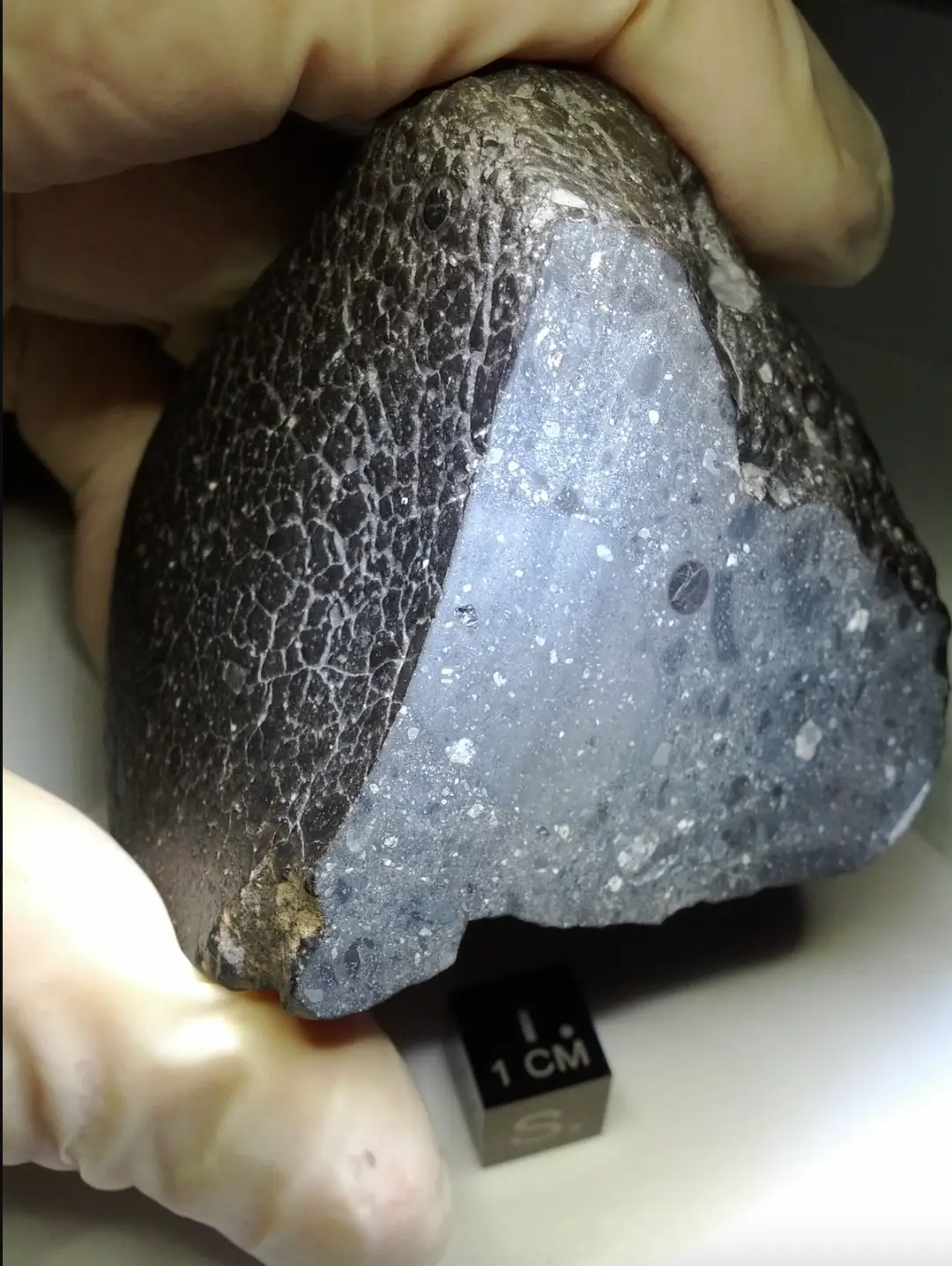
The polished black rock is believed to be the second oldest Martian meteorite ever at around 2 billion years old, according to Space.com.
However, scientists from Curtin University in a study published in Science Advances discovered something significantly older within the rock, which revealed evidence of hot water.
And now, a 4.45-billion-year-old zircon grain filled with fluid-rich water could now lead to a whole new understanding of hydrothermal systems relating to volcanic magma activity on historic Mars.
Aaron Cavosie, from Curtin's School of Earth and Planetary Sciences, said in a statement: "We used nano-scale geochemistry to detect elemental evidence of hot water on Mars 4.45 billion years ago.
"Hydrothermal systems were essential for the development of life on Earth, and our findings suggest Mars also had water, a key ingredient for habitable environments, during the earliest history of crust formation."
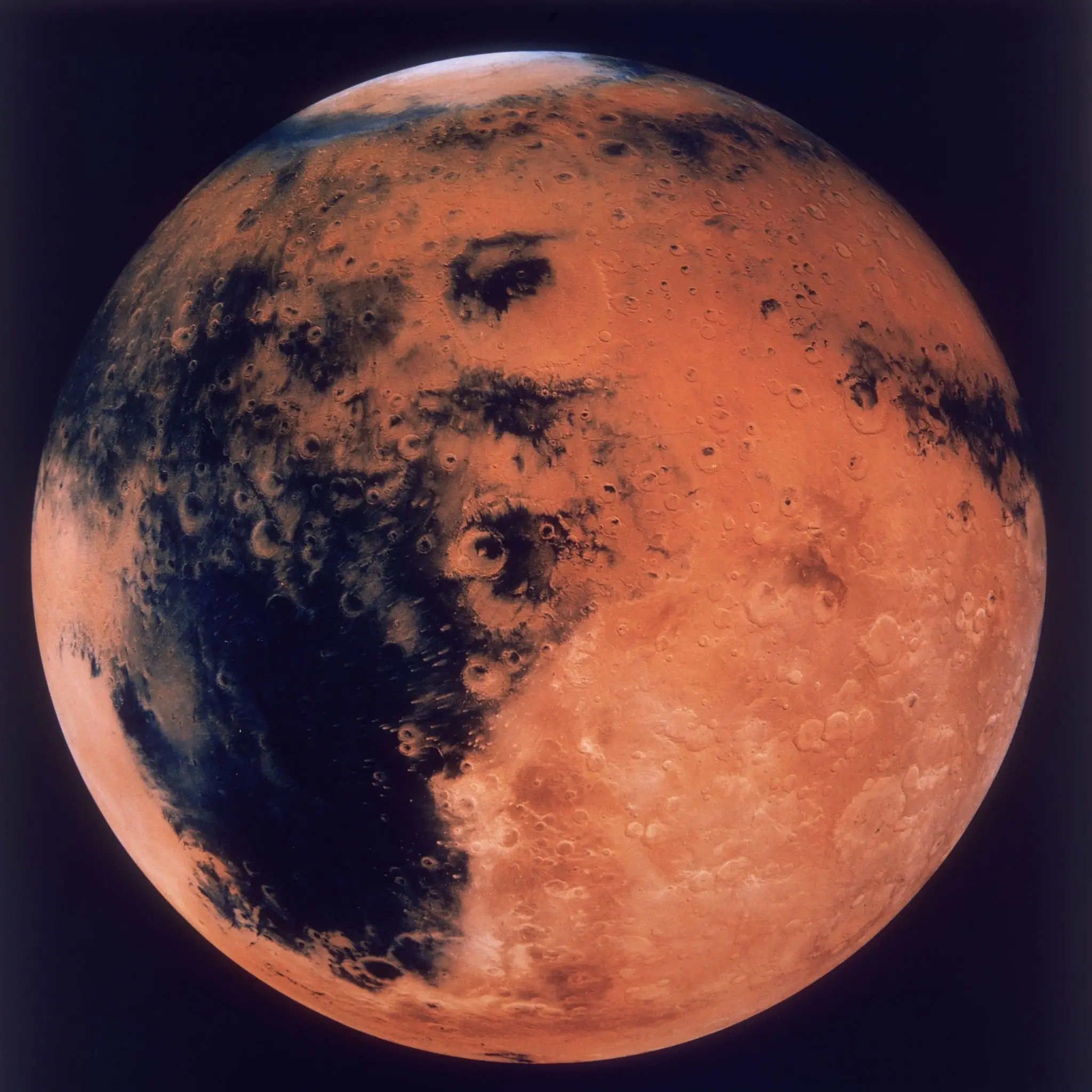
Using nano-scale imaging and spectroscopy, the team discovered elements of iron, sodium, aluminum and yttrium, which Cavosie says were added when the zircon was formed 4.45 billion years ago, which suggests that 'water was present during early Martian magmatic activity'.
This particular discovery is especially groundbreaking as scientists had previously came to the conclusion that Mars had been home to water in liquid form around 4.2 billion years ago, thanks to the discovery of evidence of waterways and ancient lakebeds.
The Red Planet was later stripped of its water when the harsh solar radiation of the sun destroyed the Martian atmosphere, but it turns out the water may have been there significantly longer than previously believed, Space.com reports.
"A 2022 Curtin study of the same zircon grain found it had been 'shocked' by a meteorite impact, marking it as the first and only known shocked zircon from Mars," Cavosie said.
"This new study takes us a step further in understanding early Mars by identifying tell-tale signs of water-rich fluids from when the grain formed, providing geochemical markers of water in the oldest known Martian crust."
Perhaps, there was 'Life on Mars' after all.
 Emma Rosemurgey