unilad homepage
  • News
    • UK News
    • US News
    • World News
    • Crime
    • Health
    • Money
    • Sport
    • Travel
  • Film and TV
    • Netflix
  • Music
  • Tech
  • Features
  • Celebrity
  • Politics
  • Advertise
  • Terms
  • Privacy & Cookies
  • LADbible Group
  • LADbible
  • SPORTbible
  • GAMINGbible
  • Tyla
  • UNILAD Tech
  • FOODbible
  • License Our Content
  • About Us & Contact
  • Jobs
  • Latest
  • Archive
  • Topics A-Z
  • Authors
Facebook
Instagram
X
Threads
TikTok
YouTube
Submit Your Content
Bizarre reason snooze alarm on your phone is 9 minutes instead of 10

Home> Technology

Published 14:06 29 Nov 2024 GMT

Bizarre reason snooze alarm on your phone is 9 minutes instead of 10

Serial snoozers may wonder why the snooze option is only nine minutes long

Niamh Shackleton

Niamh Shackleton

google discoverFollow us on Google Discover
Featured Image Credit: Getty Stock Image

Topics: Science, Sleep

Niamh Shackleton
Niamh Shackleton

Niamh Shackleton is an experienced journalist for UNILAD, specialising in topics including mental health and showbiz, as well as anything Henry Cavill and cat related. She has previously worked for OK! Magazine, Caters and Kennedy.

X

@niamhshackleton

Advert

Advert

Advert

If you're someone who frequently hits the snooze button in a morning, you may have questions why your alarm clock is set to go off again in nine minutes.

Some people might find that hitting the snooze button is only postponing the agony of having to get yourself out of bed, while others find it useful - but I'm sure we can all agree that nine minutes is a pretty random number.

And it's not just on one type of alarm clock that it's default snooze is this long, but almost all of them.

Advert

While this seems like a bit of a questionable number, there's a reason it was chosen and it dates all the way back to the 1950s.

In 1956, the General Electric-Telechron’s Snooze-Alarm hit shelves and was the first clock to have a 'snooze' option.

With this model, the snooze button deferred the alarm (or alarms if you're the type of person to set multiple) for nine minutes.

This wasn't just to be awkward though, apparently it was down to the fact it was virtually impossible to get the gear teeth in the clock to line up for exactly 10 minutes so it would also be slightly before or later.
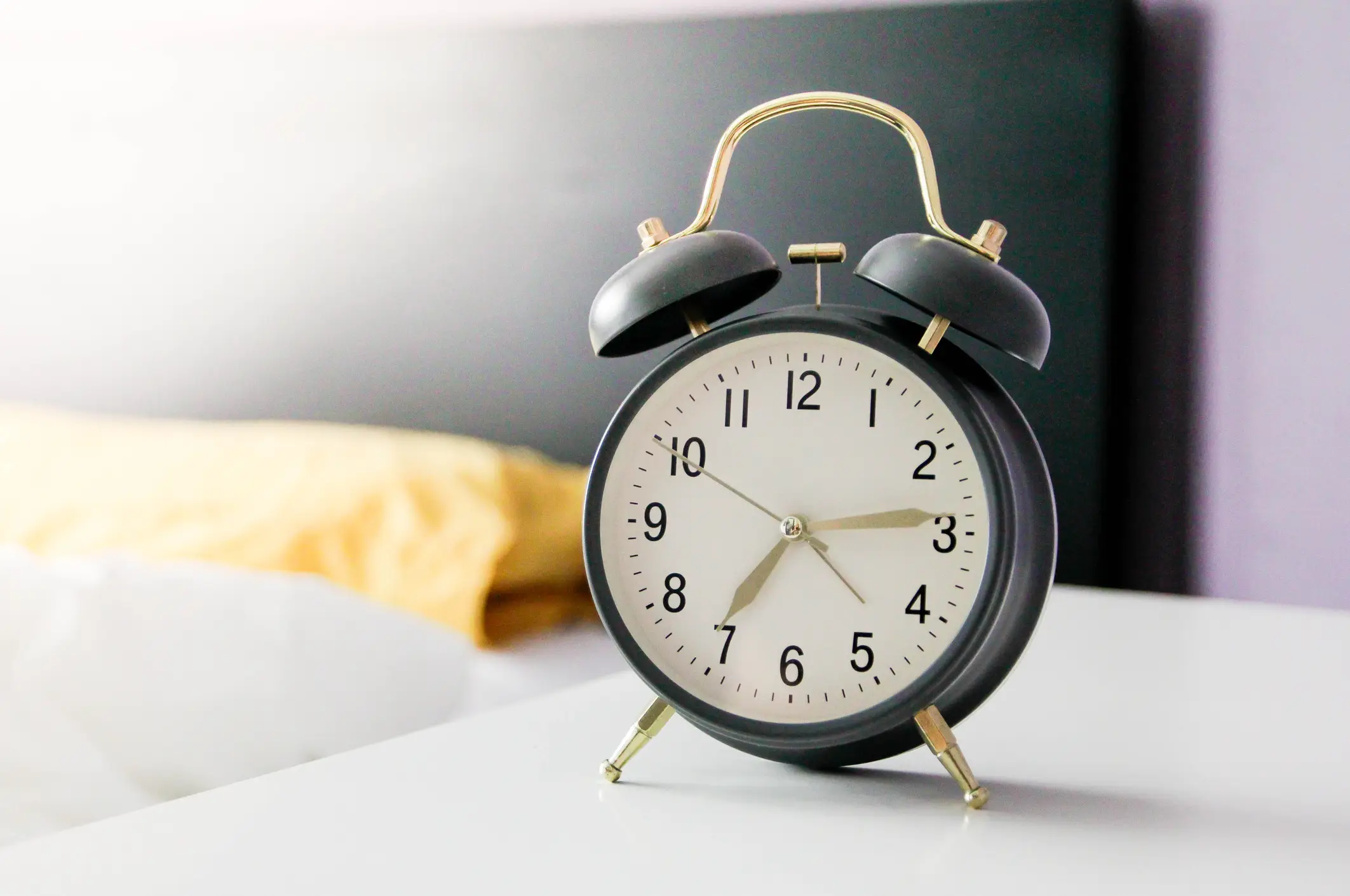
Around 80% of adults in the US use an alarm clock to start their day (Getty Stock)

Snooze alarms might be some people's nemesis, but they can be beneficial if used right.

Apparently, if you use the snooze alarm as a means to slowly wake you up instead of drifting back into a deep sleep, then it can be useful, says Brooklyn Bedding.

It's when you start hitting 'snooze' over and over again that it can become problematic and potentially lead to sleep inertia (a feeling of grogginess and disorientation after waking).

If you heavily rely on the snooze button because you sleep poorly, there are steps you can take before your head hits the pillow that could help you.

Some sleep experts say to follow the 10-3-2-1-0 routine where ten hours before sleep, you cut out any caffeine products.
Some people may feel the need to set multiple alarms (Getty Stock)

Three hours before going to sleep it's advised that you stop eating - fried foods in particular.

Then, two hours before get some much-needed Zzzs, experts say you should stop doing anything work-related.

Similar to this, one hour before bed you should be ditching electronic devices with harsh blue light (i.e your cellphone).

And the 0? The zero is for the 0 times you'll hit the snooze button because you'll feel fine waking up after a solid night of rest.

It's also advised that you avoid hitting 'snooze' even if you are tired as one study suggested that serial snoozers have elevated resting heart rates and showed lighter sleep before waking.

Choose your content:

13 hours ago
3 days ago
5 days ago
6 days ago
  • Justin Sullivan/Getty Images
    13 hours ago

    OpenAI names 22 industries at risk of job losses as it proposes four day week

    Two new reports suggest AI might be coming for your job - but you could also get a three day weekend

    Technology
  • Kayla Bartkowski/Bloomberg via Getty Images
    3 days ago

    Congressman Tim Burchett claims he has seen UFO footage that ‘defies logic’

    Tim Burchett says he has seen UFO footage that couldn't be man made - and he wants answers from the government

    Technology
  • NASA/JPL-Caltech/MSSS
    5 days ago

    NASA's Curiosity rover makes groundbreaking discovery that suggests Mars can support life

    An expert has claimed the new reveal 'increases the prospect that Mars offered a home for life in the ancient past'

    Technology
  • John Nacion/Variety via Getty Images
    6 days ago

    Bill Nye issues stern warning to Trump over concerns he could 'end NASA'

    Bill Nye the Science Guy revealed that Donald Trump's NASA proposal is a 'huge mistake'

    Technology
  • Experts reveal why you should never hit snooze on your alarm and the devastating effects it can have on your body
  • New study claims this common habit is actually rotting your brain
  • Experts reveal how many times it's normal to wake up during the night based on your age
  • Expert breaks down how your body functions based on the hours of sleep you get